Beyond Academics: Holistic Learning at India School Merit Awards & K-12 Leadership 2025
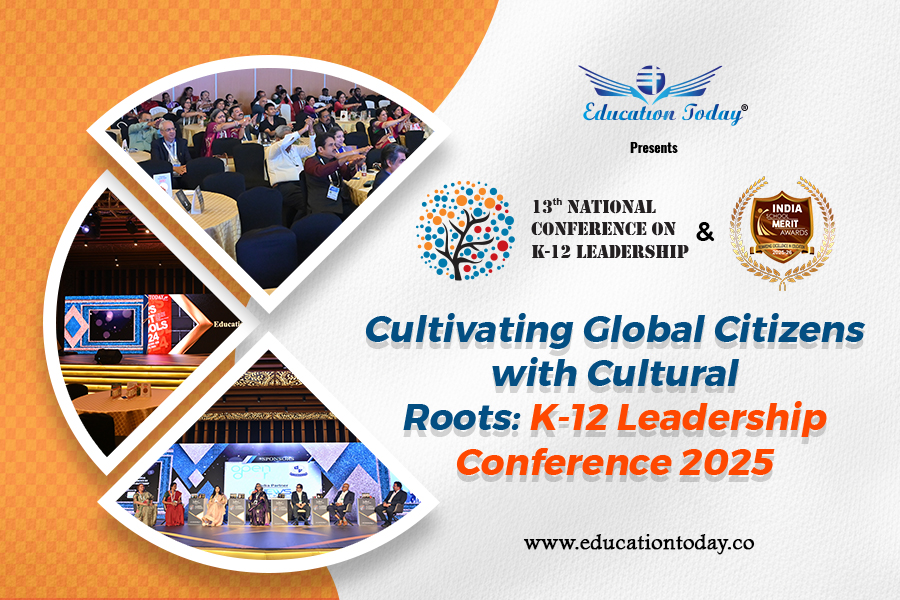
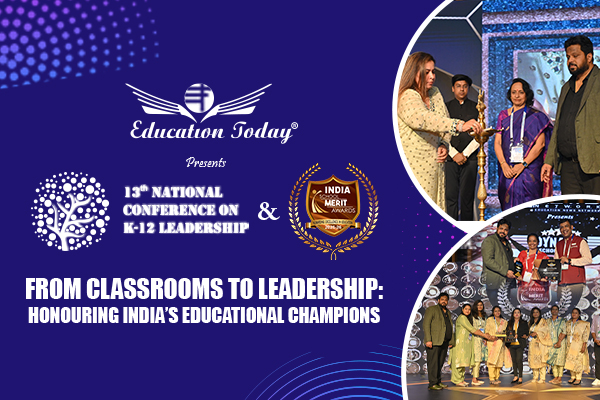
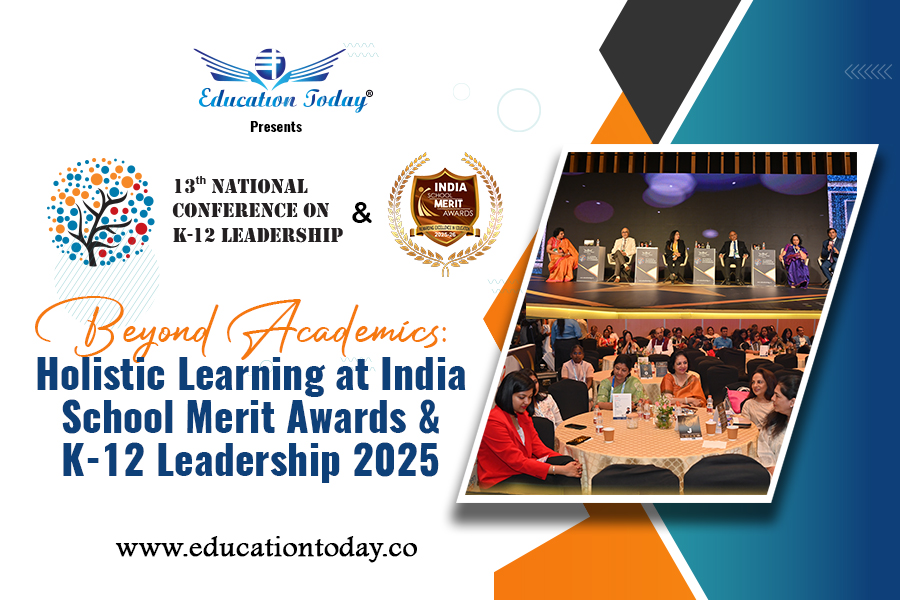
The 13th National Conference on K-12 Leadership 2025, held alongside the India School Merit Awards 2025, emerged as a defining moment in India’s evolving educational discourse. Convened on 5 December 2025 at the Taj, Yeshwantpur, Bengaluru, the event brought together an influential assembly of educationists, school leaders, and policy thinkers committed to reimagining schooling beyond traditional academic paradigms. Organised by EducationToday and powered by UniPro, the conference served as a national platform for critical reflection on how Indian schools must adapt to the intellectual, emotional, and social realities of contemporary learners.
Beyond its intellectual gravitas, the conference was underpinned by strong institutional collaboration. Partners and sponsors including UniPro, LiveLife Education Pvt. Ltd., AddressHealth Solutions India Pvt. Ltd., Academica International Studies, Entab, Arko Global, CENTA, OpenDoor, Alumnatis Club, EDHR Recruitments, My School Admission, and Education News Network reaffirmed the collective responsibility required to advance meaningful educational reform. Their involvement reinforced the understanding that quality education is not the mandate of schools alone, but a shared national endeavour.
At the heart of the panel discussion was a theme of growing urgency: Holistic Learning and Well-being – Fostering Critical Thinking, Problem-Solving, and Emotional Resilience. The session was moderated by Dr. Manila Carvalho, Principal of Delhi Public School, Bangalore East, a veteran educator and psychologist with over three decades of experience in championing student mental health and inclusive schooling practices. Under her stewardship, the discussion unfolded with depth, clarity, and purpose.
The conversation began by unpacking the concept of holistic education itself. Mr. Ramesh Mudgal, Director of Chirec International School, Hyderabad, observed that although holistic education has been widely referenced in educational discourse for decades, its practical application remains uneven. He articulated holistic education as an integrated model of child development—one that addresses physical, cognitive, emotional, social, and psychological dimensions in tandem with well-being. He contrasted this approach with conventional board-driven curricula, which often prioritise textbook completion over the lived development of the learner.
Expanding on this perspective, Dr. Hamsa K Venugopal, Academic Leader and Principal of the New Baldwin Group of Institutions, Bengaluru, positioned holistic education as fundamentally rooted in skill development and citizenship. She emphasised that the ultimate aim of education must be the creation of capable, ethical, and contented individuals who contribute meaningfully to society. In her view, a happy child who feels valued and competent within the school ecosystem is the most authentic indicator of educational success.
The distinction between academics and education was further explored by Mr. Shantanu Das, Principal of Sarala Birla Academy, Bengaluru. He cautioned against conflating examination performance with education itself, asserting that academics represent only one component of a much broader developmental process. Drawing on observations from industry and higher education, he highlighted a recurring concern: while many young people enter the workforce with technical proficiency, they often lack emotional resilience, conceptual clarity, and social competence. Such deficiencies, he noted, are the by-products of schooling systems overly focused on high-stakes examinations at the expense of holistic growth.
The discussion then turned to the practical challenge of fostering critical thinking and problem-solving without burdening the curriculum. Mr. Das argued that there is no singular strategy, but rather a need for pedagogical imagination. He advocated for connecting academic concepts to real-world experiences, thereby enabling students to internalise learning meaningfully and retain it over time. When education transcends the classroom and enters laboratories, sports fields, creative studios, and natural environments, students begin to question, analyse, and synthesise knowledge organically.
Experiential learning emerged as a recurring theme, with panelists emphasising that curiosity cannot be mandated but must be ignited. Learning becomes transformative when students are encouraged to explore phenomena, observe patterns, and apply theory to practice. In such contexts, education shifts from passive absorption to active discovery, cultivating independent and critical thinkers.
Emotional resilience formed another cornerstone of the discussion. Addressing this dimension, Dr. Revathi Sreenivasan highlighted the growing vulnerability observed among students today. She stressed that resilience must be lived and modelled by adults within the school community, as children learn emotional strength through observation as much as instruction. Schools, she argued, must intentionally create opportunities for students to face challenges, experience setbacks, and learn recovery in supportive environments.
Dr. Sreenivasan further noted that resilience-building is most effective when embedded into everyday school life—through activities that require responsibility, collaboration, negotiation, and perseverance. Importantly, she underscored the role of language and culture, advocating for school environments that focus on correction rather than punishment, and reflection rather than blame.
The panel then examined the early identification of emotional strain among students. Dr. Hamsa K Venugopal emphasised that teachers must adopt an empathetic lens, remaining alert to behavioural changes such as withdrawal, disengagement, or inconsistency. She argued that empathy should be considered a foundational professional qualification for educators. In an era where students may feel uncomfortable seeking formal counselling, everyday teacher-student interactions often serve as the first and most trusted support system.
Dr. Venugopal also highlighted the realities of modern family structures, observing that many students lack consistent adult engagement at home. Consequently, schools must function as emotional sanctuaries—spaces where children feel safe, heard, and valued. Training teachers to respond with sensitivity and responsibility, she asserted, is no longer optional but essential.
The role of parents in holistic education was addressed by Mr. Ramesh Mudgal, who reiterated that meaningful student development depends on strong school–parent partnerships. He stressed the importance of clearly communicating a school’s values and philosophy from the point of admission, ensuring alignment beyond academic expectations. Regular orientations, transparent child protection policies, and collaborative engagement were identified as critical to sustaining trust and coherence.
Mr. Mudgal also advocated for comprehensive student profiling that recognises diverse strengths and learning needs. Celebrating achievements across academics, arts, sports, and personal growth, he noted, fosters inclusivity and reinforces self-worth among students who may not conform to traditional academic metrics.
The conversation returned to the challenge of moving from rote learning to curiosity-driven education. Mr. Das asserted that teachers must be empowered and trained to make learning intellectually stimulating and relevant. When lessons provoke inquiry rather than compliance, students engage more deeply and develop enduring understanding. Education, the panel agreed, must prioritise meaning over marks.
Creating schools as safe spaces for failure was another critical theme. Dr. Revathi Sreenivasan emphasised the need to cultivate cultures of empathy, collaboration, and open dialogue across all school environments. From classrooms to playgrounds and transport spaces, each micro-culture influences student behaviour and well-being. Conscious efforts to nurture positive interactions across these domains enable students to confront consequences constructively and build confidence.
In the concluding reflections, Dr. Anil Kumar T, Principal of Amarajyothi Public School, Bengaluru, offered a deeply personal insight into the pressures children face. He reflected on how expectations—particularly from families—often become the primary source of stress for students. Drawing from his professional and personal experience, he reiterated the need to redefine success and adopt assessment practices that recognise holistic growth rather than narrow academic outcomes.
Dr. Kumar concluded by reaffirming that holistic education is not an abstract ideal, but a necessary response to the complex realities of modern childhood. As India prepares its students for an uncertain and rapidly changing future, schools must broaden their mandate—nurturing not only academic competence, but emotional resilience, ethical grounding, and human flourishing.
The conference, in both spirit and substance, served as a compelling call to action for educators across the nation.