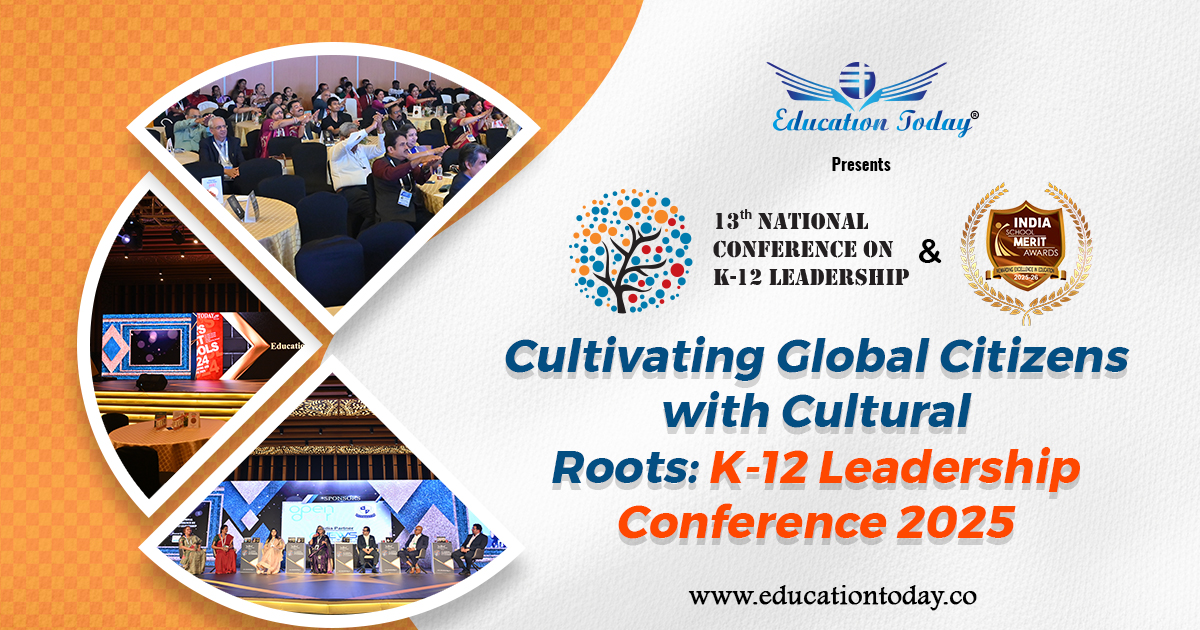
Cultivating Global Citizens with Cultural Roots: K-12 Leadership Conference 2025
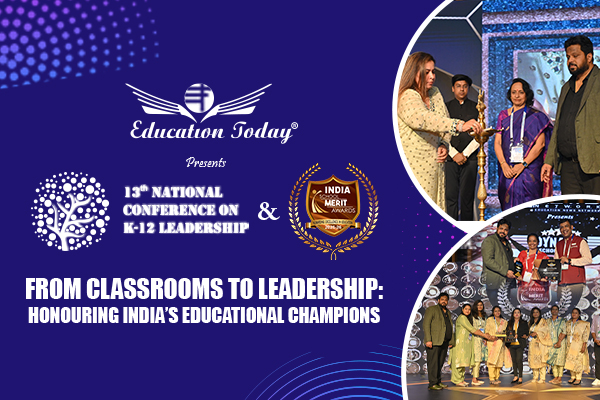
The 13th National Conference on K-12 Leadership 2025, held in conjunction with the India School Merit Awards 2025, emerged as a defining moment in India’s evolving educational discourse. Convened on 5 December 2025 at the Taj, Yeshwantpur, Bengaluru, the event drew together a distinguished assembly of educationists, school leaders, and policy thinkers, all committed to reimagining the purpose and scope of schooling beyond conventional academic metrics. Organised by EducationToday and powered by UniPro, the conference served as a national platform for critical reflection on how Indian schools can adapt to the intellectual, emotional, and social realities of contemporary learners.
The conference was underpinned by robust institutional collaboration. Partners and sponsors including UniPro, LiveLife Education Pvt. Ltd., AddressHealth Solutions India Pvt. Ltd., Academica International Studies, Entab, Arko Global, CENTA, OpenDoor, Alumnatis Club, EDHR Recruitments, My School Admission, and Education News Network reaffirmed the collective responsibility required to advance meaningful educational reform. Their engagement underscored a vital principle: quality education is not the mandate of schools alone, but a shared national endeavour.
Among the conference’s highpoints was the second panel discussion, titled “Building Global Citizens – Balancing International Exposure with Rooted Cultural Values”. This session was moderated by Dr. Sangeeta Bhatia, Principal of KIIT World School and recipient of the National Award for Education from the Ministry of Education (MHRD). Dr. Bhatia’s leadership philosophy emphasises cultivating global perspectives in students while remaining firmly grounded in indigenous cultural values. With over three decades of experience, she has consistently championed progressive, student-centric learning environments.
The panel comprised an impressive line-up of educational leaders, each bringing distinctive insights into the challenges and opportunities of nurturing globally competent yet culturally anchored students. These included Ms. Suseela Santosh, Director of Vishwa Vidyapeeth Group of Schools; Dr. Nafeesa Ahmed, Director of Presidency Group of Institutions; Mr. Manas Mehrotra, Trustee of Greenwood High International School and Chief Mentor at Kara4Kids, Bengaluru; Mrs. Suja George, Vice Chairperson of Alpha Group of Institutions; Mr. Vittal Bhandary, Co-Founder and Managing Director of Learning Edge India Pvt. Ltd., and Mr. Tanveer Ahmed, CEO of Little Flower Public School & Mitra Academy.
The panel began by acknowledging the growing tension between global aspirations and local cultural rootedness. Dr. Bhatia observed that contemporary Indian students often aspire to adopt global standards as benchmarks for excellence. Yet, she stressed the importance of introspection, urging educators to reflect on their own institutional strengths and the cultural values embedded within them. The emphasis, she suggested, should not solely be on globalisation but on fostering pride in local heritage, ensuring students remain grounded even as they reach for international horizons.
Mr. Bhandary highlighted the developmental implications of exposing children to global contexts at an early age. While technological advancements and parental influences enable children to interact with global ideas and experiences sooner than ever, he cautioned against premature overexposure. He argued that children require a period of nurturing rootedness before their wings can fully develop. Drawing attention to iconic figures such as Sundar Pichai, he illustrated that global achievement does not necessitate severing ties with one’s cultural identity; rather, it flourishes when individuals are deeply aware of their origins.
Mrs. Suja George outlined four essential attributes that she considers indispensable for nurturing global citizenship in today’s learners: critical thinking, cultural awareness, social responsibility, and empathy. She emphasised that curricula should be designed to cultivate these qualities systematically. By incorporating local examples in the study of global issues, fostering empathy through value-based education, integrating mandatory community service, and promoting awareness of diverse cultures, schools can prepare students to act responsibly on the global stage while remaining connected to their roots.
Ms. Suseela Santosh further elaborated on the interplay between rootedness and global thinking, invoking the ancient Indian principle of “Manasa Vacha Karmena”—the alignment of thought, speech, and action. She argued that students must first understand their inner values and cultural foundations to engage meaningfully with the wider world. Drawing on historical examples, including the influence of Swami Vivekananda, she underscored that true global leadership derives from substance and character rather than external appearances. Santosh highlighted the success of Indian leaders in international arenas as evidence that cultural rootedness complements, rather than conflicts with, global engagement.
Dr. Bhatia noted the contemporary challenges students face in reconciling modern aspirations with traditional values. She observed that young learners often experience internal conflict between their desire for modernity and the inherited cultural framework, affecting behaviours, relationships, and worldviews. Schools, she argued, bear the responsibility of guiding students through this reconciliation, ensuring that educational experiences harmonise global awareness with local identity.
Dr. Nafeesa Ahmed provided practical examples of integrating global perspectives within classrooms while remaining culturally anchored. Through international collaborations, virtual exchanges, and exposure to global practices, students at the Presidency Group of Institutions developed empathy, resilience, and appreciation for cultural diversity. Ahmed emphasised that budget-conscious approaches, such as leveraging technology for international classroom interactions and collaborative projects, can be effective in cultivating global citizenship from an early age.
Mr. Manas Mehrotra addressed the challenges faced by parents in navigating generational gaps and the evolving needs of contemporary learners. He observed that schools have traditionally emphasised IQ and cognitive development but argued that emotional intelligence (EQ) is equally critical in preparing students for the future. Mr. Mehrotra noted that while AI may enhance knowledge acquisition, human connections, empathy, and ethical reasoning remain irreplaceable. He called for a systemic focus on EQ development in schools, complemented by parental engagement in value-based education, to ensure holistic student growth.
Mr. Tanveer Ahmed highlighted the unique advantages Indian learners possess due to their cultural upbringing. The multilingual, multicultural, and resilient nature of Indian households equips students with adaptability and cross-cultural understanding. He underscored the importance of respect, warmth, and consciousness in behaviour, arguing that these traits—rooted in Indian familial and societal structures—enhance leadership and career success. Ahmed emphasised that resilience, problem-solving, and perseverance, cultivated from early education, enable students to navigate complex global landscapes effectively.
The panel concluded with a reflective synthesis on the mutual responsibilities of educators and students in bridging the gap between global ambitions and local identity.
Dr. Bhatia asserted that the challenge is not solely for students to adapt but also for educators to revisit institutional practices and curricula. By integrating local narratives, values, and cultural insights into learning experiences while adopting international pedagogical best practices, schools can cultivate students who are both globally competent and culturally grounded—a balance Dr. Bhatia captured with the term “Glocal.” She further highlighted the importance of gratitude, adaptability, and positivity in shaping students’ worldviews, drawing lessons from Western educational efficiencies such as punctuality while retaining India’s distinctive cultural ethos.
The discussions underscored a central tenet: true global citizenship is inseparable from a firm grounding in local culture and values. As the panel demonstrated, fostering globally competent learners requires a delicate balance between exposure to international ideas and immersion in one’s cultural heritage. Education, therefore, is not merely about knowledge acquisition but about cultivating character, empathy, and social responsibility, ensuring that students emerge as thoughtful, resilient, and conscientious citizens of the world.
The 13th National Conference on K-12 Leadership 2025 thus offered a compelling vision for Indian education. By foregrounding the interplay between global exposure and rootedness, the conference provided a framework for schools to nurture students who are confident in their identities, competent in global contexts, and capable of leading with empathy and insight. Through thoughtful curricula, innovative pedagogy, and collaborative institutional efforts, the path towards a generation of Indian learners who are simultaneously globally aware and culturally grounded becomes not only feasible but imperative.