AI for Urban Resilience: IIT Gandhinagar’s ARC Centre Signals a New Era in Climate-Ready Cities
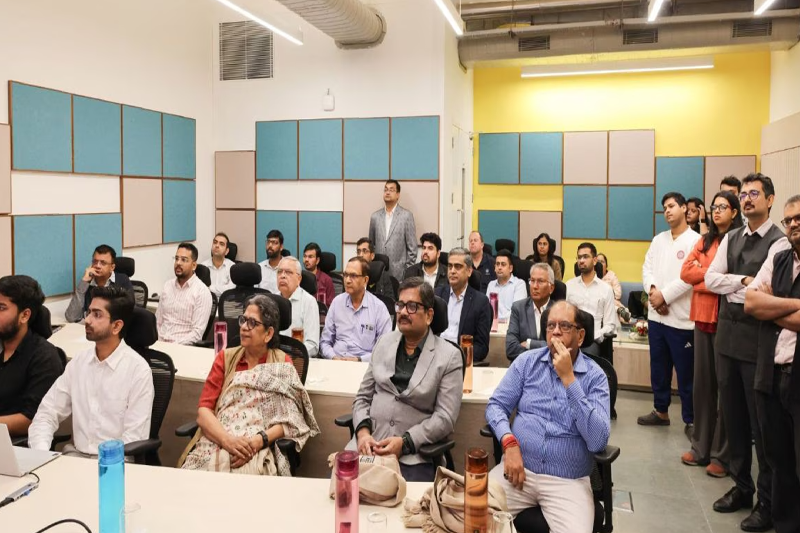
The intersection of artificial intelligence and environmental resilience has become one of the defining frontiers of contemporary research. As climate volatility intensifies and urban systems grow increasingly complex, the ability to anticipate risks rather than merely respond to crises has assumed critical importance. In this evolving landscape, the Indian Institute of Technology Gandhinagar (IITGN) has launched the AI Resilience and Command (ARC) Centre, an initiative aimed at harnessing advanced artificial intelligence to strengthen climate-risk management, urban preparedness and data-driven governance. The initiative represents a significant step not only for technological innovation but also for the broader discourse on sustainable urban development in India.
A Strategic Response to Climate Uncertainty
Indian cities, like many urban centres globally, face mounting pressures from erratic weather patterns, rapid urbanisation and fragile infrastructure systems. Short bursts of intense rainfall, for instance, increasingly trigger urban flooding, mobility disruptions and infrastructure strain. Recognising these challenges, IIT Gandhinagar’s ARC Centre is designed to provide anticipatory, data-driven solutions that enable authorities to forecast and manage such events more effectively.
Unlike conventional disaster management frameworks, which often remain reactive, the ARC Centre emphasises predictive modelling and real-time analytics. By integrating artificial intelligence with environmental data, the initiative seeks to transform how cities interpret climate signals, thereby enabling earlier interventions and more strategic planning. This shift from response to preparedness may well define the next phase of urban resilience policy.
The Vision Behind the ARC Centre
At its conceptual core, the ARC Centre aims to connect the chain from rainfall events to resilience planning through a unified technological framework. This includes flood forecasting, mobility impact assessment and operational decision support, all integrated into a physics-guided AI ecosystem.
Such integration is particularly crucial because urban disasters rarely occur in isolation. A sudden downpour, for example, may trigger flooding, traffic congestion, infrastructure breakdown and public safety concerns simultaneously. By analysing these interlinked variables collectively, the ARC Centre hopes to offer holistic insights rather than fragmented data streams.
Furthermore, the centre’s location at the IIT Gandhinagar Research Park underscores a deliberate effort to translate academic research into deployable solutions. The initiative is not merely theoretical; it is structured to support urban authorities with actionable intelligence and operational tools.
Artificial Intelligence with Scientific Grounding
One distinguishing feature of the ARC Centre is its emphasis on physics-consistent modelling alongside artificial intelligence. While AI offers unparalleled capabilities in pattern recognition and predictive analytics, grounding these models in established scientific principles ensures reliability and credibility, particularly for public policy applications.
This hybrid methodology allows for real-time flood assessment, scenario analysis and dynamic decision-making. Advanced tools developed through collaborations with deep-tech partners enable rapid simulations and “what-if” explorations, providing policymakers with nuanced insights before crises escalate.
Such scientifically anchored AI could become indispensable as climate uncertainties grow more pronounced. It offers a pathway toward decisions that are both technologically sophisticated and empirically sound.
Implications for Urban Governance
The ARC Centre’s potential impact extends beyond academic research. Urban authorities stand to benefit significantly from faster response times, reduced disruption to infrastructure and improved long-term planning. Data-driven insights can inform everything from drainage system design to emergency evacuation strategies.
Moreover, the initiative aligns with broader national aspirations for sustainable development and technological self-reliance. By equipping cities with predictive tools, it contributes to safeguarding livelihoods, infrastructure and environmental stability.
This emphasis on practical applicability reflects a growing recognition that technological innovation must ultimately serve societal resilience. Artificial intelligence, when deployed responsibly, can enhance governance efficiency and public safety simultaneously.
Bridging Research, Industry and Public Policy
Another notable dimension of the ARC Centre is its collaborative orientation. The initiative involves academic researchers, technology developers and policy stakeholders, creating an ecosystem that bridges theory and implementation. Partnerships with incubated deep-tech companies demonstrate how academic innovation can translate into commercially viable solutions for public benefit.
Such collaboration is increasingly essential in addressing climate challenges, which seldom fall neatly within disciplinary boundaries. Engineers, environmental scientists, urban planners and policymakers must work in concert to devise sustainable solutions. The ARC Centre offers a model for such interdisciplinary engagement.
AI Beyond the Hype: A Pragmatic Perspective
While artificial intelligence continues to dominate global discourse, experts associated with the ARC Centre emphasise a pragmatic approach. The real value of AI, they argue, lies not in technological novelty but in measurable improvements to quality of life, particularly in areas such as urban resilience and infrastructure stability.
This perspective is instructive. The proliferation of generative AI tools has often overshadowed applications that address pressing societal challenges. Initiatives like the ARC Centre remind us that AI’s transformative potential may be most profound when applied to public welfare rather than purely commercial or entertainment domains.
Educational Significance and Capacity Building
For higher education, the establishment of such centres signals an evolving academic mandate. Universities are no longer solely knowledge repositories; they are becoming innovation hubs addressing real-world challenges. The ARC Centre provides students and researchers with opportunities to engage in cutting-edge interdisciplinary work that combines artificial intelligence, environmental science and urban planning.
This experiential learning environment is particularly valuable in preparing graduates for emerging career pathways in climate technology, urban analytics and AI governance. It also reinforces the importance of ethical, socially responsible technological development.
A Catalyst for Future Research
The ARC Centre is likely to stimulate further research in climate analytics, predictive modelling and resilient infrastructure design. Its integrated framework may inspire similar initiatives across other academic institutions and government agencies.
Additionally, the centre’s focus on anticipatory planning aligns with global trends in disaster risk reduction. As climate events grow more unpredictable, investments in predictive intelligence will become increasingly vital. India’s proactive approach, exemplified by IIT Gandhinagar’s initiative, positions the country as a contributor to international climate resilience discourse.
Challenges and Considerations
Despite its promise, the success of the ARC Centre will depend on sustained collaboration, robust data governance and careful ethical oversight. Artificial intelligence systems require extensive datasets, which must be managed responsibly to ensure privacy, accuracy and inclusivity.
Moreover, translating predictive insights into policy action often requires administrative agility and political will. Technology alone cannot guarantee resilience; it must be accompanied by effective governance frameworks and public engagement.
Looking Ahead
The launch of the AI Resilience and Command Centre marks a forward-looking step in India’s journey toward climate-resilient urban development. By blending artificial intelligence with scientific modelling, interdisciplinary research and policy engagement, IIT Gandhinagar has initiated a project that holds both national and global relevance.
As cities confront escalating environmental uncertainties, such initiatives will likely become indispensable. They embody a philosophy that prioritises preparedness over reaction, collaboration over silos and sustainability over short-term expediency.
In the broader narrative of technological progress, the ARC Centre serves as a reminder that innovation attains its highest purpose when it safeguards communities, strengthens infrastructure and fosters a more resilient future. Artificial intelligence, guided by thoughtful design and ethical intent, can indeed become a powerful ally in humanity’s quest for sustainable urban living.