All High Schools in India to Get Broadband Internet in 2–3 Years, Says Dharmendra Pradhan
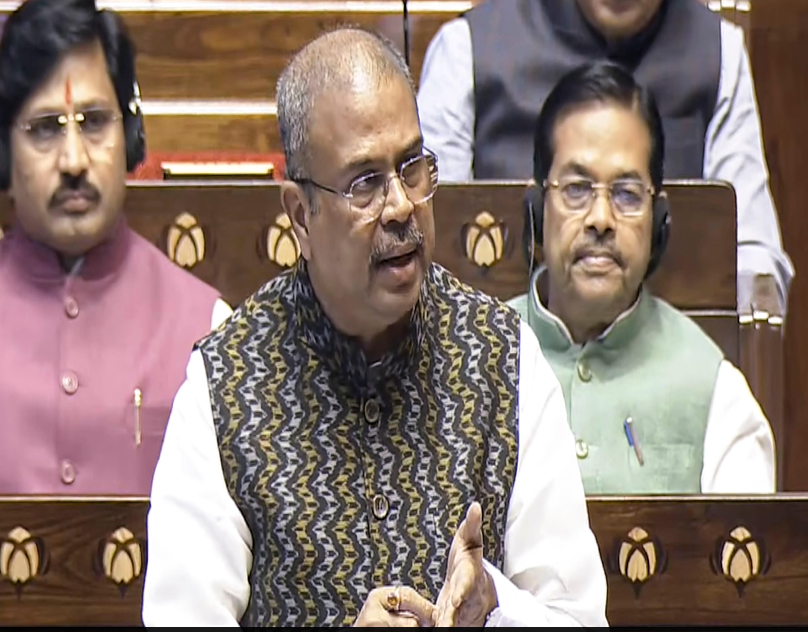
In a significant policy direction that underscores India’s commitment to digital inclusion in education, Union Education Minister Dharmendra Pradhan has announced that all high schools across the country will be equipped with broadband internet connectivity within the next two to three years. The statement, made in the Rajya Sabha, reflects an ambitious national effort to bridge infrastructural gaps and strengthen the technological backbone of school education.
At a time when education systems worldwide are undergoing rapid digital transformation, this initiative signals India’s intent to align its schooling ecosystem with contemporary learning demands. The move is not merely about connectivity, it represents a broader vision of integrating technology into pedagogy, governance, and student engagement.
Current Landscape: Progress and Gaps
India’s school education system has made notable strides in digital infrastructure over the past decade. According to the minister, approximately 60 per cent of high schools are already connected to broadband internet, indicating substantial progress.
However, the remaining gap underscores the uneven distribution of digital resources, particularly in rural and remote areas. The absence of reliable internet connectivity has long been a barrier to equitable education, limiting access to online resources, digital classrooms, and emerging learning tools.
The proposed timeline of two to three years aims to address this disparity, ensuring that every high school, regardless of location, can participate in the digital education ecosystem.
Beyond Connectivity: The Role of Artificial Intelligence
While broadband connectivity forms the infrastructural foundation, the government’s vision extends significantly beyond it. A key component of this transformation is the integration of Artificial Intelligence (AI) into school education.
The minister emphasised that AI should be embedded across all forms of learning, reflecting its growing relevance across disciplines.
In line with this, foundational AI education is set to be introduced from as early as Class 3, marking a decisive shift towards early exposure to advanced technological concepts.
This approach acknowledges AI not as a specialised subject confined to higher education, but as a fundamental literacy, akin to mathematics or language, necessary for navigating the future.
Alignment with the National Education Policy 2020
The initiative is deeply rooted in the principles of the National Education Policy 2020, which places strong emphasis on integrating technology into teaching and learning processes.
The policy advocates for the introduction of contemporary subjects such as AI, design thinking, and computational thinking at appropriate stages of education.
By combining universal broadband access with curriculum reform, the government seeks to create a cohesive framework where infrastructure and pedagogy evolve in tandem. This alignment ensures that technological tools are not merely available but are meaningfully utilised within classrooms.
Teacher Capacity Building: A Critical Pillar
A transformation of this scale necessitates not only infrastructure but also human capacity. Recognising this, both central and state governments are focusing on capacity building for teachers, enabling them to effectively impart AI-related knowledge and utilise digital tools in their teaching practices.
Teacher training programmes are being designed to enhance digital literacy, pedagogical innovation, and adaptability. This is particularly crucial in a landscape where educators must navigate rapidly evolving technologies while maintaining academic rigour.
Without such capacity-building efforts, even the most advanced infrastructure risks remaining underutilised. Thus, the emphasis on teacher preparedness forms a cornerstone of the broader initiative.
Digital Platforms and Ecosystem Support
India’s digital education ecosystem is already supported by several national platforms, including DIKSHA, SWAYAM, and PM eVidya. These platforms provide access to a wide range of digital content, online courses, and interactive learning modules.
The expansion of broadband connectivity is expected to significantly enhance the reach and effectiveness of these platforms. With reliable internet access, students and teachers can engage more deeply with digital resources, participate in virtual classrooms, and access real-time educational support.
Moreover, the integration of AI into these platforms has the potential to personalise learning experiences, offering adaptive content tailored to individual student needs.
Curriculum Evolution and Emerging Technologies
The shift towards digital education is also reflected in curriculum design. Existing NCERT textbooks for subjects such as computer science and informatics practices already incorporate concepts related to AI, the Internet of Things (IoT), and other emerging technologies.
Additionally, vocational education at the school level is being enriched with projects related to animation, gaming, and digital creation. These initiatives aim to foster creativity, innovation, and practical skills alongside academic learning.
The introduction of a dedicated curriculum on Computational Thinking and Artificial Intelligence, to be implemented from Classes 3 to 8 starting in the 2026–27 academic session, further reinforces this direction.
Such curricular reforms ensure that students are not merely consumers of technology but active participants in its creation and application.
Federal Structure and Implementation Challenges
Education in India falls under the concurrent list of the Constitution, meaning that both central and state governments share responsibility.
This federal structure introduces both opportunities and challenges in implementing nationwide initiatives. While central policies provide direction and funding support, state governments play a crucial role in execution, particularly in areas such as infrastructure development, teacher recruitment, and localised curriculum adaptation.
Achieving universal broadband connectivity within the stipulated timeframe will therefore require coordinated efforts across multiple levels of governance. Issues such as last-mile connectivity, funding allocation, and regional disparities must be addressed with precision and urgency.
Bridging the Digital Divide
At its core, the initiative seeks to bridge the longstanding digital divide in Indian education. The COVID-19 pandemic brought this divide into sharp focus, revealing stark disparities in access to devices, connectivity, and digital literacy.
By ensuring that all high schools are connected to broadband internet, the government aims to create a more equitable learning environment where students, irrespective of socio-economic background, can access the same educational resources.
This has far-reaching implications, not only for academic outcomes but also for social mobility, employability, and national development.
Preparing Students for a Digital Future
The integration of broadband connectivity and AI into school education is ultimately about preparing students for a rapidly evolving world. As industries become increasingly technology-driven, the demand for digital skills continues to rise.
Early exposure to AI, computational thinking, and digital tools equips students with the competencies required to navigate complex, technology-rich environments. It fosters critical thinking, problem-solving, and innovation, skills that are essential in the 21st century.
Moreover, such exposure broadens career horizons, enabling students to explore emerging fields and participate in the global digital economy.
A Vision for the Next Decade
The announcement by the Education Minister represents more than a policy update; it is a statement of intent for the future of Indian education. By combining infrastructure development with curricular innovation and capacity building, the initiative lays the groundwork for a comprehensive transformation of the schooling system.
If implemented effectively, universal broadband connectivity could redefine classroom experiences, making them more interactive, inclusive, and future-ready. It could also catalyse further innovations in edtech, research, and collaborative learning.
Conclusion
The plan to equip all high schools in India with broadband internet connectivity within the next two to three years marks a decisive step towards a digitally empowered education system. Anchored in the principles of the National Education Policy 2020 and complemented by a strong emphasis on Artificial Intelligence, the initiative reflects a holistic approach to educational reform.
As the nation moves towards this ambitious goal, the focus must remain on equitable implementation, teacher readiness, and meaningful integration of technology into learning. In doing so, India has the opportunity not only to bridge existing gaps but to set new benchmarks in digital education, ensuring that every student is equipped to thrive in an increasingly interconnected world.