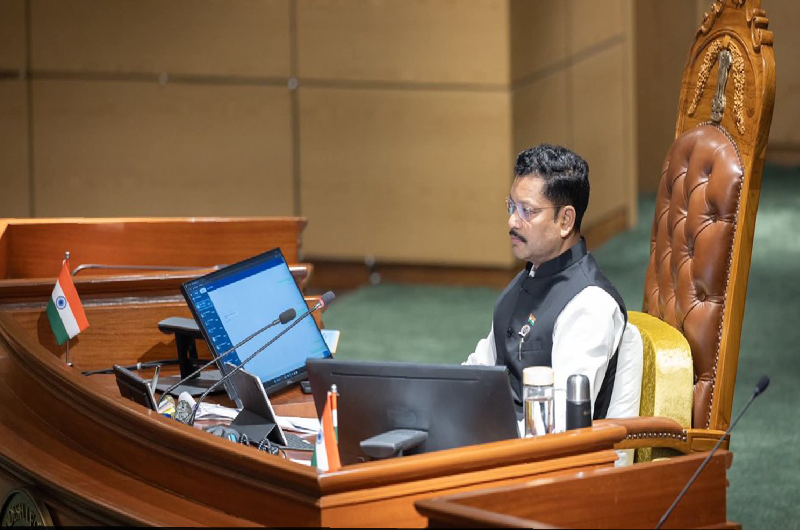
Arunachal Assembly passes bill to regulate teachers’ transfers
In a significant step towards reforming the governance of school education in the Northeast, the Arunachal Pradesh Legislative Assembly has passed a landmark bill aimed at regulating the transfer and posting of teachers and other employees in the state’s Education Department. The legislation seeks to bring clarity, transparency and equity to a system that has long struggled with uneven staffing, administrative inefficiencies and legal disputes over transfer orders.
The bill, formally titled the Arunachal Pradesh Transfer and Posting of Employees of Education Department (Regulation and Management) Bill, was introduced by Education Minister Pasang Dorjee Sona and passed by voice vote during the Assembly session. With this move, the state government intends to establish a statutory framework that will govern the deployment of education department personnel across Arunachal Pradesh.
The reform is widely viewed as a crucial intervention in strengthening the functioning of schools, particularly in remote and underserved regions of the state.
Addressing a Persistent Administrative Challenge
Teacher transfers have long been a contentious administrative issue in many parts of India, and Arunachal Pradesh has been no exception. For years, the system largely operated through executive instructions rather than a comprehensive legal framework. This often resulted in inconsistencies, grievances and frequent litigation over transfer orders.
The newly passed bill aims to rectify these systemic shortcomings. By creating a formal legal structure governing transfers and postings, the legislation introduces clear norms, criteria and procedures that education officials must follow when relocating teachers and other staff.
Education Minister Pasang Dorjee Sona emphasised that the legislation is designed to ensure a more equitable distribution of teachers throughout the state. In many districts, schools have faced chronic shortages of subject specialists and teaching staff, while others have had comparatively higher concentrations of educators.
Such imbalances have affected the quality of education available to students, particularly those living in geographically isolated or difficult-to-access areas. The bill therefore represents an attempt to rationalise teacher deployment and ensure that students across the state benefit from adequate academic support.
Extensive Consultations Before Drafting the Law
One of the notable aspects of the legislation is the consultative process undertaken before it was introduced in the Assembly. According to the Education Minister, the department carried out extensive groundwork while preparing the bill.
Officials conducted consultations with a wide range of stakeholders, including legislators, community organisations, educators and administrative bodies. The department also undertook district-level visits to identify operational gaps in the existing transfer system and understand the challenges faced by schools across the state.
These consultations helped highlight several issues affecting the education sector. Among the most pressing concerns were shortages of qualified teachers in certain subjects, uneven distribution of personnel, and inadequate infrastructure in many schools.
By incorporating feedback from stakeholders, the government aimed to craft legislation that reflects the practical realities of the state’s education landscape.
Tackling Uneven Distribution of Teachers
A major objective of the bill is to address the longstanding problem of uneven teacher deployment. In some schools, particularly those located in urban or semi-urban areas, staffing levels have been relatively stable. However, institutions situated in remote or mountainous regions often struggle to retain teachers.
Officials have acknowledged that while the state may have an adequate overall number of educators, many teachers prefer to remain in accessible postings rather than relocate to distant areas. As a result, some schools remain understaffed despite the availability of qualified personnel elsewhere in the system.
The new legislation seeks to correct this imbalance by introducing structured transfer mechanisms that ensure a more balanced distribution of human resources. Such measures are expected to improve teaching standards and ensure that students in remote communities receive the same level of academic support as their counterparts in more developed districts.
Digital Tools and Transparency
Another key feature of the proposed framework is the integration of digital systems to improve transparency and efficiency. The legislation envisions the use of technology-enabled platforms to manage transfer requests, maintain service records and streamline administrative procedures.
One such initiative is the development of a Teachers’ Registry Portal, a digital database containing information on teacher postings, qualifications and service history. Through this system, employees will be able to submit requests for transfers electronically, making the process more transparent and less susceptible to arbitrary decision-making.
The digital platform is also expected to help authorities track staffing patterns and identify areas that require additional personnel. By relying on data-driven decision-making, the government hopes to create a more accountable and efficient administrative structure.
Reducing Legal Disputes and Administrative Delays
In the past, transfer orders have frequently led to legal disputes, with teachers approaching courts to challenge their postings or seek stay orders. Such cases not only delay administrative processes but also create uncertainty within the education system.
The new legislation is designed to reduce such disputes by establishing clear guidelines and transparent procedures. Once implemented, the law will provide a defined framework within which transfer decisions are made, thereby minimising ambiguity and potential grievances.
By limiting the scope for arbitrary decisions, the government hopes to create a more predictable and stable environment for educators as well as administrators.
Addressing Infrastructure and Resource Constraints
While the bill primarily focuses on transfer regulations, it also highlights broader challenges within the education sector. During discussions in the Assembly, officials acknowledged that infrastructure deficiencies remain a significant concern in many parts of Arunachal Pradesh.
Several schools continue to face shortages of essential facilities, including proper buildings, classrooms and teachers’ quarters. Such limitations often discourage teachers from accepting postings in remote areas, thereby exacerbating staffing imbalances.
The state government has indicated that efforts are already underway to address these gaps through targeted infrastructure development projects. Improving school facilities is expected to complement the transfer reforms and make remote postings more feasible for educators.
Implications for Students and Schools
For students, particularly those in rural and remote regions, the bill could have far-reaching benefits. Reliable access to qualified teachers is one of the most critical determinants of educational outcomes, and equitable staffing can significantly enhance the learning environment.
When schools have sufficient teachers across subjects, students are more likely to receive consistent instruction, improved academic support and a broader range of learning opportunities. In contrast, understaffed schools often struggle to maintain regular classes and offer specialised subjects.
By rationalising teacher deployment, the new legislation aims to ensure that all schools, regardless of location, have access to the human resources required for effective teaching.
Strengthening Governance in the Education Sector
Beyond its immediate administrative impact, the bill also reflects a broader effort to strengthen governance within the education sector. Policymakers have increasingly recognised that structural reforms are essential to improve the efficiency and accountability of public institutions.
By replacing ad hoc administrative practices with a clear legislative framework, the Arunachal Pradesh government hopes to establish a more stable and transparent system of governance.
The law also signals a shift towards modernising educational administration through the use of digital tools, structured procedures and stakeholder engagement.
A Step Towards Educational Equity
Arunachal Pradesh is characterised by its vast geographical expanse, challenging terrain and diverse communities. Delivering equitable education in such a context requires not only infrastructure and funding but also effective human resource management.
The newly passed bill represents an important step in that direction. By addressing longstanding administrative challenges, the legislation aims to ensure that teachers are deployed where they are most needed and that students across the state have access to quality education.
As the bill moves towards implementation, its success will depend on consistent enforcement, continued investment in infrastructure and the cooperation of educators and administrators alike.
Looking Ahead
Education reforms often unfold gradually, with their true impact becoming visible only over time. Nevertheless, the passage of this legislation marks a noteworthy milestone in Arunachal Pradesh’s efforts to modernise its education system.
If implemented effectively, the new framework could bring greater fairness, transparency and efficiency to the management of teacher transfers. More importantly, it has the potential to improve the educational experience of thousands of students across the state.
In a region where geography and accessibility pose unique challenges, such policy interventions are vital for ensuring that education remains a transformative force for social and economic development.