Assam HS Result 2026 Date: AHSEC to Declare on April 28
Awaiting the Turning Point: What Assam HS Result 2026 Means for Students and the Education Landscape
The impending declaration of the Assam Higher Secondary (HS) Result 2026 is not merely an administrative announcement; it is a defining academic moment for lakhs of students across the state. Scheduled to be released on April 28 by the Assam Higher Secondary Education Council (AHSEC), the results will mark the culmination of years of schooling and the beginning of new academic and professional journeys.
For over three lakh students who appeared for the examinations across Science, Arts and Commerce streams, the anticipation surrounding the results is both intense and deeply personal. These scores will not only determine immediate academic options but also shape long-term career trajectories, making this announcement one of the most consequential milestones in a student’s educational life.
The Significance of the April 28 Declaration
The confirmation of April 28 as the result date has brought clarity after a period of uncertainty fuelled by rumours and unofficial notices. Authorities, including state officials, have repeatedly urged students to rely solely on verified sources, underscoring the importance of accurate communication in high-stakes situations.
This emphasis on authenticity reflects a broader challenge in the digital age, where misinformation can spread rapidly, particularly during critical academic periods. By reinforcing official channels, AHSEC aims to ensure that students and parents receive timely and reliable updates.
The scheduled release also aligns with the broader trend of earlier result declarations observed in recent years. Traditionally announced in late April or early May, the results now appear to be stabilising within a predictable timeframe, allowing students to plan their next steps with greater confidence.
A High-Stakes Examination Across Streams
The Assam HS examination encompasses multiple academic streams: Science, Arts, Commerce and Vocational, each catering to diverse academic interests and career aspirations. The simultaneous release of results across these streams highlights the comprehensive nature of the evaluation process, ensuring uniformity and fairness.
Each stream carries its own academic weight and future implications. For Science students, the results often determine eligibility for competitive entrance examinations in engineering, medicine and allied fields. Commerce students may use their scores as a stepping stone towards professional courses such as chartered accountancy or business studies. Arts students, meanwhile, find pathways into humanities, social sciences and creative disciplines.
This diversity underscores the importance of the HS examination as a pivotal academic checkpoint, one that bridges school education with higher education and specialised training.
Digital Access and Result Dissemination
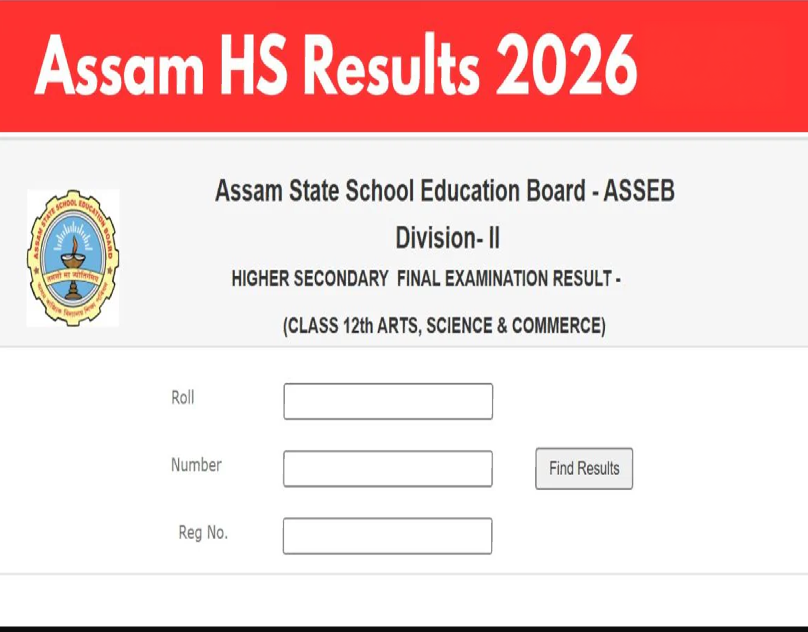
In line with contemporary educational practices, AHSEC has streamlined the process of accessing results through digital platforms. Students will be able to check their scores on official websites such as ahsec.assam.gov.in and resultsassam.nic.in by entering their roll number and other credentials.
Additionally, alternative platforms such as DigiLocker and mobile applications like UPOLOBDHA provide supplementary access, ensuring that students across urban and rural regions can obtain their results without significant barriers.
This digital approach represents a significant advancement in result dissemination. It reduces dependency on physical documentation, minimises delays and enhances accessibility. However, it also places a degree of responsibility on students to ensure accuracy while entering their details and to verify their results through official channels.
Understanding the Marksheet and Evaluation Criteria
Once the results are declared, students will receive provisional marksheets detailing subject-wise scores, total marks, division and qualifying status. It is crucial for candidates to review these details carefully, as any discrepancies must be reported promptly.
To pass the examination, students are required to secure a minimum of 33 per cent marks in each subject, including both theory and practical components where applicable. This benchmark ensures a baseline level of competency while allowing for a degree of flexibility through provisions such as grace marks in exceptional cases.
The marksheet, though provisional in digital form, holds immediate significance for college admissions and application processes. Original certificates are typically issued later through respective institutions.
The Emotional Landscape of Result Day
Beyond statistics and procedures, the announcement of HS results is deeply intertwined with emotional experiences. For many students, it represents the culmination of years of effort, discipline and aspiration. The period leading up to the results is often characterised by anticipation, anxiety and hope. It is important to recognise that academic outcomes, while significant, do not define the entirety of a student’s potential. The increasing awareness around student wellbeing has prompted educators and policymakers to advocate for a more balanced perspective, one that values resilience, adaptability and holistic development alongside academic achievement.
Post-Result Pathways and Choices
The declaration of results opens up a spectrum of opportunities. Students who perform well may pursue undergraduate programmes in universities across India and beyond. For others, the focus may shift towards skill-based courses, vocational training or alternative educational pathways.
The key lies in informed decision-making. Students are encouraged to assess their interests, strengths and long-term goals rather than adhering to conventional hierarchies of academic streams. Guidance from educators, career counsellors and parents can play a crucial role in navigating this transition.
Additionally, provisions for re-evaluation and compartment examinations offer a safety net for students seeking to improve their scores or clear pending subjects. These mechanisms ensure that the system remains flexible and responsive to individual circumstances.
Trends and Historical Context
An examination of past trends reveals a gradual improvement in pass percentages across streams, reflecting incremental progress in educational outcomes. For instance, in previous years, the Science stream has often recorded higher pass percentages compared to Arts and Commerce, though the gap has been narrowing.
Such trends indicate a broader strengthening of academic performance across disciplines. They also highlight the impact of targeted interventions, improved teaching methodologies and increased access to learning resources.
However, it is equally important to interpret these trends with caution. High pass percentages, while encouraging, must be accompanied by a focus on the quality of learning and conceptual understanding.
The Role of Policy and Educational Reform
The performance of students in board examinations is closely linked to the broader educational ecosystem. In recent years, there has been a concerted effort to align school education with the principles of competency-based learning, as outlined in national policy frameworks.
This shift emphasises critical thinking, problem-solving and application-based knowledge, moving away from rote memorisation. While the transition is gradual, its influence is increasingly visible in examination patterns and student performance.
In Assam, initiatives aimed at improving infrastructure, teacher training and digital access have contributed to a more robust educational framework. The HS results, therefore, serve not only as an assessment of individual achievement but also as an indicator of systemic progress.
Challenges That Persist
Despite these advancements, challenges remain. Disparities in access to quality education, particularly between urban and rural areas, continue to influence outcomes. Additionally, the pressure associated with board examinations can have significant implications for student mental health. Addressing these challenges requires a multifaceted approach, one that combines policy interventions with community engagement and institutional support. Ensuring equitable access to resources and fostering a supportive learning environment will be critical in sustaining progress.
Looking Ahead
As Assam prepares for the announcement of the HS Result 2026, the focus extends beyond the immediate outcomes. The results will undoubtedly shape individual futures, but they also offer insights into the evolving dynamics of education in the state. For students, this is a moment of transition, a bridge between past efforts and future aspirations. For educators and policymakers, it is an opportunity to reflect, recalibrate and reinforce the systems that underpin academic success.
Conclusion
The Assam HS Result 2026 stands as a significant milestone in the academic calendar, embodying both achievement and anticipation. It is a reminder of the transformative power of education and the possibilities it unlocks. Yet, beyond the numbers lies a broader narrative, one of growth, resilience and continuous evolution. As students step into the next phase of their journeys, the lessons learned extend far beyond the classroom, shaping not only their careers but also their perspectives on the world. In this sense, the HS results are not merely an endpoint but a beginning, an invitation to explore, to aspire and to realise one’s fullest potential in an ever-changing educational landscape.