CDAC Recruitment 2026: Registration Ends Tomorrow for 805 Posts; Direct Link to Apply Here
The Centre for Development of Advanced Computing (C-DAC) has announced one of the most notable technical recruitment drives of the year, inviting applications for 805 project-based positions across its centres in India. With the application deadline set for 20 February 2026, eligible candidates have only a limited window remaining to complete the online registration process.
For professionals aspiring to work at the forefront of advanced computing, electronics design, artificial intelligence, cybersecurity and high-performance computing, this recruitment initiative represents a significant opportunity. Beyond employment, it offers a chance to contribute directly to national technological advancement in an increasingly digital and innovation-driven landscape.
Understanding the Role of C-DAC
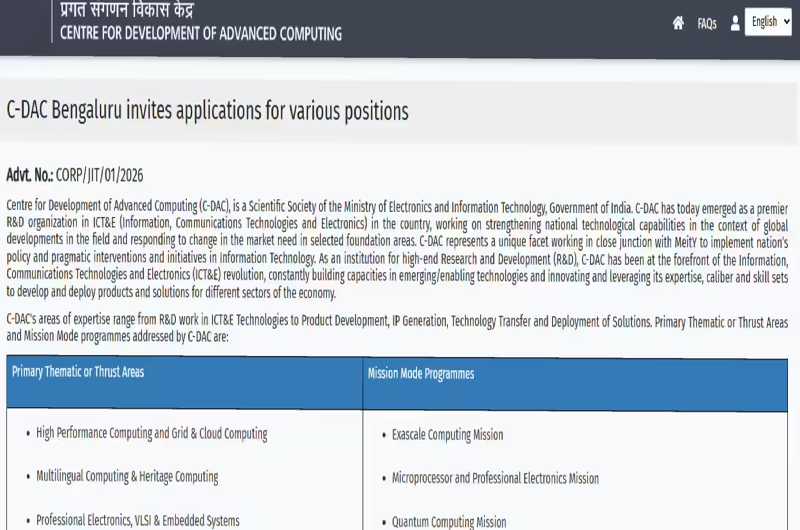
Established as a premier research and development organisation, C-DAC has consistently played a crucial role in strengthening India’s technological ecosystem. From supercomputing initiatives and advanced electronics to AI-driven solutions and cybersecurity frameworks, its projects often align with national priorities in science, defence, industry and digital infrastructure.
Recruitment drives of this scale are therefore not merely hiring exercises; they are strategic investments in human capital aimed at sustaining innovation. Candidates selected through this process will likely engage with cutting-edge projects that shape emerging technological capabilities.
Overview of the 805 Vacancies
The current recruitment campaign encompasses 805 project-based technical and administrative roles. While the exact distribution varies across centres, the principal categories include:
- Project Engineer positions
- Project Technician roles
- Technical support staff
- Administrative and project management personnel
These posts span multiple specialised domains such as:
- Software development and system engineering
- Electronics and hardware design
- Artificial intelligence and machine learning
- Cybersecurity and information assurance
- High-performance computing
- Embedded systems development
- Technical project support and coordination
Most appointments are expected to be project-based and contractual in nature. Such arrangements are common in research organisations where project timelines and funding cycles influence staffing requirements.
Eligibility Criteria: Academic and Professional Expectations
Eligibility varies significantly depending on the position applied for. However, certain broad parameters have been outlined in the official notification.
Engineering and Technical Roles
Candidates applying for Project Engineer posts typically require:
- BE or BTech degrees in relevant disciplines
- ME or MTech qualifications for advanced roles
- MCA degrees for computing-related posts
- Equivalent recognised qualifications
These roles often prioritise candidates with demonstrable technical competence, practical experience, or specialised certifications.
Technician and Support Roles
Applicants for technician or support positions generally need:
- Diplomas in relevant technical fields
- Specific vocational or technical certifications
- Additional skills depending on project requirements
Experience and Age Considerations
Some roles may mandate prior work experience, particularly those involving leadership, research coordination or specialised technical expertise.
Age limits differ post-wise, with statutory relaxations applicable for reserved categories in accordance with government regulations. Candidates are strongly encouraged to review detailed eligibility clauses carefully before submitting applications.
Application Procedure: Online Only
The recruitment process is entirely digital. Offline applications will not be accepted under any circumstances. The application workflow typically involves the following steps:
- Visiting the official C-DAC website
- Accessing the Careers or Recruitment section
- Selecting the CDAC Recruitment 2026 notification
- Completing registration and login formalities
- Filling the application form with accurate details
- Uploading required documents
- Final submission and confirmation download
Accuracy in documentation is critical. Errors in academic details, identity information or supporting documents may lead to rejection during screening or verification stages.
Selection Process: Multi-Stage Evaluation
Although specific procedures vary by post, the selection methodology broadly includes:
- Shortlisting based on qualifications and experience
- Written examinations where applicable
- Technical interviews or personal interviews
- Document verification
Merit, domain expertise and project suitability typically determine final selection. Candidates should prepare thoroughly, particularly in technical domains relevant to their chosen posts.
Project-Based Roles: What Candidates Should Expect
Project-oriented employment often differs from traditional permanent roles. While contracts may be time-bound, such positions frequently provide:
- Exposure to advanced research and development environments
- Opportunities to work with emerging technologies
- Strong professional networking prospects
- Valuable experience for future academic or industry roles
For many professionals, these roles act as career accelerators, especially within specialised technological sectors.
Why This Recruitment Matters
The timing of this recruitment aligns with broader technological shifts. Artificial intelligence, cybersecurity resilience, semiconductor development and high-performance computing are becoming critical national priorities globally.
Organisations like C-DAC play a pivotal role in ensuring technological self-reliance and innovation capacity. Recruiting skilled professionals helps sustain these efforts while creating high-value employment opportunities.
Preparing a Strong Application
Prospective applicants should consider several practical steps before submission:
Review Eligibility Carefully
Ensure academic qualifications, age criteria and experience requirements align precisely with the chosen role.
Update Professional Documentation
Resumes, certificates and identification documents should be current, legible and accurate.
Highlight Relevant Skills
Technical proficiency, project experience, research exposure or certifications can significantly strengthen an application.
Submit Early
Avoid last-minute submissions to minimise technical glitches or documentation errors.
Key Dates at a Glance
- Application start date: 1 February 2026
- Final date to apply: 20 February 2026
- Mode of application: Online only
Meeting deadlines is crucial, as late applications are typically not entertained.
Looking Ahead: Career Prospects After Selection
Professionals who secure positions through this recruitment drive may find themselves working on projects that shape future technological infrastructure. Experience gained in areas like AI, cybersecurity, embedded systems or advanced computing often opens pathways to:
- Senior technical roles
- Research opportunities
- Leadership positions in technology firms
- Academic or consultancy careers
Such exposure can be transformative, particularly for early-career engineers and technology professionals.
Final Thoughts
With the deadline imminent, eligible candidates should act promptly to complete their applications. The CDAC Recruitment 2026 initiative offers not just employment, but an opportunity to engage with some of the most consequential technological projects underway today. For aspirants seeking a meaningful career in advanced computing, engineering innovation or digital transformation, this recruitment drive represents a compelling and timely opportunity. Careful preparation, attention to eligibility criteria and timely submission remain the keys to maximising one’s chances of success.