CTET 2026 Answer Key Out Live: Direct Link, Steps to Raise Objections
CTET 2026 Answer Key Out Live: Direct Link To Check, Steps To Raise Objections
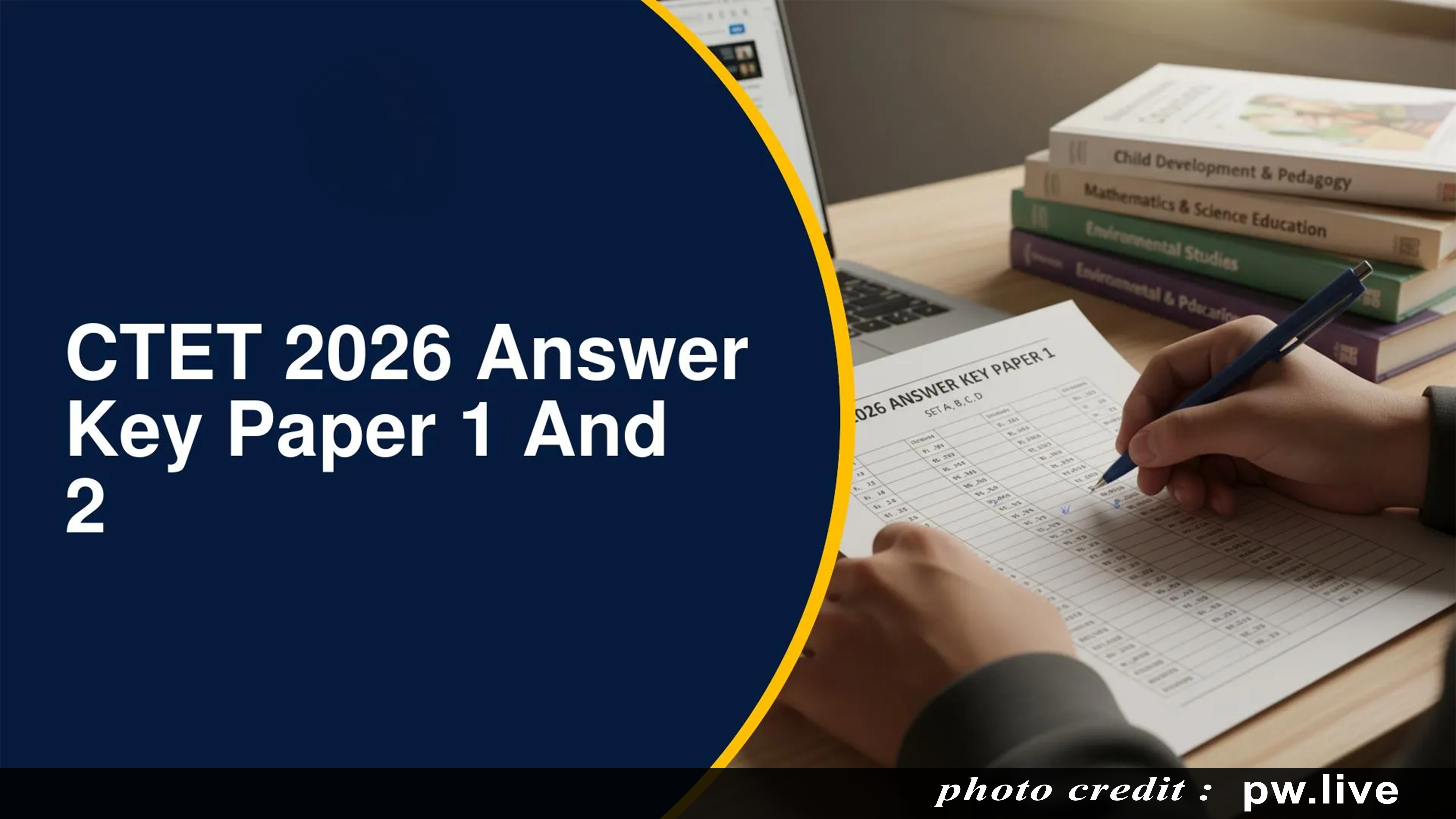
The Central Board of Secondary Education (CBSE) has released the provisional answer key for the Central Teacher Eligibility Test (CTET) February 2026 session, marking an important step in the examination process for aspiring teachers across India. Candidates who appeared for the national eligibility examination can now access the answer key and their OMR response sheets through the official portal, allowing them to evaluate their performance ahead of the declaration of results.
The release of the answer key reflects CBSE’s ongoing commitment to transparency in competitive examinations. By providing candidates with access to the official answers and their recorded responses, the board enables aspirants to verify their attempts and estimate their probable scores. It also offers an opportunity to raise objections if any discrepancies are identified before the final answer key is published.
Understanding the Importance of CTET
The Central Teacher Eligibility Test (CTET) is among India’s most significant national-level eligibility examinations for aspiring school teachers. Conducted by CBSE, the examination determines the eligibility of candidates who wish to teach in central government schools such as Kendriya Vidyalayas, Navodaya Vidyalayas, and other institutions governed by the Union government.
The examination is designed to ensure that teachers possess the essential pedagogical knowledge, subject expertise, and professional competence required for effective classroom teaching. By establishing a uniform national standard for teacher eligibility, CTET plays a vital role in strengthening the quality of school education across the country.
Every year, lakhs of candidates appear for the examination with the goal of qualifying for teaching positions in primary and upper primary schools.
CTET February 2026 Examination Overview
The 21st edition of the CTET examination was conducted in February 2026 across numerous cities in India. The examination took place on February 7 and February 8, covering two distinct papers designed for different teaching levels.
- Paper I is intended for candidates aspiring to teach Classes I to V (primary level).
- Paper II is designed for those who wish to teach Classes VI to VIII (upper primary level).
The examination was conducted in multiple shifts across more than a hundred cities nationwide, reflecting the large number of candidates seeking entry into the teaching profession.
In some centres where administrative issues arose, the examination authorities also organised a re-examination on March 1 to ensure that affected candidates were able to participate fairly in the process.
Provisional Answer Key and Response Sheet Released
With the publication of the provisional answer key, candidates can now review the correct answers for each question asked in the examination. Alongside the answer key, CBSE has also released the scanned images of candidates’ OMR response sheets, which show the answers marked by them during the test.
By comparing their responses with the official answers, candidates can estimate their tentative scores before the final results are announced. This process enables aspirants to gain a clearer understanding of their performance and potential eligibility status.
The provisional answer key represents the initial stage of the evaluation process. Before the results are finalised, candidates are provided with an opportunity to challenge any answers they believe may be incorrect.
Objection Window Open for Candidates
CBSE has opened an online objection window for candidates wishing to challenge the provisional answer key. This mechanism allows candidates to report discrepancies or potential errors in the official answers.
To submit a challenge, candidates must log in to the official CTET portal and select the question they wish to contest. Each objection must be accompanied by valid academic justification or references supporting the candidate’s claim.
A processing fee of ₹1,000 per question is required for submitting a challenge. If the objection is found to be valid during the review process, the fee will be refunded to the candidate.
The objection window is available for a limited period, and candidates are advised to review the answer key carefully and submit challenges within the stipulated deadline. According to available updates, the challenge facility remains open for a few days following the release of the provisional answer key.
Steps to Download the CTET 2026 Answer Key
Candidates who wish to access the provisional answer key and response sheet can follow the steps outlined below:
- Visit the official CTET website: ctet.nic.in.
- On the homepage, click on the link titled “CTET Feb 2026 Answer Key / OMR Response Sheet”.
- Enter the required login credentials, including roll number and date of birth.
- Once logged in, the answer key and scanned OMR sheet will appear on the screen.
- Download and save the documents for future reference.
Candidates are encouraged to download these documents promptly and review them thoroughly before the objection window closes.
How Candidates Can Calculate Their Scores
The provisional answer key enables candidates to estimate their potential scores by applying the official marking scheme. While CTET does not involve negative marking, candidates can calculate their probable score by simply counting the number of correct responses.
The process typically involves:
- Matching each attempted question with the answer provided in the official key
- Counting the number of correct answers
- Calculating the total score based on the marks assigned per question
This preliminary evaluation helps candidates assess their chances of qualifying in the examination.
Qualifying Criteria for CTET
To qualify for the CTET examination, candidates must secure at least 60 per cent marks, although this requirement may vary slightly depending on government guidelines for reserved categories.
Candidates who achieve the qualifying score receive the CTET eligibility certificate, which allows them to apply for teaching positions in central government schools and several state-run institutions that recognise the CTET qualification.
In recent years, the validity of the CTET certificate has been extended to lifetime validity, making it a valuable credential for aspiring educators.
Final Answer Key and Result Declaration
Once the objection window closes, CBSE will review all the challenges submitted by candidates. Subject experts will evaluate the evidence provided and determine whether any revisions to the answer key are necessary.
After this review process is completed, the board will publish the final answer key, which will form the basis for evaluating candidate responses. The CTET results will then be prepared using this revised answer key.
According to current updates, the CTET February 2026 results are expected to be announced later this month, bringing the examination cycle to its conclusion.
Candidates will be able to download their scorecards and eligibility certificates from the official website once the results are declared.
Significance of CTET for Aspiring Teachers
Qualifying in the CTET examination represents an important milestone for individuals aspiring to build a career in school education. The certification serves as an essential requirement for recruitment in many government schools and is widely recognised across the country.
Beyond eligibility, the examination also reflects a candidate’s understanding of child development, pedagogy, subject knowledge, and classroom management, all of which are crucial for effective teaching.
As India continues to prioritise improvements in educational quality, teacher eligibility tests such as CTET play a vital role in ensuring that classrooms are led by competent and well-prepared educators.
The Role of Transparency in Competitive Examinations
The release of the provisional answer key illustrates the increasing emphasis on transparency and accountability in large-scale examinations. By allowing candidates to review official answers and raise objections, examination authorities strengthen trust in the evaluation process.
Such practices also ensure that potential errors are identified and corrected before final results are declared, thereby protecting the interests of candidates and maintaining the credibility of the examination system.
What Candidates Should Do Next
With the provisional answer key now available, candidates should take the following steps:
- Download the answer key and OMR response sheet from the official website
- Carefully verify all attempted questions
- Calculate tentative scores using the official answers
- Submit objections, if necessary, before the deadline
Candidates should also continue monitoring the official CTET portal for updates regarding the final answer key, result declaration, and certificate download process.
Conclusion
The release of the CTET 2026 provisional answer key marks a crucial phase in the examination cycle for thousands of aspiring teachers across India. It offers candidates a valuable opportunity to evaluate their performance, verify their responses, and ensure the accuracy of the evaluation process.
As CBSE reviews the objections and prepares the final answer key, candidates now await the next significant milestone, the announcement of the CTET 2026 results. For many aspirants, qualifying in the examination will open the door to a meaningful and impactful career in teaching, contributing to the development of future generations and the strengthening of India’s educational system.