Education Ministry Reviews Merit Scholarship Scheme at National Workshop
Education Ministry Holds National Workshop on Merit Scholarship Scheme Implementation
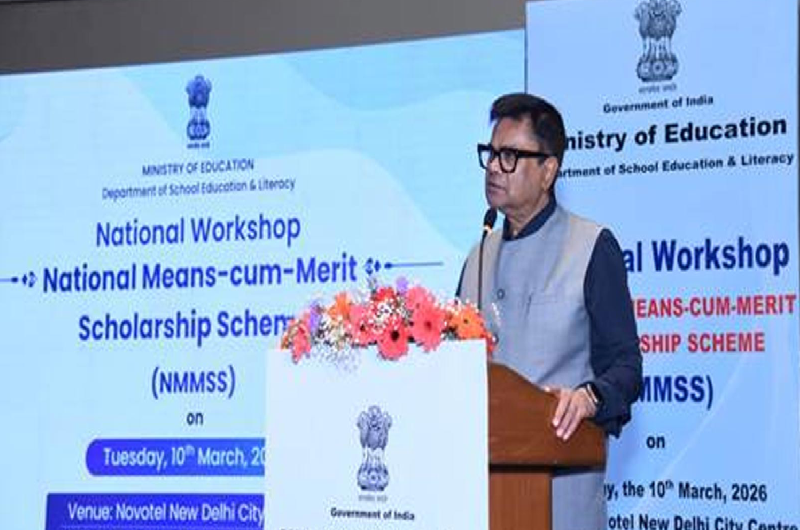
In a renewed effort to strengthen educational equity and reduce dropout rates among students from economically disadvantaged backgrounds, the Government of India’s Ministry of Education recently convened a national workshop to review the implementation of the National Means-cum-Merit Scholarship Scheme (NMMSS). The one-day deliberative session, organised in New Delhi by the Department of School Education and Literacy (DoSEL), brought together officials from states, Union Territories and districts responsible for administering the scholarship programme.
The workshop served as a platform for evaluating the progress of the scheme, identifying challenges in its execution, and exploring strategies to ensure that its benefits reach deserving students across the country. In an educational landscape increasingly focused on inclusivity and access, such initiatives play a crucial role in ensuring that financial constraints do not obstruct the academic aspirations of meritorious learners.
Strengthening the Implementation of NMMSS
The National Means-cum-Merit Scholarship Scheme occupies a pivotal position in India’s effort to promote continuity in secondary education. Designed to support academically capable students from economically weaker sections, the scheme aims to prevent dropout at a critical stage of schooling.
During the workshop, officials reviewed the implementation of the programme at various administrative levels, with particular emphasis on strengthening coordination between the Centre, states and local authorities. The deliberations also addressed ways to streamline the operational processes involved in identifying eligible candidates and ensuring the timely disbursement of scholarship benefits.
Chaired by the Secretary of the Department of School Education and Literacy, the meeting underscored the importance of efficient governance mechanisms in translating policy objectives into tangible educational outcomes. The participants examined the current performance of states and Union Territories, focusing on areas where implementation could be further improved.
The Vision Behind the Scholarship Scheme
Introduced as a central sector initiative, the National Means-cum-Merit Scholarship Scheme was conceived to support bright students who might otherwise discontinue their education due to financial hardship. The scheme targets students studying in government, government-aided, and local body schools - institutions that serve a large proportion of India’s socio-economically vulnerable communities.
Each year, one lakh fresh scholarships are awarded to selected students entering Class IX, enabling them to continue their studies through the secondary stage. The scholarship is renewable for Classes X, XI and XII, provided the student maintains the required academic performance.
The financial assistance provided under the scheme is ₹12,000 per year, intended to support students with educational expenses and encourage them to remain in school.
By alleviating financial pressures, the scheme seeks to create an enabling environment where academic potential can flourish irrespective of economic circumstances.
Addressing the Challenge of School Dropouts
One of the principal motivations behind the NMMSS initiative is the persistent challenge of school dropouts during the transition from elementary to secondary education. Across many regions, students, particularly those from economically disadvantaged families, often discontinue their studies after completing Class VIII due to financial constraints or competing household responsibilities.
Scholarship programmes such as NMMSS play a critical role in addressing this challenge by providing sustained financial support during the secondary stage of education. The scheme acts not only as an incentive for students to remain enrolled but also as a reassurance to families that education can be a viable and worthwhile investment.
During the workshop, policymakers emphasised the need to strengthen awareness about the scheme among eligible students and parents. In many instances, limited awareness or procedural complexities can prevent deserving students from accessing the benefits available to them.
Aligning the Scheme with National Education Policy 2020
The deliberations at the workshop were also closely aligned with the broader vision articulated in the National Education Policy (NEP) 2020. The policy emphasises the importance of inclusive and equitable education, recognising that financial barriers often hinder the academic progression of capable students.
By strengthening the implementation of scholarship schemes, the government aims to ensure that the goals of NEP 2020, particularly those relating to access, equity and quality are realised at the grassroots level.
Officials at the workshop discussed the integration of scholarship initiatives with other educational reforms, ensuring that financial support mechanisms complement improvements in curriculum, pedagogy and infrastructure.
Focus Areas of the Workshop
The national workshop focused on several key aspects of scholarship implementation, reflecting both administrative and educational priorities.
1. Improved Quota Utilisation
One of the major topics of discussion was the effective utilisation of the scholarship quotas allocated to each state and Union Territory. In some regions, a significant number of scholarships remain unutilised due to procedural delays or lack of awareness among eligible students.
By examining state-wise performance data, officials sought to identify strategies for ensuring that the full quota of scholarships is awarded each year.
2. Ensuring Continuity of Scholarships
Another important concern discussed during the workshop was the continuity of scholarships for students progressing from Class IX to Class XII. While many students receive the initial scholarship, administrative hurdles sometimes affect the renewal process.
Officials emphasised the need for smoother coordination between schools and state authorities to ensure uninterrupted support for beneficiaries.
3. Strengthening Monitoring Mechanisms
Participants also discussed the importance of robust monitoring systems to track the progress of scholarship recipients. Such mechanisms can help authorities assess the scheme’s impact and identify areas for improvement.
Role of States and District Authorities
The effective implementation of scholarship programmes relies heavily on collaboration between different levels of government. While the scheme is designed at the national level, its success ultimately depends on state and district authorities responsible for identifying beneficiaries and managing the selection process.
The workshop brought together officials who oversee the scheme at these levels, creating an opportunity for dialogue and knowledge sharing. Participants discussed best practices adopted by different states and explored ways to replicate successful models across the country.
Such collaborative forums are essential for ensuring that policy implementation remains responsive to regional challenges and administrative realities.
Expanding Access Through Awareness
One of the recurring themes during the discussions was the need to enhance awareness about the scholarship scheme among students, parents and school administrators.
In many cases, eligible students are unable to apply for the scholarship simply because they are unaware of the opportunity. Expanding outreach through schools, community networks and digital platforms can significantly increase participation in the programme.
Officials also highlighted the role of teachers and school administrators in guiding students through the application process and ensuring that they meet the eligibility requirements.
The Broader Impact of Scholarship Programmes
Scholarship initiatives such as the National Means-cum-Merit Scholarship Scheme have far-reaching implications for India’s educational landscape. By supporting talented students from disadvantaged backgrounds, the programme contributes to a more equitable and inclusive education system.
Beyond financial assistance, the scholarship also serves as a recognition of academic merit. For many students, receiving the award becomes a source of motivation and confidence, encouraging them to pursue higher education and professional aspirations.
Over time, such initiatives contribute to the development of a skilled and knowledgeable workforce capable of driving national progress.
Looking Ahead
The national workshop organised by the Ministry of Education underscores the government’s commitment to strengthening scholarship programmes and ensuring their effective implementation across the country.
As policymakers continue to refine the mechanisms for identifying beneficiaries, disbursing funds and monitoring outcomes, the NMMSS programme is expected to play an increasingly significant role in supporting students at the secondary stage of education.
By addressing financial barriers and recognising academic potential, the scheme embodies a broader vision of educational empowerment, one in which talent and determination, rather than economic circumstance, determine a student’s future.
For thousands of young learners across India, such initiatives represent not merely financial assistance but the promise of opportunity, continuity and hope.