GATE 2026 Scorecard Released: Check Scores, AIR and PSU, MTech Opportunities
In a development of considerable importance to India’s vast community of engineering graduates and aspirants, the Indian Institute of Technology (IIT) Guwahati has officially released the scorecards for the Graduate Aptitude Test in Engineering (GATE) 2026. This milestone marks a crucial stage in the academic and professional journeys of thousands of candidates who appeared for one of the country’s most competitive examinations.
The release of the scorecards follows the earlier declaration of results on March 19, and candidates may now access their detailed performance metrics through the GATE Online Application Processing System (GOAPS) portal by logging in with their enrolment credentials.
While the announcement itself may appear procedural, its implications extend far beyond the immediate act of downloading a document. The GATE scorecard serves as a gateway, quite literally, to advanced academic opportunities, professional pathways, and long-term career trajectories.
Understanding the Significance of the GATE Scorecard
The GATE examination has long been regarded as a benchmark of academic excellence within the fields of engineering and science. Its scorecard is not merely a reflection of performance in a single examination; rather, it encapsulates a candidate’s standing within a national pool of highly competitive peers.
Each scorecard contains several critical components: the marks obtained by the candidate, the normalised GATE score (scaled out of 1000), the qualifying marks for the respective discipline, and the candidate’s All India Rank (AIR).
These elements collectively provide a comprehensive picture of a candidate’s academic positioning. The AIR, in particular, plays a decisive role in admissions to postgraduate programmes and in recruitment processes undertaken by Public Sector Undertakings (PSUs). In this sense, the scorecard functions not only as an academic record but also as a credential with significant professional currency.
Accessing the Scorecard: A Digital Process
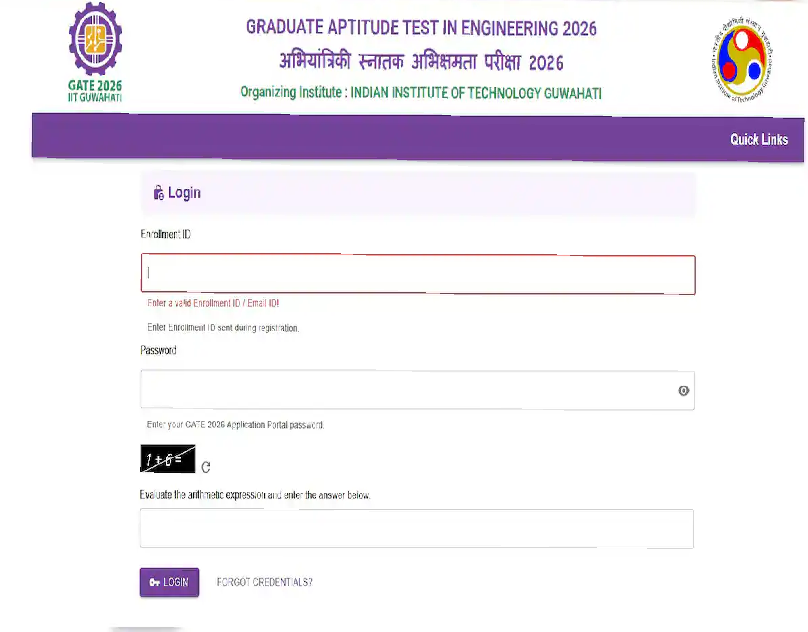
The process of obtaining the GATE 2026 scorecard reflects the broader digitisation of examination systems in India. Candidates are required to visit the official GOAPS portal, enter their enrolment ID and password and download the scorecard directly from their dashboard.
This streamlined procedure ensures accessibility and efficiency, enabling candidates across the country to retrieve their results without logistical barriers. At the same time, it underscores the importance of digital literacy and secure access to personal credentials, both of which have become integral to modern academic processes.
The emphasis on downloading and preserving the scorecard for future use is particularly noteworthy. As a document that will be required during admissions and recruitment, its safekeeping assumes considerable importance.
The Examination Timeline and Context
The release of the scorecards must be understood within the broader timeline of the GATE 2026 examination cycle. The examination itself was conducted over multiple sessions on February 7, 8, 14, and 15, reflecting its scale and complexity.
Following the examination, the results were announced on March 19, accompanied by the final answer key. The publication of the scorecards thus represents the culmination of a multi-stage process that includes examination, evaluation, verification and result declaration.
This structured timeline highlights the meticulous nature of large-scale national examinations, where accuracy and fairness are paramount. The release of the final answer key alongside the results ensures transparency, allowing candidates to understand the basis of their scores.
Validity and Long-Term Utility
One of the most significant aspects of the GATE 2026 scorecard is its extended validity. The scores obtained in the examination will remain valid for a period of three years from the date of result declaration.
This extended validity offers candidates a degree of flexibility in planning their academic and professional futures. Rather than being constrained to immediate decisions, candidates may choose to apply for postgraduate programmes or job opportunities over multiple admission cycles.
The three-year validity also underscores the enduring relevance of the GATE examination as a measure of academic capability. It allows institutions and employers to rely on the score as a consistent indicator of a candidate’s proficiency over time.
A Gateway to Higher Education
For many candidates, the primary significance of the GATE scorecard lies in its role in facilitating admissions to postgraduate programmes, particularly Master of Technology (MTech) courses offered by premier institutions such as the Indian Institutes of Technology (IITs), National Institutes of Technology (NITs) and other leading universities.
Admission to these programmes is highly competitive, and the GATE score serves as a critical criterion in the selection process. A strong performance can open doors to some of the most prestigious academic environments in the country, providing access to advanced research facilities, expert faculty and a network of accomplished peers.
In this context, the scorecard is not merely a record of past achievement but a key that unlocks future opportunities.
Employment Prospects and PSU Recruitment
Beyond academia, the GATE scorecard holds substantial value in the employment domain, particularly in recruitment by Public Sector Undertakings. Many PSUs use GATE scores as a primary criterion for shortlisting candidates for various technical positions.
This dual utility - academic and professional enhances the significance of the examination and its associated scorecard. For candidates, it represents a convergence point where educational attainment meets career aspiration.
The inclusion of detailed metrics such as AIR and qualifying marks further aids employers in assessing candidates’ relative performance, thereby streamlining the recruitment process.
The Importance of Accuracy and Vigilance
While the process of downloading the scorecard is straightforward, candidates are advised to exercise caution and ensure that they access the document only through official channels. The reliance on the GOAPS portal as the authorised platform reinforces the need for vigilance in an environment where misinformation and unofficial links can occasionally surface.
Maintaining the integrity of personal data and ensuring the authenticity of downloaded documents are essential considerations in the digital age. Candidates must therefore remain attentive to official communications and updates.
A Moment of Reflection for Aspirants
For candidates, the release of the GATE 2026 scorecard is both an end and a beginning. It marks the conclusion of months, if not years of preparation, characterised by rigorous study, practice and perseverance. At the same time, it heralds the start of a new phase, where decisions regarding higher education and career paths come to the fore.
The scorecard, in this sense, becomes a point of reflection. It offers an opportunity for candidates to assess their performance, identify strengths and areas for improvement and chart a course for the future.
Broader Implications for the Education System
The GATE examination and its associated processes also hold broader implications for India’s education system. As a national-level assessment, it plays a critical role in standardising evaluation across diverse institutions and disciplines.
The emphasis on transparency, digital access, and detailed performance metrics reflects a commitment to fairness and accountability. At the same time, the examination’s widespread acceptance by academic institutions and employers underscores its credibility and relevance.
The release of the scorecards thus serves as a reminder of the central role that such examinations play in shaping educational and professional pathways.
Conclusion
The announcement of the GATE 2026 scorecards by IIT Guwahati represents a pivotal moment for engineering aspirants across the country. By providing detailed insights into performance and enabling access to a wide range of opportunities, the scorecard stands as a cornerstone of the academic and professional landscape.
From facilitating admissions to prestigious postgraduate programmes to serving as a gateway to employment in leading public sector organisations, its significance is both immediate and enduring. The structured process of examination, evaluation, and scorecard release reflects the robustness of the system, while the digital accessibility of results highlights the ongoing evolution of educational practices.
For candidates, the journey does not end with the download of a scorecard. Rather, it begins anew, with aspirations refined, opportunities unfolding and the promise of future achievement taking shape.