IB MTS Result 2026 Out at MHA.gov.in, Tier 2 Next Steps
IB MTS Result 2026 Released at Mha.gov.in: What It Means for Aspirants and the Road Ahead
The announcement of the IB MTS Result 2026 marks a crucial milestone in one of the most sought-after government recruitment processes in India. Released by the Intelligence Bureau under the Ministry of Home Affairs, the result has brought both relief and anticipation for thousands of candidates who appeared for the Tier 1 examination earlier this year. With the merit list now available on the official portal, shortlisted candidates are set to progress to the next phase of the selection process. This development is not merely procedural; it underscores the competitive and multi-layered nature of recruitment within India’s intelligence framework. For aspirants, the release of the results is both an achievement and a gateway to further evaluation stages that will ultimately determine final selection.
Understanding the IB MTS Recruitment Framework
The Intelligence Bureau’s Multi-Tasking Staff (MTS) recruitment is designed to identify candidates capable of handling a range of operational and support functions within the organisation. Conducted under the aegis of the Ministry of Home Affairs, the recruitment process is known for its rigour and structured evaluation.
The selection process typically unfolds across multiple stages, beginning with a written examination (Tier 1), followed by subsequent assessments such as Tier 2 examinations and document verification. Each stage serves as a filtering mechanism, ensuring that only candidates who meet the prescribed standards progress further.
The Tier 1 examination, which forms the basis for the recently declared result, evaluates candidates on general awareness, reasoning ability, numerical aptitude and language proficiency. Performance in this stage is critical, as it determines eligibility for advancement to Tier 2.
Release of the IB MTS Result 2026
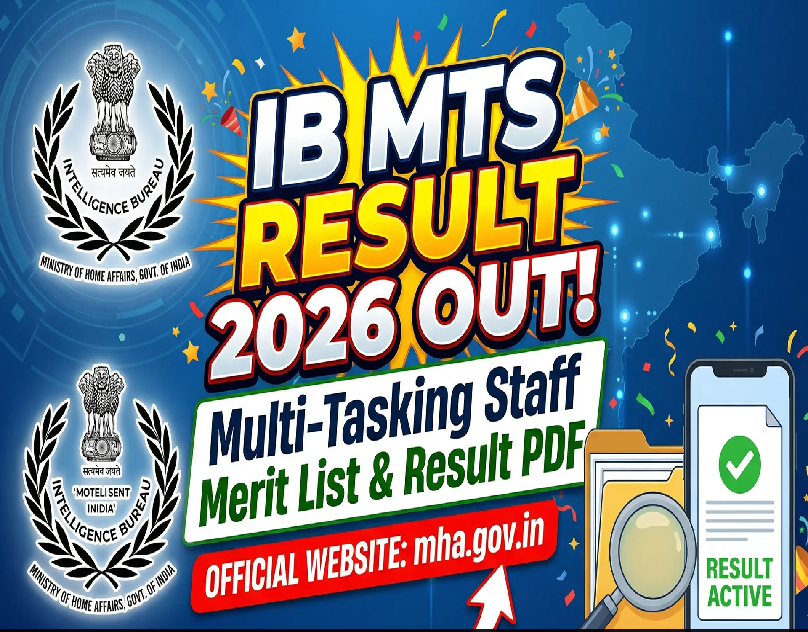
The IB MTS Result 2026 was officially released on April 13, 2026, and is accessible through the Ministry of Home Affairs’ official website. The result has been published in PDF format, listing the roll numbers of candidates who have successfully qualified for the next stage.
Unlike scorecards that provide individual marks, the merit list format requires candidates to search for their roll numbers within the document. This approach is standard for many government recruitment processes and ensures transparency while maintaining procedural efficiency.
The result has been prepared based on a defined marking scheme and qualifying criteria, ensuring that only those who meet the required benchmarks proceed to Tier 2.
How Candidates Can Access Their Results
Accessing the IB MTS Result 2026 is a straightforward process, although candidates must follow specific steps to ensure accuracy. The result is hosted on the official website of the Ministry of Home Affairs and candidates are required to navigate to the recruitment or results section to locate the relevant link.
Once the PDF is downloaded, candidates can use search functions to find their roll numbers. This method not only simplifies the process but also allows candidates to retain a copy of the result for future reference.
Candidates should verify all details carefully and ensure that there are no discrepancies. In case of any issues, they are encouraged to contact the relevant authorities promptly.
Significance of Shortlisting for Tier 2
Being shortlisted for the Tier 2 examination is a noteworthy achievement, given the highly competitive nature of the IB MTS recruitment process. With a large number of applicants vying for limited positions, progressing beyond the initial stage reflects both preparation and performance.
Tier 2 serves as the next critical phase in the selection process. While Tier 1 primarily evaluates cognitive and academic competencies, Tier 2 often focuses on descriptive or skill-based assessments, depending on the nature of the post.
Candidates who advance to this stage must demonstrate not only subject knowledge but also clarity of expression, analytical ability and overall aptitude for the role.
The Role of Document Verification
Following the Tier 2 examination, candidates who meet the required standards will be called for document verification. This stage is essential to confirm the authenticity of the information provided during the application process.
Document verification typically involves the submission of educational certificates, identity proofs and other relevant documents. Any discrepancies at this stage can lead to disqualification, making it imperative for candidates to ensure accuracy and completeness in their documentation.
The inclusion of this stage highlights the importance of procedural integrity in government recruitment processes.
Preparation Strategies for the Next Stage
For candidates who have qualified for Tier 2, the focus now shifts to preparation for the upcoming examination. Given the transition from objective to potentially descriptive assessments, candidates may need to adapt their preparation strategies accordingly.
Key areas of focus should include:
- Enhancing writing skills and clarity of expression
- Strengthening subject knowledge and conceptual understanding
- Practising previous years’ question papers and mock tests
- Staying updated with official notifications and guidelines
Effective preparation at this stage can significantly influence outcomes, making it essential for candidates to approach the process with diligence and discipline.
Broader Implications for Government Job Aspirants
The release of the IB MTS Result 2026 also reflects broader trends in government recruitment in India. With increasing competition and evolving evaluation methods, aspirants are required to adopt more structured and strategic approaches to preparation.
The emphasis on multi-stage selection processes ensures a comprehensive assessment of candidates, covering both academic knowledge and practical skills. This approach aligns with the growing need for efficiency, reliability and competence in public service roles.
Moreover, the transparency associated with merit lists and structured evaluation frameworks enhances trust in the recruitment process.
Challenges and Expectations
While the release of results is a moment of accomplishment for many, it also brings challenges for those who did not qualify. The competitive nature of such examinations means that not all candidates can progress to the next stage.
For those who did not make the cut, the result should be viewed as a learning opportunity. Analysing performance, identifying areas of improvement and refining preparation strategies can pave the way for success in future attempts.
For shortlisted candidates, the challenge lies in maintaining momentum and preparing effectively for the subsequent stages.
The Importance of Official Communication
Candidates are strongly advised to rely solely on official sources for information regarding the recruitment process. The Ministry of Home Affairs’ website remains the primary platform for updates, including examination schedules, admit cards and instructions for document verification. Staying informed through official channels ensures accuracy and helps candidates avoid misinformation, which can be detrimental during critical stages of the recruitment process.
Looking Ahead
As the IB MTS recruitment process progresses, the focus will now shift to the Tier 2 examination and subsequent stages. For candidates who have advanced, this is an opportunity to move closer to securing a position within one of India’s most prestigious intelligence agencies. The journey from application to final selection is undoubtedly demanding, but it also offers the promise of a rewarding career in public service. The IB MTS role, while often understated, plays a vital part in supporting the operational efficiency of the Intelligence Bureau.
Conclusion
The release of the IB MTS Result 2026 marks a significant juncture in the recruitment cycle, setting the stage for the next phase of evaluation. For successful candidates, it represents both recognition and responsibility, a testament to their efforts and a call to prepare for the challenges ahead. As the process unfolds, the emphasis will remain on merit, transparency, and procedural integrity. For aspirants, the journey continues, guided by determination, preparation and the aspiration to serve the nation. In the broader context of government recruitment, such developments highlight the evolving standards and expectations that define public service today. Whether progressing to the next stage or preparing for future opportunities, candidates remain at the heart of this dynamic and competitive landscape.