IIT Delhi Launches Industry Membership Programme for Companies
IIT Delhi Launches Industry Membership Programme to Deepen Corporate-Academia Collaboration
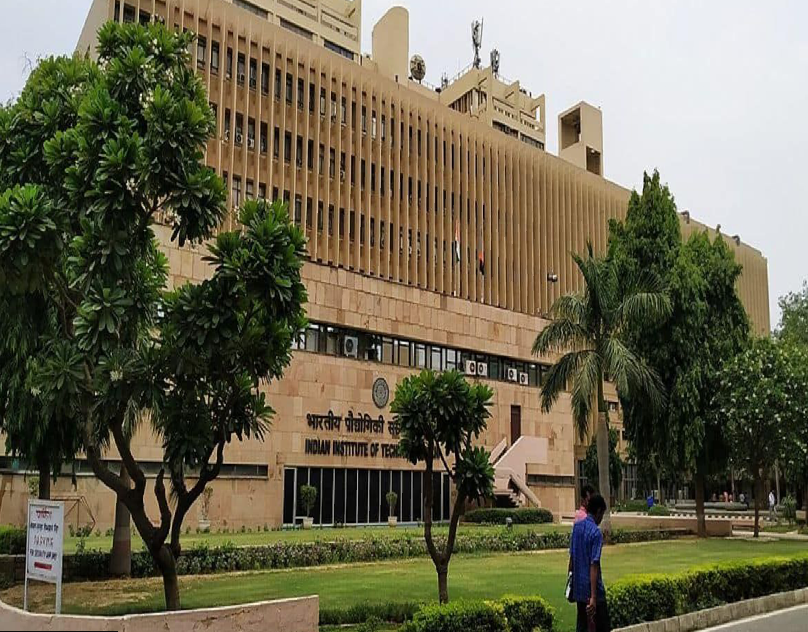
The Indian Institute of Technology Delhi has unveiled a new Industry Membership Programme aimed at building structured, long-term partnerships between academia and the corporate sector. At a time when India is increasingly emphasising indigenous innovation, research commercialisation and technology-led growth, the initiative represents a significant institutional effort to bridge the long-discussed gap between universities and industry.
Introduced through the institute’s Corporate Relations Office, the programme offers companies tiered access to IIT Delhi’s research ecosystem, faculty expertise, innovation initiatives, laboratories, patents and institutional resources. Officials at the institute describe the initiative as more than a conventional industry outreach exercise. Instead, it has been framed as a sustained engagement model designed to create deeper collaboration in research, development and technological innovation.
The launch arrives at a moment when higher education institutions across India are under increasing pressure to demonstrate practical impact beyond classroom teaching and academic publications. Industry, meanwhile, is seeking stronger research partnerships capable of supporting product development, advanced manufacturing, artificial intelligence, sustainability and emerging technology sectors. IIT Delhi’s latest initiative appears to position itself directly at the intersection of these evolving priorities.
A Structured Corporate Engagement Model
Unlike short-term partnerships or isolated research agreements, the new programme has been designed as a formal membership-based framework. Participating organisations can choose among three tiers: Silver, Gold and Platinum, with annual membership fees ranging from ₹10 lakh to ₹50 lakh.
According to information released by the institute, the Silver membership has been priced at ₹10 lakh annually, Gold at ₹20 lakh and Platinum at ₹50 lakh per annum. Each category provides varying levels of engagement with IIT Delhi’s academic and research ecosystem.
The membership structure has been crafted to give companies access to:
- Faculty expertise and research consultation
- Institutional laboratories and technical infrastructure
- Thematic research collaborations
- Innovation and technology development projects
- Patents and intellectual property outputs
- Customised training programmes
- Leadership forums and CXO roundtables
- Corporate Social Responsibility (CSR) engagement platforms
The institute has also stated that participating organisations will receive early access to selected patents, technologies and research outputs emerging from ongoing academic work.
This aspect is particularly notable because it reflects a growing institutional recognition that universities must increasingly function not only as centres of education but also as engines of applied innovation and commercial research.
The Expanding Importance of Industry-Academia Partnerships
For decades, one of the persistent criticisms directed at India’s higher education system has been the disconnect between academic research and industrial application. Universities often generated theoretical research with limited commercial translation, while industries frequently relied on imported technologies or in-house development systems.
Over the past several years, however, this dynamic has begun to shift. Institutions such as the Indian Institute of Technology Delhi have increasingly focused on technology transfer, startup incubation, interdisciplinary innovation and collaborative R&D ecosystems.
The new Industry Membership Programme appears to be part of this broader transformation. Rather than restricting engagement to occasional consultancy projects, the initiative encourages long-term collaboration across multiple institutional dimensions.
This model mirrors trends seen internationally, where leading research universities maintain deep strategic partnerships with corporations in sectors ranging from healthcare and semiconductor technology to clean energy and advanced computing.
For Indian institutions, however, the stakes are particularly high. As the country attempts to strengthen domestic manufacturing capabilities and reduce dependence on imported technologies, research universities are increasingly expected to contribute directly to national innovation capacity.
IIT Delhi’s Growing Innovation Ecosystem
The launch of the programme also reflects IIT Delhi’s steadily expanding role within India’s innovation and entrepreneurship landscape. Over the years, the institute has developed multiple research and technology-transfer platforms intended to support collaboration between academia, startups, government agencies and industry.
One of the most prominent among these is the Foundation for Innovation and Technology Transfer (FITT), IIT Delhi’s industry interface organisation. FITT has played a major role in facilitating technology commercialisation, patent management, startup incubation and research partnerships.
According to institutional data available through FITT, IIT Delhi has already facilitated more than 2,100 industry collaborations, filed over 1,600 intellectual property rights, and supported hundreds of technology transfer and development projects.
The institute has also developed specialised innovation hubs, incubation ecosystems, and research parks focused on translating academic research into practical applications. These initiatives align closely with India’s broader policy emphasis on innovation-led economic growth.
Recent collaborations further illustrate this direction. Earlier this year, IIT Delhi signed a memorandum of understanding with Jindal Steel to establish a Centre of Excellence focused on structural steel research and sustainable infrastructure technologies.
Similarly, the institute has partnered with industry players in areas such as automotive lighting technologies, advanced manufacturing systems and translational research initiatives.
Viewed within this context, the new membership programme appears less like a standalone initiative and more like an institutional consolidation of IIT Delhi’s expanding industry-facing strategy.
Research Commercialisation and India’s Innovation Ambitions
The timing of the initiative is also significant. India’s higher education and research ecosystem is undergoing a gradual but visible transformation driven by national priorities around innovation, self-reliance and technological competitiveness.
Government initiatives promoting “Atmanirbhar Bharat”, deep-tech entrepreneurship, semiconductor manufacturing, AI research and indigenous defence technologies have increased expectations from academic institutions. Universities are no longer expected merely to produce graduates; they are increasingly being evaluated on their capacity to generate commercially viable research and intellectual property.
Within this environment, industry partnerships have become central to institutional strategy.
Professor Jayant Jain, Dean of Corporate Relations at IIT Delhi, stated that the programme aims to support “meaningful research collaborations” and “innovation-driven partnerships” across sectors. He further noted that the initiative aligns with India’s broader objective of becoming a global knowledge and technology powerhouse.
The emphasis on sustained engagement is particularly important. Historically, many university–industry collaborations in India remained transactional or short-term in nature. IIT Delhi’s new framework suggests an attempt to create more integrated and enduring relationships capable of supporting larger research agendas over time.
Why Companies May Find the Programme Attractive
For industry participants, the programme offers more than a symbolic academic association. Access to advanced research infrastructure, specialised faculty expertise, and emerging technologies can significantly reduce research costs and accelerate innovation timelines.
This becomes especially relevant in sectors where rapid technological evolution demands constant experimentation and interdisciplinary collaboration. Startups and mid-sized companies, in particular, often lack the research infrastructure required for advanced prototyping or scientific testing.
Partnerships with institutions like IIT Delhi may therefore offer strategic advantages, including:
- Access to highly specialised laboratories
- Collaboration with researchers across disciplines
- Opportunities for talent recruitment and internship pipelines
- Participation in frontier technology research
- Faster translation of academic discoveries into industrial applications
The programme’s inclusion of curated forums, leadership discussions and thematic engagement platforms also reflects the growing importance of knowledge networks within innovation ecosystems.
The Broader Shift in Indian Higher Education
The emergence of such programmes also signals a wider institutional shift occurring across India’s top universities and technical institutes. Increasingly, higher education institutions are repositioning themselves as active participants in economic and technological development rather than isolated academic centres.
This transition is evident in several parallel developments:
- Expansion of startup incubation centres
- Increased patent filing activity
- Interdisciplinary innovation hubs
- Corporate-sponsored research chairs
- International industry collaborations
- Government-supported deep-tech initiatives
For students and researchers, this changing environment may create expanded opportunities for applied research, entrepreneurship and industry exposure. Online discussions among IIT Delhi students frequently highlight growing engagement with research projects, innovation programmes, and startup ecosystems within the institute.
At the same time, experts caution that successful industry-academia collaboration requires careful balance. Universities must preserve academic independence and long-term scientific inquiry even while pursuing commercially relevant research.
The challenge for institutions such as IIT Delhi will therefore lie in ensuring that industrial collaboration strengthens academic quality rather than narrowing research priorities exclusively towards immediate commercial outcomes.
A Strategic Institutional Direction
The launch of IIT Delhi’s Industry Membership Programme ultimately reflects more than administrative expansion. It signals a strategic institutional direction shaped by changing national priorities, technological competition and evolving expectations from higher education.
As India attempts to strengthen its position within the global innovation economy, research universities are increasingly becoming central actors in that transformation. Structured partnerships between academia and industry are likely to become more common, more competitive and more influential in shaping future research ecosystems.
For IIT Delhi, the initiative represents an effort to institutionalise long-term collaboration rather than rely on fragmented engagement. Whether the model succeeds at scale will depend on how effectively it translates partnerships into meaningful research outcomes, technological innovation and societal impact.
What is already clear, however, is that the boundaries separating universities, industry and innovation ecosystems are steadily becoming less rigid. In that evolving landscape, programmes such as this may well become defining features of India’s next phase of higher education and technological development.