India to Establish 100 New Sainik Schools Under PPP Model to Strengthen Military Education
Reimagining Military Education: The Expansion of Sainik Schools Under the PPP Model
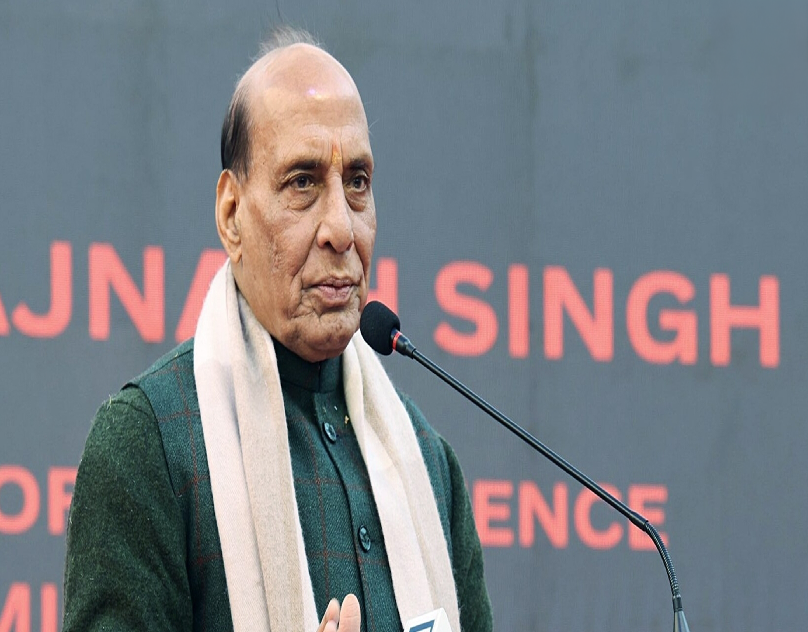
In a significant development that underscores India’s evolving educational and strategic priorities, Rajnath Singh has announced the establishment of 100 new Sainik Schools across the country under a Public-Private Partnership (PPP) model. The announcement, made during the Diamond Jubilee celebrations of Sainik School Ghorakhal, marks a decisive shift in how the nation intends to cultivate discipline, leadership, and national service among its youth.
This initiative is not merely an expansion of educational infrastructure; it is emblematic of a broader vision, one that integrates education with nation-building, and academic development with character formation.
The Legacy and Purpose of Sainik Schools
To appreciate the magnitude of this decision, it is essential to understand the foundational ethos of Sainik Schools. Conceived in the early 1960s, these institutions were established to address regional disparities in the officer cadre of the armed forces and to prepare young students for entry into premier military academies such as the National Defence Academy.
Over the decades, Sainik Schools have evolved into centres of holistic education. While their original mandate was closely aligned with defence services, their contemporary role extends far beyond producing military officers. They aim to nurture well-rounded individuals equipped with intellectual rigour, physical endurance, and a strong moral compass.
As Rajnath Singh himself emphasised, these institutions are not solely intended to channel students into the armed forces; rather, they serve as crucibles for leadership across sectors.
The PPP Model: A Strategic Shift
Traditionally, Sainik Schools were fully government-funded institutions, managed under the aegis of the Sainik Schools Society. The move to establish 100 new schools under a PPP framework signals a strategic recalibration.
Under this model, partnerships will be forged with private entities, non-governmental organisations, and state governments. This collaborative approach is expected to accelerate expansion, enhance resource mobilisation, and introduce operational efficiencies that may not always be feasible within a purely public system.
The PPP model also aligns with broader national policy directions that encourage private sector participation in public welfare initiatives. By leveraging private expertise alongside governmental oversight, the initiative aims to maintain the distinctive ethos of Sainik Schools while ensuring scalability and sustainability.
Importantly, this is not an entirely unprecedented experiment. The government had already initiated a phased rollout of partnership-mode Sainik Schools in recent years, with several institutions functioning successfully under this hybrid framework.
Strengthening Nation-Building Through Education
At the heart of this initiative lies a deeper philosophical commitment to cultivate citizens who are not only academically proficient but also imbued with values essential for nation-building.
The announcement was accompanied by a parallel decision to expand the National Cadet Corps (NCC), increasing its strength from 17 lakh to 20 lakh cadets. This expansion reflects a concerted effort to instill discipline, leadership, and civic responsibility among a larger segment of the youth population.
By integrating formal education with structured training programmes such as the NCC, the government is attempting to create a cohesive ecosystem that nurtures both intellectual and civic competencies.
Such initiatives acquire even greater significance in the context of contemporary security challenges. As highlighted by the Defence Minister, modern warfare transcends conventional battlefields, encompassing cyber, economic, and informational domains.
In this evolving landscape, the need for a disciplined, aware, and resilient citizenry becomes paramount.
Inclusivity and the Admission of Girls
One of the most transformative aspects of recent reforms in Sainik Schools has been the inclusion of girls. Historically male-dominated, these institutions have opened their doors to female cadets, marking a significant step towards gender parity.
Described as a “historic and revolutionary step,” this policy has already begun to yield encouraging results. The performance of girl cadets has effectively dispelled lingering scepticism, demonstrating that capability knows no gender.
The inclusion of girls is not merely a symbolic gesture; it represents a substantive commitment to expanding opportunities and redefining societal expectations. In doing so, it reinforces the broader national narrative of women’s empowerment and participation in all spheres of public life.
The Broader Educational Implications
The expansion of Sainik Schools under the PPP model has far-reaching implications for India’s educational landscape.
Firstly, it introduces an alternative model of schooling that integrates academic excellence with physical training, discipline, and leadership development. In an era where education is often criticised for being overly examination-centric, Sainik Schools offer a more holistic paradigm.
Secondly, the initiative may serve as a catalyst for innovation in school education. The involvement of private stakeholders could bring in new pedagogical approaches, improved infrastructure, and enhanced accountability mechanisms.
Thirdly, it broadens access to quality education, particularly in regions that may lack well-established institutions. By establishing schools across diverse geographies, the programme aims to democratise opportunities and reduce regional disparities.
Challenges and Considerations
While the initiative is undoubtedly ambitious, its success will depend on careful implementation and sustained oversight.
One of the primary challenges lies in maintaining uniform standards across institutions operating under different management structures. The distinctive ethos of Sainik Schools, characterised by discipline, rigour and a sense of purpose, must not be diluted in the process of expansion.
Additionally, the PPP model necessitates a delicate balance between public accountability and private autonomy. Clear guidelines, robust monitoring mechanisms, and transparent governance structures will be essential to ensure that educational objectives are not compromised.
Affordability is another critical consideration. While Sainik Schools have traditionally been accessible to students from diverse socio-economic backgrounds, the involvement of private partners may introduce cost-related complexities. Ensuring equitable access will be vital to preserving the inclusive character of these institutions.
A Vision for the Future
The decision to establish 100 new Sainik Schools reflects a forward-looking vision, one that recognises the interdependence of education, national security, and societal development.
In an increasingly complex and interconnected world, the qualities nurtured within Sainik Schools - discipline, resilience, leadership and a sense of duty are not confined to the military domain. They are equally relevant in civilian life, contributing to the creation of responsible, capable, and engaged citizens.
As India aspires to position itself as a global leader, investments in human capital will play a decisive role. Initiatives such as this signal a recognition that the foundations of national strength lie not only in economic or military power, but in the character and capabilities of its people.
Conclusion
The expansion of Sainik Schools under the PPP model represents a significant milestone in India’s educational and strategic journey. It is an initiative that bridges tradition and innovation, combining the legacy of military-oriented education with the dynamism of public-private collaboration.
While challenges remain, the potential benefits are substantial. If implemented with foresight and integrity, this initiative could redefine the contours of school education in India, creating institutions that are not only centres of learning, but also nurseries of leadership and nation-building.
In the final analysis, the success of this endeavour will be measured not merely by the number of schools established, but by the calibre of individuals they produce - citizens who are prepared, as the Defence Minister aptly urged, to face every eventuality with courage, competence, and conviction.