Indian Navy Agniveer SSR MR Exam 2026 Dates Announced
Indian Navy Agniveer SSR & MR Exam 2026: Key Dates Announced, Admit Cards to Follow Soon
The announcement of examination schedules in the defence recruitment landscape often signals more than administrative progress; it marks the beginning of a decisive chapter for thousands of aspirants seeking to serve the nation. The Indian Navy’s confirmation of written examination dates for the Agniveer SSR (Senior Secondary Recruit) and MR (Matric Recruit) 2026 recruitment cycle is one such moment of consequence. With the written test forming the first stage of selection and admit cards expected to be released shortly, the process now enters a critical phase for candidates across the country.
A Defining Moment for Aspirants
For many young individuals, entry into the armed forces is not merely a career ambition but a deeply rooted aspiration shaped by ideals of discipline, service and national pride. The Agniveer scheme, introduced under the Agnipath framework, has significantly redefined recruitment into the armed forces by offering a structured yet time-bound opportunity for youth participation. The release of the examination schedule provides long-awaited clarity, allowing candidates to channel their preparation efforts with renewed focus. After weeks of anticipation following the application process, aspirants can now align their study plans with a defined timeline, transforming uncertainty into actionable preparation.
Examination Schedule and Format
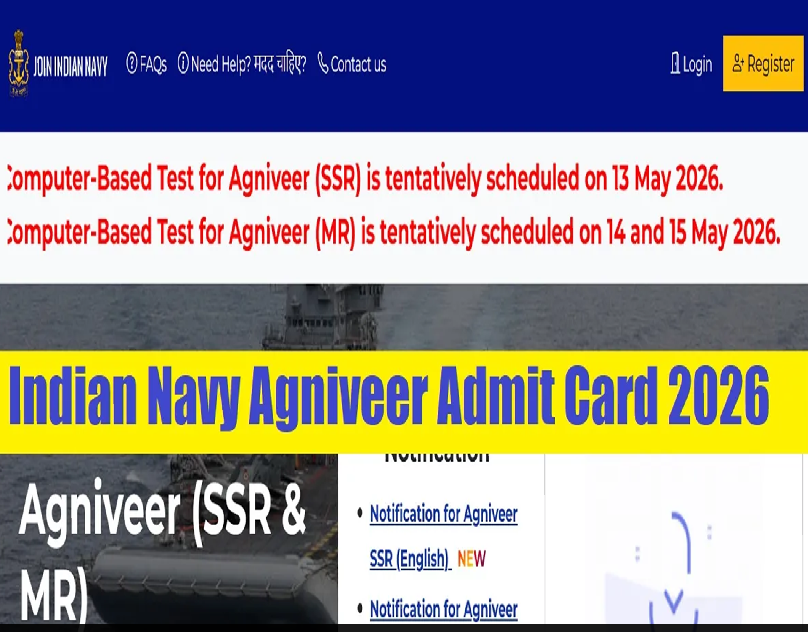
According to available updates, the written examination for Agniveer SSR is expected to be conducted around mid-May 2026, with the MR examinations scheduled shortly thereafter over multiple days. These tests will be conducted in a computer-based format, ensuring standardisation, efficiency and transparency in evaluation.
The written examination, commonly referred to as the Indian Navy Entrance Test (INET), serves as the initial screening stage. It evaluates candidates across a range of parameters, including academic knowledge, reasoning ability and general awareness. This stage is critical, as only those who qualify proceed to the subsequent phases of the recruitment process.
The structured scheduling reflects the Navy’s commitment to maintaining a streamlined recruitment calendar while ensuring adequate preparation time for candidates. For aspirants, this phase represents the culmination of months of preparation and the threshold of opportunity.
Admit Cards: The Gateway to Examination
With the examination dates now confirmed, attention inevitably shifts to the release of admit cards, which are expected shortly on the official recruitment portal. The admit card is not merely a procedural requirement; it is an essential document that enables entry into the examination hall and provides critical details such as the date, time and venue of the test.
Typically, admit cards are issued in the weeks leading up to the examination. Candidates are required to download them using their login credentials and ensure that all information is accurate. The document must be carried to the examination centre along with valid identification, as failure to do so can result in disqualification.
The importance of this step cannot be overstated. It represents the transition from preparation to participation, marking the formal commencement of the selection journey.
Understanding the Agniveer Framework
The Agniveer recruitment initiative has introduced a transformative model for military enlistment in India. Under this scheme, selected candidates are enrolled for a four-year tenure, during which they undergo rigorous training and contribute to the operational strength of the armed forces.
At the end of this period, a proportion of candidates, based on merit and organisational requirements, may be retained in the regular cadre, while others transition into civilian life with valuable skills and experience. This dual pathway reflects a broader vision of creating a disciplined, skilled and adaptable workforce that contributes both within and beyond the defence sector.
For candidates, the Agniveer scheme offers not only the opportunity to serve but also a platform for personal and professional development.
Selection Process: A Multi-Stage Evaluation
The written examination is only the first step in a comprehensive selection process designed to identify candidates who meet the high standards required for naval service. Following the written test, shortlisted candidates are required to undergo a Physical Fitness Test (PFT) and a medical examination.
The PFT assesses endurance, strength and overall physical capability, attributes essential for life in the armed forces. Meanwhile, the medical examination ensures that candidates meet stringent health criteria, reflecting the operational demands of naval service.
This multi-tiered approach ensures that selection is based not only on academic proficiency but also on physical fitness and overall suitability for the role.
Eligibility and Academic Criteria
The eligibility requirements for SSR and MR roles are aligned with the nature of responsibilities associated with each category. Candidates applying for SSR positions are generally required to have completed their 10+2 education with Mathematics and Physics, reflecting the technical demands of the role.
In contrast, MR roles, such as chefs, stewards and hygienists, require candidates to have passed Class 10 from a recognised board. These distinctions ensure that recruitment is both targeted and efficient, matching educational qualifications with operational needs.
Additionally, candidates must fall within the prescribed age bracket, typically between 17.5 and 21 years, ensuring that recruits meet the physical and developmental requirements of military training.
The Role of Preparation in the Final Phase
With the examination dates now officially announced, candidates enter a crucial phase of preparation. This period demands not only academic revision but also strategic planning and disciplined execution.
Given the computer-based nature of the examination, familiarity with digital testing formats can provide a significant advantage. Regular practice through mock tests and timed assessments can help candidates develop accuracy, speed and confidence.
Equally important is the emphasis on physical fitness. As the selection process extends beyond written assessment, candidates must maintain a balanced routine that supports both mental and physical readiness.
Digital Transformation and Transparency
The recruitment process for the Agniveer scheme reflects a broader shift towards digital governance. From application submission to admit card downloads and result announcements, the entire process is conducted online, ensuring efficiency and accessibility. This digital integration enhances transparency, reduces administrative delays, and ensures that candidates from diverse geographical locations have equal access to information and opportunities. It also aligns with the government’s broader push towards technology-driven public services.
The Broader Significance of Defence Recruitment
The Agniveer recruitment drive is emblematic of a larger transformation within India’s defence framework. By introducing flexibility, skill development and structured training, the initiative seeks to create a more agile and future-ready armed force. For young aspirants, the opportunity to join the Indian Navy represents more than employment; it is an avenue for personal growth, national service and the acquisition of skills that extend beyond military life. The structured nature of the programme, combined with the prestige associated with naval service, continues to attract a wide and diverse pool of candidates.
Navigating the Days Ahead
As the examination approaches, candidates are encouraged to adopt a balanced and composed approach. While the competitive nature of the process may induce pressure, maintaining focus and adhering to a structured preparation strategy can significantly enhance performance.
Adequate rest, effective stress management, and a positive mindset are equally critical components of preparation. The days leading up to the examination should be utilised for revision and consolidation rather than the introduction of new topics.
Regularly checking official updates remains essential, particularly for information regarding admit card release, examination centres and any changes to the schedule.
Conclusion
The release of written examination dates for the Indian Navy Agniveer SSR and MR 2026 recruitment cycle marks a pivotal moment in the selection process. With admit cards expected soon, aspirants now stand on the threshold of opportunity, where preparation meets possibility. For thousands of candidates across India, this examination represents the culmination of sustained effort and the beginning of a journey defined by discipline, service and national commitment. As the process unfolds, it underscores not only the aspirations of individuals but also the evolving vision of India’s defence recruitment system, one that seeks to combine tradition with transformation in shaping the future of the armed forces.