India’s 2026 Bihar Board Intermediate Exams: A Defining Academic Milestone Underway
As winter recedes and the academic calendar reaches its most intense phase, the Bihar School Examination Board (BSEB) has formally launched the 2026 Intermediate Annual Examinations, one of the largest school-level assessments in India with aspirants across the state converging at examination centres to embark on a fortnight that could shape their academic and professional futures.
This year’s board papers, spanning disciplines from the sciences to the humanities and vocational streams, began on 2 February 2026. Scheduled to continue until 13 February, the examinations epitomise a tradition that has, for decades, been both a rite of passage for students and a logistical challenge for educational administrators.
A Vast and Diverse Cohort
The scale of the Bihar Board Intermediate examinations cannot be overstated. For 2026, more than 13.17 lakh students have registered, with candidates spread across rural hamlets and urban centres alike. This encompasses a roughly equal gender distribution, reflecting sustained progress in educational inclusion for both girls and boys.
To accommodate this vast cohort, the board has designated 1,762 examination centres across the state, outfitted to handle the rigours of administering high-stakes assessments at such a scale.
Security, Integrity and Conduct
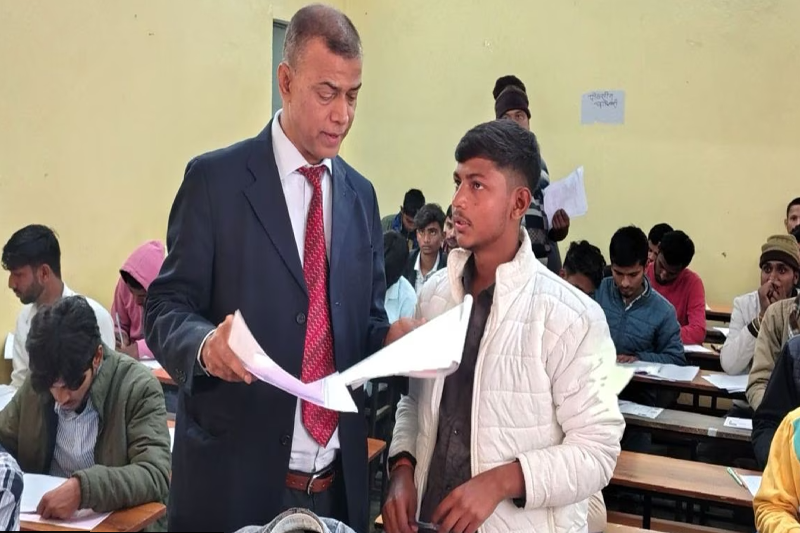
Board officials have underlined their commitment to maintaining the credibility and fairness of this high-visibility examination. In Patna, as elsewhere, centres have instituted two-level frisking, strict entry controls, and the deployment of magistrates, police personnel and invigilators to ensure orderly conduct throughout the examination schedule.
The board’s focus on integrity is a response to longstanding concerns about malpractices in educational assessments, a challenge faced by many large examination authorities. The measures go beyond mere supervision: CCTV cameras and videography have been installed in halls to deter cheating and provide real-time oversight. Candidates found with unauthorized items or engaging in malpractice face immediate expulsion and further disciplinary action.
Model Centres: A Focus on Safety and Comfort
One of the most distinctive features of this year’s examination logistics is the creation of 152 model examination centres, i.e - specialised hubs designed with female candidates’ safety and comfort in mind. Each of these centres is staffed primarily by women, from invigilators to administrative personnel, and equipped with amenities such as dedicated help desks, safe drinking water, and other facilities intended to create a supportive environment.
The deployment of these centres marks a significant administrative step in addressing gender-specific challenges that female students have historically reported, including congestion, long walks to examination sites, and safety concerns during peak hours. In urban districts such as Patna, the establishment of these model centres has been especially noteworthy, bolstering both participation and parental confidence.
Day-by-Day Progress and Examination Format
The Intermediate examinations are structured in two daily shifts: a morning session from 9:30 am to 12:45 pm, and an afternoon session from 2:00 pm to 5:15 pm. Students are given an additional 15 minutes at the start of each session to glance over the question papers, i.e - a practice adopted to ease their acclimatisation with the paper before writing begins.
On the opening day, papers such as Biology (for science streams) and Philosophy and Economics (for arts and commerce) were conducted, with more than 5 lakh students sitting for examinations across the state.
By the second day, nearly 7.63 lakh candidates appeared for subjects including Mathematics, Political Science and Vocational foundations, illustrating the staggered and systematic approach taken by the board to manage assessments efficiently.
Such organisation is indispensable when managing an examination of this magnitude — not merely because of numbers, but also due to the diverse set of subjects and streams involved.
Administrative Oversight and Leadership
Throughout the examinations, BSEB leadership has been visibly engaged in on-site inspections and dialogues with centre superintendents and local governance officials. BSEB Chairperson Anand Kishore, in particular, has led several visits to examination venues in Patna and other districts to assess conditions first-hand and reassure all stakeholders of effective oversight.
Officials report that the examinations have, thus far, unfolded in a largely peaceful and orderly manner. Instances of impersonation or rule violations, although taken seriously, have been comparatively few, and the board has reiterated its zero-tolerance policy on infractions.
The Stakes: Beyond School Certification
The Intermediate Board examinations hold far more significance than the immediate certification of 12th-grade completion. For lakhs of students, their performance in these exams influences university admissions, scholarship opportunities, and professional choices, i.e - whether in fields such as engineering, medicine, the humanities or vocational careers.
Success in these exams can open doors to elite institutions in India and abroad, while setbacks, such as underperformance or failure, may lead students to seek compartmental exams, re-evaluations, or alternative academic pathways. The board typically announces results in March, allowing families and students to plan for higher education or remedial options well ahead of admissions cycles.
Societal Reflections and Broader Educational Trends
The Bihar Board examinations are a mirror to broader socio-educational trends across India. Over the years, Bihar has made significant strides in expanding access to education, with rising enrolment figures and a narrowing gender gap. Yet the challenges remain formidable: ensuring quality instruction, equitable access for rural and marginalised communities, and bridging the gap between secondary education and employability or higher learning.
In this context, the 2026 Intermediate exams are not merely academic rites; they embody the aspirations of families, educators, and policymakers alike. The sheer scale of coordination, involving lakhs of invigilators, hundreds of centres and elaborate logistical planning, i.e - underscores the administrative heft required to uphold educational standards in a populous region.
Conclusion
As the examination period advances towards its conclusion on 13 February, the mood across Bihar is one of intense focus. Students are immersed in their preparations, parents watch with quiet hopes, and educators pore over administrative feedback from the field.
The success of the 2026 Bihar Board Intermediate exams - in terms of organisational efficiency, fairness, safety and academic integrity, will soon be measured not just by the figures in the result announcements, but by the confidence it inspires among future cohorts of learners.
For the tens of thousands who have sat their exams already, and those yet to complete their papers, this fortnight has been, and will continue to be, a crucible of effort, resilience and determination, a testament to the enduring significance of academic achievement in the lives of India’s youth.