Karnataka Assembly to Form Panel for KPSC Reforms Amid Recruitment Irregularities Allegations
Karnataka Assembly panel to be formed for reforming KPSC amid allegations of irregularities
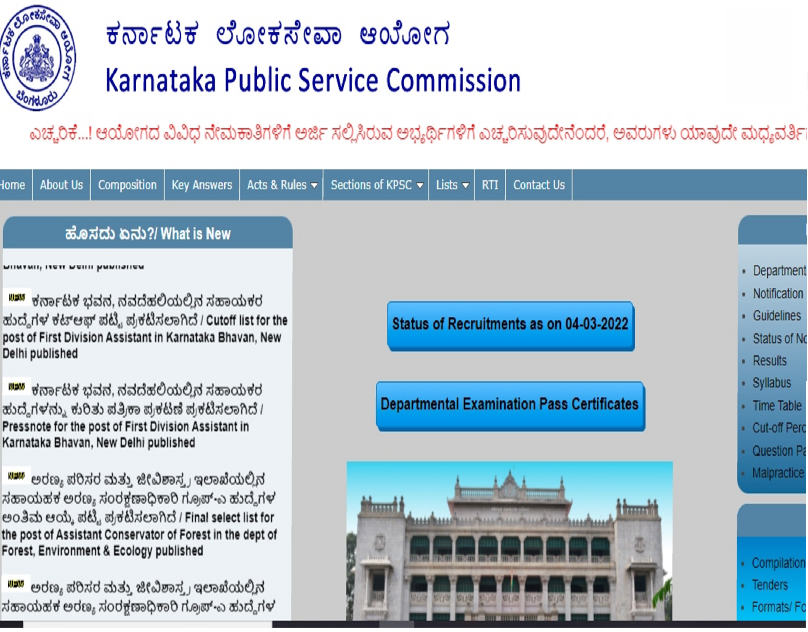
In a development that signals both urgency and intent, the Karnataka Legislative Assembly has announced the formation of a House committee to examine and recommend reforms to the Karnataka Public Service Commission (KPSC). This decision emerges against the backdrop of mounting allegations of irregularities in recruitment processes, which have cast a shadow over the credibility of one of the state’s most vital constitutional bodies.
Rising Concerns Over Recruitment Integrity
The immediate trigger for this intervention lies in the controversies surrounding recent recruitment examinations, particularly for gazetted probationers in Group A and B categories. Aspirants and observers have raised concerns over suspicious patterns in the results, including instances where candidates from the same examination centres or with consecutive roll numbers secured selection. Such anomalies have prompted widespread speculation regarding the fairness of the evaluation process.
For thousands of candidates who invest years in preparation, these concerns are far from abstract. They strike at the core of trust, trust that merit, rather than manipulation, determines outcomes. The erosion of this trust has not only led to protests and public outcry but has also compelled the government to acknowledge the gravity of the situation.
Government’s Response and Acknowledgement
During deliberations in the Assembly, state authorities conceded that the perception of irregularity has significantly affected aspirants’ confidence. The government’s decision to constitute a House committee reflects an understanding that restoring credibility requires more than incremental adjustments, it demands a comprehensive review of the system itself.
By placing the matter before a legislative committee, the government has opted for a consultative and transparent approach. The committee is expected to examine both immediate concerns and deeper structural issues, thereby ensuring that reform efforts are not merely reactive but transformative.
The Mandate of the House Committee
The newly proposed committee will play a central role in identifying systemic weaknesses within the KPSC and recommending corrective measures. Its scope is likely to include evaluating recruitment procedures, examining administrative frameworks and suggesting mechanisms to enhance accountability.
Importantly, the committee’s work is expected to extend beyond addressing isolated allegations. It will seek to understand recurring inefficiencies that have historically hindered the commission’s functioning. In doing so, it aims to establish a more resilient and credible recruitment ecosystem.
Introducing a Structured Recruitment Calendar
One of the most significant proposals under consideration is the introduction of a fixed annual recruitment calendar. Inspired by the practices of national-level institutions, this initiative seeks to bring predictability and order to the recruitment process.
At present, irregular schedules and delays often leave candidates in a prolonged state of uncertainty. A structured calendar would not only streamline operations but also allow aspirants to plan their preparation more effectively. It represents a shift towards a more disciplined and transparent system, where timelines are adhered to with consistency.
Towards a Five-Year Recruitment Plan
Complementing the annual calendar is the proposal for a comprehensive five-year recruitment strategy. Under this model, government departments would be required to forecast their staffing needs in advance, enabling the commission to plan examinations and selections accordingly.
This forward-looking approach is designed to reduce the reliance on ad hoc recruitment drives, which are often prone to delays and inconsistencies. By aligning recruitment with long-term administrative requirements, the government aims to create a more efficient and predictable system that benefits both institutions and aspirants.
Streamlining Group C Recruitment
Reforms are also expected to address the recruitment process for Group C posts, which constitute a significant portion of government vacancies. Unlike higher-level positions, these roles typically do not involve interviews, relying instead on written examinations and merit-based selection.
The government has indicated that strict timelines will be enforced for these recruitments, ensuring that vacancies are filled promptly. Simplifying procedures and minimising delays in this segment could significantly improve the overall efficiency of the system and alleviate one of the most persistent concerns among job seekers.
Learning from Established Best Practices
Another dimension of the reform agenda involves benchmarking the KPSC’s processes against those of more efficient examination bodies. Institutions such as the Karnataka Examinations Authority (KEA) have demonstrated the effectiveness of standardised procedures and robust question banks in conducting large-scale examinations.
Adopting similar practices could help the KPSC enhance both its operational efficiency and its credibility. The integration of technology, coupled with systematic planning, has the potential to minimise errors and ensure greater consistency in outcomes.
Governance and Structural Reforms
The question of governance within the KPSC has also come under scrutiny. Observers have pointed to the relatively large number of commission members as a potential factor affecting administrative efficiency. In response, the government has proposed a gradual reduction in the number of members, aligning the commission’s structure with established norms.
However, given the constitutional status of the KPSC, such changes cannot be implemented overnight. Members can only be removed through a formal impeachment process, necessitating a phased approach to structural reform. This underscores the complexity of balancing legal safeguards with the need for administrative efficiency.
Political Reactions and Demand for Accountability
The issue has elicited strong reactions across the political spectrum. While the government has outlined a roadmap for reform, opposition parties have called for more immediate action, including the establishment of a Special Investigation Team (SIT) to probe the alleged irregularities.
These demands reflect a broader concern that systemic reforms must be accompanied by accountability for past lapses. Without a thorough investigation and appropriate action against those responsible, critics argue, efforts to restore trust may fall short.
Balancing Caution with Reform
In navigating this sensitive situation, the government has adopted a cautious stance, particularly regarding demands to annul examination results. Officials have emphasised the importance of evidence-based decision-making, noting that any action affecting candidates’ futures must be grounded in verified findings.
Preliminary assessments, including the review of examination records and surveillance footage, have not conclusively established malpractice. Nevertheless, authorities have indicated their willingness to pursue further inquiries where necessary, balancing the need for justice with the imperative of fairness.
Broader Implications for Public Recruitment
The current controversy highlights a larger challenge faced by public recruitment systems across India: ensuring integrity at scale. With lakhs of aspirants competing for limited opportunities, even minor irregularities can have disproportionate consequences.
In this context, the reforms proposed for the KPSC assume significance beyond the immediate situation. They represent an attempt to strengthen institutional frameworks and safeguard the principles of meritocracy and transparency that underpin public service.
Restoring Trust Among Aspirants
For many young individuals, government employment is not merely a career choice but a pathway to stability and public contribution. When recruitment processes are called into question, the resulting disillusionment can have far-reaching social implications.
Restoring trust, therefore, must remain at the centre of all reform efforts. This requires not only procedural changes but also a commitment to transparency, accountability and timely communication with aspirants.
The Road Ahead
The formation of a House committee marks an important step in Karnataka’s journey towards administrative reform. It reflects a recognition that systemic challenges require collective deliberation and sustained effort.
However, the success of this initiative will depend on its execution. Recommendations must translate into tangible changes, supported by political will and institutional commitment. Leveraging technology, strengthening oversight mechanisms and ensuring adherence to timelines will be critical in achieving the desired outcomes.
Conclusion
The decision to constitute a House committee for reforming the KPSC is both timely and necessary. It addresses immediate concerns while laying the groundwork for long-term transformation. If implemented effectively, the proposed reforms have the potential to restore credibility, enhance efficiency and reaffirm the principles of fairness and merit that are essential to public service.
In the final analysis, the true measure of success will lie in the restoration of confidence among aspirants, confidence that the system is just, transparent and worthy of their aspirations.