‘Limited Specialisations, Scarce Internships’: Why Fewer Engineers Are Choosing MTech, According to the IIT Council
The steady decline in the number of engineering graduates opting for Master of Technology (MTech) programmes has been a growing concern for policymakers and academic leaders in India. Now, the Council of Indian Institutes of Technology (IIT Council) has formally acknowledged the depth of the problem, pointing to limited specialisation choices and inadequate industry exposure as key deterrents. In response, the council has outlined a roadmap for wide-ranging reforms across all IITs, with a 12-month timeline to initiate change.
The IIT Council, the apex coordination body for the country’s premier engineering institutions, discussed the issue in detail during its meeting in August last year. The deliberations followed a presentation by the director of IIT Hyderabad, who shared the findings of a committee constituted to examine structural weaknesses in the MTech ecosystem. The council’s conclusions offer a candid assessment of why postgraduate engineering education is losing relevance for many BTech graduates.
Narrow specialisations in a changing tech landscape
One of the most significant issues identified by the council is the limited availability of relevant and contemporary MTech specialisations. Many existing programmes continue to be organised around rigid, traditional disciplines that do not reflect how engineering and technology roles are evolving in industry.
As industry increasingly demands interdisciplinary skill sets—combining, for instance, computer science with electronics, materials science with manufacturing, or data analytics with domain expertise—MTech curricula at many institutions have struggled to keep pace. Council members noted that this mismatch makes postgraduate study less attractive to graduates who already possess an undergraduate degree and are keen to acquire skills with immediate market relevance.
In effect, for many BTech graduates, an MTech degree no longer offers a clear value proposition in terms of career advancement, specialisation depth, or exposure to emerging technologies.
Internships: the missing link in MTech programmes
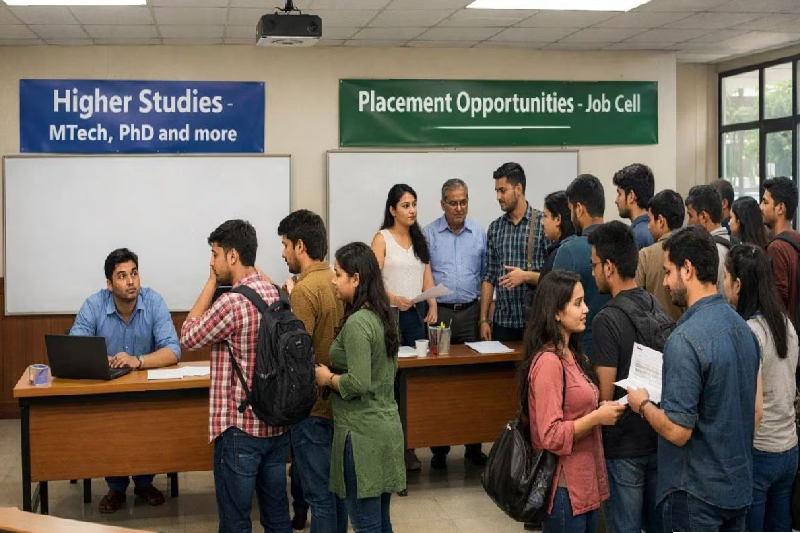
Equally critical is the lack of structured internship opportunities within MTech programmes. Unlike postgraduate engineering models in several other countries—where industry exposure is an integral part of the curriculum—Indian MTech students often complete their degrees with little or no hands-on industrial experience.
The council highlighted that this gap has a direct impact on employability. Graduates without meaningful exposure to real-world engineering problems, industrial workflows, or applied research environments are at a disadvantage in the job market. This, in turn, reduces the perceived return on investment of an MTech degree, especially when compared to entering the workforce directly after a BTech.
To address this, the council strongly recommended making industry internships a compulsory component of MTech programmes across IITs. Embedding internships into the academic structure, members argued, would help bridge the gap between theory and practice while strengthening ties between institutes and industry.
The numbers tell a worrying story
The council’s concerns are reinforced by national enrolment data. Earlier reporting highlighted that nearly two out of every three MTech seats in engineering colleges across India remain vacant. Data from the All India Council for Technical Education (AICTE) shows that MTech admissions have dropped to a seven-year low of around 45,000 students over the last two academic years.
This decline is particularly stark when viewed against historical trends. Postgraduate engineering intake peaked at over 1.85 lakh seats in 2017–18 but fell steadily to about 1.24 lakh by 2023–24. Actual enrolments declined from nearly 66,900 students in 2018–19 to roughly 45,000 in 2023–24.
In contrast, undergraduate engineering has shown a stronger recovery. Although intake dipped during the pandemic years—from about 14.75 lakh seats in 2017–18 to 12.55 lakh in 2021–22—it rebounded to 13.49 lakh by 2023–24. Enrolments rose sharply after 2020–21, climbing from around 7–7.5 lakh to more than 11.2 lakh by 2023–24. The divergence underscores that the issue lies not with engineering education overall, but specifically with the postgraduate pathway.
A dual-track vision for MTech reform
As part of its proposed overhaul, the IIT Council discussed introducing a dual-track MTech model. Under this approach, one track would be explicitly industry-oriented, focusing on applied projects, problem-solving, and mandatory internships. The second track would be research-focused, designed to feed into PhD programmes and long-term academic or R&D careers.
The council believes such a structure could better serve both private sector needs and national research goals, offering students clearer choices aligned with their career aspirations. Alongside this, members discussed launching multidisciplinary and blended-mode MTech programmes to reflect technological convergence and expand access beyond conventional formats.
Formally, the council has recommended that each IIT redesign its MTech curriculum in line with its institutional strengths and long-term vision. To guide this process, four to five broad, discipline-based, industry-dominated committees will be constituted by the Standing Committee of the IIT Council. These committees will monitor progress and report back to the council within the proposed 12-month reform window.
Research funding and systemic constraints
The discussions also revealed deeper structural constraints affecting postgraduate education. Council members pointed to inadequate research support and the lack of sufficient overheads in research grants, which place financial pressure on IITs. These limitations affect the maintenance of modern laboratories, industry collaboration, and the overall quality of postgraduate training.
Another concern raised was faculty recruitment. The council noted the need for more equitable recognition of both academic and industry experience when hiring faculty, as this has a direct bearing on mentoring quality and applied learning—particularly at the postgraduate level.
Beyond curriculum: a broader reset
Importantly, the council framed MTech reform as part of a larger reset of higher education beyond the undergraduate level. Deliberations extended to doctoral education and the alignment of curricula with national priorities such as artificial intelligence, quantum technologies, cybersecurity, and semiconductors.
The minutes of the meeting emphasised that improving MTech participation will require more than syllabus changes. It will depend on reshaping how postgraduate education, research, and industry engagement intersect within the IIT system.
To this end, the council recommended taking up funding issues with agencies such as the National Research Foundation and developing new ways to assess research impact beyond academic publications. Industry-linked projects, patents, and technology development were highlighted as key outcome measures.
Strengthening the IIT Council secretariat with research expertise, creating a common management information system to track research and innovation outcomes, and aligning funding support with demonstrated impact were also discussed as essential steps. Together, these measures aim to rebuild the research backbone that underpins meaningful postgraduate education—and restore confidence in the MTech pathway for India’s next generation of engineers.