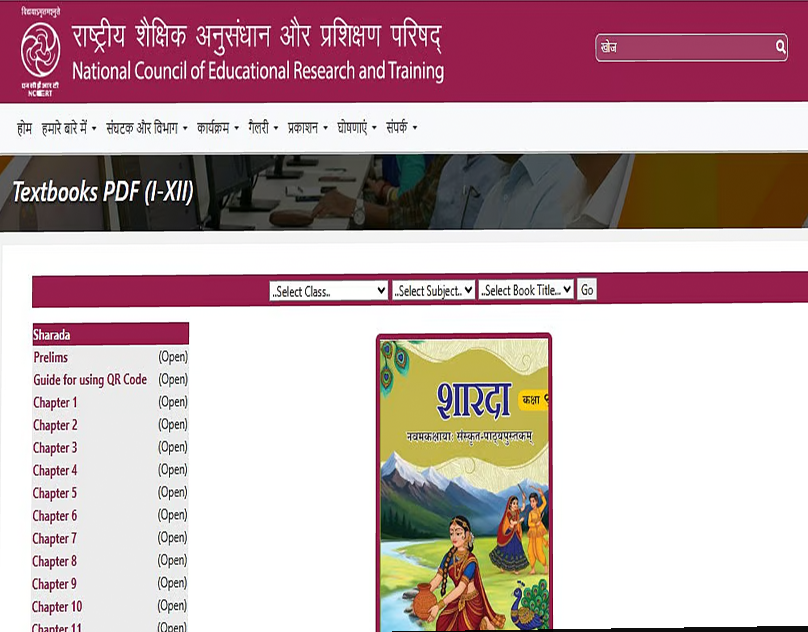
NCERT Class 9 Digital Textbooks 2026 Released Free Online
Reimagining Learning: How NCERT’s New Digital Class 9 Textbooks Signal a Shift in Indian Education
In a move that underscores the evolving nature of education in India, the National Council of Educational Research and Training (NCERT) has released a suite of free digital textbooks for Class 9 students. Titled Ganita Manjari, Kaveri, Exploration and Sharada, these resources are now accessible online, offering students across the country immediate and equitable access to core academic material. At first glance, the initiative may appear to be a routine digitisation effort. However, a closer examination reveals that it is emblematic of a deeper pedagogical transformation, one that seeks to align curriculum delivery with contemporary learning needs, technological accessibility and the broader aspirations of India’s education policy framework.
A New Chapter in Accessible Education
The availability of free digital textbooks marks a significant step towards democratising education. By hosting these materials on its official platform, NCERT has ensured that students, irrespective of geographical or socio-economic constraints, can access standardised learning resources with ease.
In a country where disparities in access to quality educational material have long posed challenges, this initiative has the potential to narrow the gap. Students in remote or underserved regions, often reliant on delayed or limited textbook supply, can now download complete or chapter-wise PDFs instantly.
This shift towards digital accessibility is not merely about convenience; it is about equity. It ensures that every learner, regardless of circumstance, begins from a common academic foundation.
The Significance of the New Textbooks
The newly introduced textbooks are not simple reprints of earlier editions. They represent a reimagined curriculum designed to reflect updated educational priorities. The subjects covered: English, Mathematics, Science and Sanskrit, are presented through newly titled books: Kaveri, Ganita Manjari, Exploration and Sharada.
Each title carries a distinct pedagogical identity. Ganita Manjari, for instance, focuses on strengthening mathematical reasoning through conceptual clarity and application-based learning. Meanwhile, Exploration in Science encourages inquiry-driven understanding, moving beyond textbook definitions to real-world connections.
Kaveri, the English textbook, introduces a refreshed literary selection, incorporating diverse voices and contexts, while Sharada in Sanskrit reflects a renewed emphasis on linguistic and cultural grounding. Together, these books signal a deliberate shift from rote memorisation to experiential learning.
Aligning with Contemporary Educational Vision
The release of these digital textbooks must be viewed within the larger context of India’s evolving educational philosophy. In recent years, there has been a concerted effort to transition from content-heavy curricula to competency-based learning models.
The new textbooks appear to embody this transition. By emphasising conceptual understanding, critical thinking and interdisciplinary connections, they align with the principles outlined in national policy frameworks. The objective is clear: to prepare students not merely for examinations, but for a rapidly changing world that demands adaptability and analytical ability.
This approach also reflects a broader global trend in education, where the focus is increasingly on developing skills rather than memorising information. NCERT’s initiative places Indian classrooms firmly within this contemporary discourse.
The Digital Turn: Opportunities and Implications
The decision to make textbooks freely available online carries far-reaching implications. Digital resources offer flexibility that traditional print formats cannot match. Students can access content on multiple devices, revisit chapters as needed and engage with material at their own pace.
Moreover, digital textbooks can be integrated with supplementary resources such as videos, interactive exercises and assessments, creating a more holistic learning environment. While the current release primarily focuses on PDF formats, it lays the groundwork for future innovations in digital pedagogy.
However, this transition also brings challenges. The effectiveness of digital learning depends on access to devices and reliable internet connectivity, factors that are not uniformly available across all regions. Bridging this digital divide will be essential to fully realise the benefits of such initiatives.
Reducing Academic Burden
Another noteworthy aspect of the new textbooks is their potential to reduce academic burden. By streamlining content and focusing on essential concepts, NCERT aims to make learning more manageable and meaningful.
For instance, the restructuring of subjects like Mathematics and Science places greater emphasis on understanding fundamental principles rather than covering an exhaustive range of topics. This approach not only enhances comprehension but also reduces the stress often associated with dense syllabi.
The introduction of Kaveri as a new English textbook further illustrates this intent. By curating content that is both engaging and relevant, it seeks to foster a genuine interest in language rather than treating it as a purely examinable subject.
Empowering Teachers and Classrooms
While much attention is rightly focused on students, the impact of these digital textbooks extends equally to educators. Teachers now have access to standardised, updated material that can be seamlessly integrated into lesson planning.
The availability of digital resources also enables more dynamic classroom interactions. Educators can supplement textbook content with additional materials, encourage discussions and adopt varied teaching methodologies. This flexibility is particularly valuable in a diverse educational landscape where teaching contexts can vary widely.
Furthermore, the shift towards concept-based learning requires teachers to move beyond traditional lecture methods. The new textbooks, with their emphasis on application and inquiry, provide a foundation for such pedagogical evolution.
The Broader Educational Ecosystem
The release of Class 9 digital textbooks is part of a larger continuum of reforms within the Indian education system. Earlier initiatives have focused on curriculum rationalisation, teacher training and the integration of technology in classrooms.
By making textbooks freely accessible, NCERT reinforces its role as a central pillar in this ecosystem. It not only provides content but also shapes the direction of educational practice across the country.
This centralised approach ensures consistency in learning standards while allowing for contextual adaptation at the school level. It also facilitates smoother transitions for students moving between different educational boards or regions.
Student Experience in the Digital Age
For today’s students, often described as digital natives, the availability of online textbooks aligns naturally with their learning habits. The ability to study on screens, annotate digitally and access resources on demand reflects the realities of modern education.
At the same time, it is important to maintain a balance between digital and traditional learning methods. While technology offers numerous advantages, the tactile experience of physical books and the discipline of structured study remain valuable.
NCERT’s initiative, therefore, should be seen as an expansion of options rather than a replacement of existing practices. It provides students with the flexibility to choose the mode of learning that best suits their needs.
Challenges and Considerations
Despite its many advantages, the move towards digital textbooks is not without its complexities. Issues such as screen fatigue, digital distractions and unequal access to technology must be addressed thoughtfully.
Additionally, ensuring the authenticity of downloaded materials is crucial. NCERT has advised students to rely only on its official website for accessing textbooks, highlighting the importance of credible sources in an era of abundant information.
There is also the question of teacher readiness. As educational content evolves, so too must teaching practices. Continuous professional development will be essential to equip educators with the skills required to navigate this new landscape effectively.
Looking Ahead: The Future of Learning Resources
The introduction of free digital textbooks for Class 9 is likely to influence future developments in educational publishing. It sets a precedent for open-access learning resources, challenging traditional models of textbook distribution. As technology continues to advance, one can anticipate further innovations, interactive textbooks, adaptive learning platforms and personalised educational experiences. NCERT’s current initiative may well be the first step in a broader transformation of how knowledge is created, shared and consumed.
Conclusion
The release of Ganita Manjari, Kaveri, Exploration and Sharada as free digital textbooks represents more than a logistical update; it is a reflection of education in transition. It speaks to a system that is striving to become more inclusive, more relevant and more responsive to the needs of its learners. By embracing digital accessibility while reimagining curricular content, NCERT has taken a decisive step towards shaping the future of school education in India. The true measure of this initiative, however, will lie in its implementation, how effectively it reaches students, empowers teachers and enhances learning outcomes. In the end, education is not defined solely by the materials it provides, but by the possibilities it creates. In that sense, these digital textbooks are not just resources, they are gateways to a more connected, informed and equitable learning experience.