PSEB Class 10 Result 2026 Today at 12:30 PM: Check Online
PSEB Class 10 Results 2026: Punjab Awaits a Defining Academic Milestone
The declaration of the Punjab School Education Board (PSEB) Class 10 results has once again emerged as a moment of immense significance for students, parents and educators across the state. Scheduled to be announced today, the results mark the culmination of months of rigorous preparation, emotional resilience and academic commitment for lakhs of matriculation candidates in Punjab.
For many students, the Class 10 board examination represents far more than an annual assessment. It is widely regarded as the first major academic checkpoint in a student’s educational journey, shaping future subject choices, career aspirations and higher education pathways. As anticipation intensifies across households and schools, the atmosphere surrounding the result announcement reflects both excitement and anxiety in equal measure.
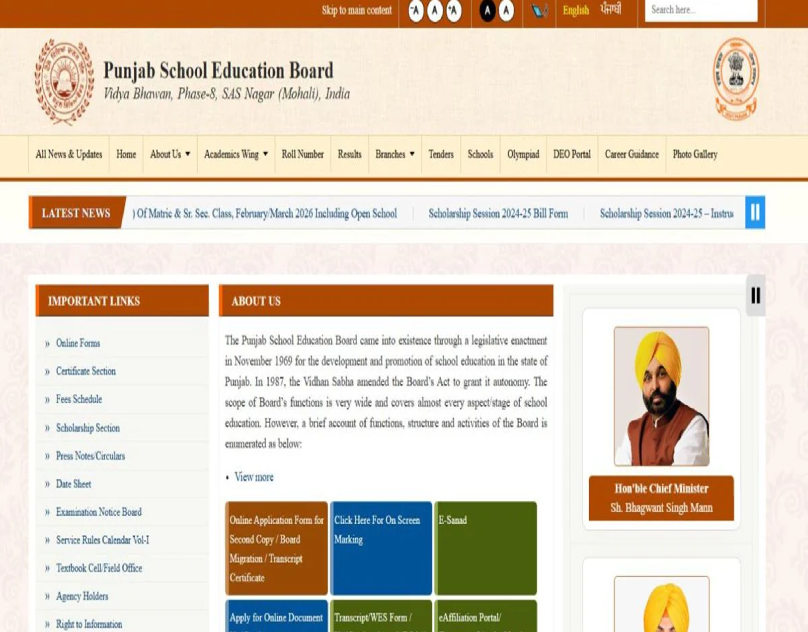
According to official updates, the Punjab School Education Board is expected to release the results at approximately 12:30 PM through its official portal. Students who appeared for the examinations conducted between March 6 and April 1, 2026, will be able to access their provisional scorecards online using their roll numbers.
This year’s matriculation examinations witnessed participation from nearly 2.84 lakh students across Punjab, underlining the scale and importance of the state board evaluation process. The examinations covered a wide spectrum of subjects, beginning with Social Science and concluding with Health and Physical Education.
Digital Access and Evolving Examination Infrastructure
In recent years, educational boards across India have increasingly embraced digital platforms to streamline result dissemination, and the PSEB has continued this transition in 2026. Alongside the official website, students will also be able to download their marksheets through DigiLocker, ensuring broader accessibility and reducing dependency on a single portal.
The move towards digital integration reflects a wider transformation within India’s examination ecosystem, where convenience, transparency and efficiency have become central priorities. Students can now retrieve official documents electronically, reducing delays and administrative bottlenecks traditionally associated with physical mark sheets.
Authorities have also advised candidates to keep their admit cards readily available before the result announcement, as roll numbers remain essential for accessing scorecards online. In the event of excessive traffic leading to website slowdowns or temporary crashes, alternative methods such as SMS services and DigiLocker access are expected to provide reliable support.
The growing emphasis on multiple access points highlights an important lesson learned from previous years, where overwhelming digital traffic during result hours often caused technical disruptions. By diversifying access channels, educational boards are increasingly prioritising student convenience and minimising avoidable stress during high-pressure moments.
Re-evaluation Opportunities and Student Confidence
One of the most significant aspects of the result process remains the provision for re-evaluation and re-checking of answer sheets. The Punjab School Education Board has confirmed that students dissatisfied with their marks will have the opportunity to apply for scrutiny after the results are announced.
This mechanism serves as an important safeguard within the examination system, reinforcing trust and accountability. While large-scale board examinations involve extensive evaluation processes, re-checking provisions ensure that students retain the right to seek clarification in cases where they believe their performance may not have been accurately reflected.
Educational experts have consistently argued that such review mechanisms contribute to student confidence by reducing fears of clerical or evaluative errors. In a competitive academic environment where even marginal score differences can influence future admissions, transparency in assessment processes becomes increasingly vital.
Moreover, the growing awareness among students regarding re-evaluation policies demonstrates how educational ecosystems are becoming more student-centric. Rather than perceiving board examinations as rigid, one-directional systems, institutions are gradually adopting more responsive and accountable frameworks.
The Emotional Weight of Board Results
Beyond statistics and procedural details, the announcement of Class 10 results carries profound emotional significance. Across Punjab, families await the outcome with anticipation, often viewing board examinations as defining milestones in a child’s educational development.
For students, the result day can evoke a complex blend of emotions - excitement, nervousness, relief and uncertainty. In many households, academic performance continues to be closely associated with future success, intensifying the psychological pressure surrounding board examinations.
Educationists increasingly emphasise the importance of approaching results with balance and perspective. While strong scores undoubtedly open doors to preferred streams and institutions, academic achievement alone cannot determine an individual’s long-term capabilities or potential. The evolving nature of education and employment now values creativity, adaptability, communication skills and interdisciplinary thinking alongside conventional academic performance.
Parents and educators, therefore, play a crucial role in ensuring that students view examination outcomes as part of a broader learning journey rather than definitive measures of self-worth.
Stream Selection and Future Academic Decisions
The Class 10 result also initiates one of the most important academic transitions in a student’s life, the selection of streams for higher secondary education. Based on their performance and interests, students typically choose between Science, Commerce, Humanities or vocational pathways.
This decision often shapes future career trajectories, making the Class 10 outcome especially influential. However, educational counsellors increasingly encourage students to prioritise aptitude and passion over societal expectations while making stream choices.
The educational landscape in India has undergone substantial transformation over the past decade, with emerging opportunities in fields such as data science, design, digital media, environmental studies, entrepreneurship and liberal arts gaining prominence. Consequently, the traditional perception that only select academic streams guarantee success is gradually evolving.
In this context, board results should ideally function as guiding indicators rather than restrictive determinants. A student’s long-term growth ultimately depends on consistent learning, curiosity and skill development rather than a single examination outcome.
Examination Reforms and Modernisation Efforts
The 2026 examination cycle also reflects broader reforms being implemented across Indian education systems. Reports indicate that PSEB has introduced improved evaluation methods, including an On-Screen Marking system designed to enhance accuracy and efficiency during assessment.
Digital evaluation technologies are increasingly becoming integral to modern examination processes across multiple state and national boards. Such systems reduce manual handling of answer sheets, improve standardisation and allow faster compilation of results.
Simultaneously, boards across the country are under growing pressure to align assessments with the objectives of the National Education Policy 2020, which advocates conceptual understanding, critical thinking and reduced emphasis on rote memorisation.
While implementation remains gradual, these developments indicate a shift towards more competency-based evaluation frameworks. Educational institutions are increasingly recognising that examinations must evolve to reflect contemporary learning requirements rather than merely testing memory retention.
Managing Result-Day Stress
Mental health experts often caution against excessive emotional pressure during board result periods. The heightened social focus on scores can create unnecessary anxiety among adolescents already navigating significant academic and personal transitions.
Students are therefore encouraged to approach result day with composure and realistic expectations. Regardless of outcomes, examinations represent only one component of a much larger educational and professional journey.
Schools and families also bear responsibility for creating supportive environments where students feel valued, irrespective of marks obtained. Constructive guidance, rather than comparison or criticism, can significantly influence a student’s confidence and future motivation.
As awareness regarding student mental well-being continues to grow, educational discourse in India is gradually shifting towards holistic development and emotional resilience alongside academic excellence.
A Defining Day for Punjab’s Students
The announcement of the PSEB Class 10 results today represents not merely the conclusion of an examination cycle but the beginning of countless new academic journeys. For some students, the results will affirm months of hard work and discipline; for others, they may offer lessons in resilience, reflection and perseverance. What remains constant, however, is the transformative role education continues to play in shaping aspirations and opportunities. As Punjab’s students prepare to access their scorecards, this is a reminder that examinations are important milestones. Still, they are never the sole measure of talent, ambition or future success.