RBSE Class 10 Result 2026: Rechecking and Re-Exam Process, Steps to Apply After Results
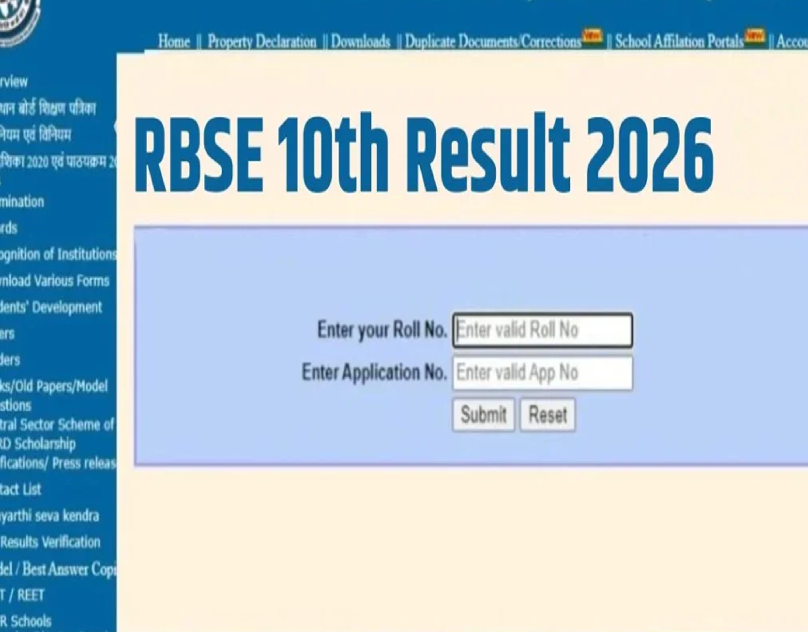
The declaration of the Rajasthan Board of Secondary Education (RBSE) Class 10 Result 2026 marks a pivotal academic moment for over six lakh students across the state. Announced on March 24, the results reflect a strong overall performance, with the pass percentage witnessing a modest rise to over 94 per cent.
Yet, beyond the celebration of success, the result declaration also initiates an equally important phase for students who may feel their performance does not accurately reflect their efforts. Recognising this, the RBSE has put in place a structured and transparent post-result mechanism, enabling candidates to seek re-evaluation or even opt for re-examination under specific conditions.
Rechecking: Ensuring Accuracy and Fairness
The rechecking, or scrutiny process, serves as the first level of verification for students dissatisfied with their marks. It is not a re-assessment of the entire answer sheet but rather a careful review to ensure that all answers have been evaluated and that there are no errors in the totalling of marks.
This process is particularly significant in maintaining the integrity of the evaluation system. It provides students with reassurance that their answer scripts have been assessed with precision and that any inadvertent oversight can be rectified. However, it is important to note that marks may increase, decrease, or remain unchanged after scrutiny, reinforcing the principle of objective evaluation.
Students can apply for rechecking only once per subject, and the application must be submitted within the stipulated timeframe following the result announcement.
Introduction of Re-examination: A Notable Reform
A key highlight of the 2026 result cycle is the introduction of a re-examination option, an initiative that marks a progressive shift in the RBSE’s approach to student assessment. This facility allows students to reappear for specific subjects, including core disciplines such as English, Science, and Mathematics, if they are dissatisfied with their performance.
The re-exam option goes beyond mere verification and offers a genuine opportunity for improvement. It reflects an evolving educational philosophy that prioritises student growth and second chances, rather than limiting outcomes to a single examination attempt.
However, students are required to first apply for rechecking before opting for the re-examination, ensuring that due process is followed and that the decision to reappear is informed and deliberate.
Application Process: Structured and Time-Bound
The RBSE has adopted a streamlined and strictly digital approach for the application process. Students can submit their requests online through the official board website or authorised e-Mitra centres. Notably, offline applications are not permitted, underscoring the board’s commitment to efficiency and transparency.
The timeline for application is clearly defined. Students must apply within seven days of the result declaration by paying the standard fee. An additional three-day window is provided with a late fee, offering a limited extension for those who may miss the initial deadline.
Applicants are required to upload valid identification documents, such as Aadhaar or voter ID, and provide accurate contact details to receive updates. This digital framework not only simplifies the process but also ensures accountability at every stage.
Fee Structure and Key Requirements
The board has prescribed a detailed fee structure for the various post-result services. The scrutiny process involves a fee per subject, with an additional charge applicable in case of late submission. Similarly, students opting to raise objections or apply for re-examination are required to pay specified fees.
Importantly, the fees are non-refundable, regardless of the outcome of the rechecking or re-exam process. This underscores the need for students to carefully evaluate their decision before applying.
The structured fee system also reflects the administrative resources involved in reprocessing answer sheets and organising re-examinations, ensuring that the system remains sustainable and efficient.
Rules Students Must Keep in Mind
The RBSE has laid down a set of clear guidelines to govern the rechecking and re-examination processes. Students must adhere to these rules to ensure their applications are valid and successfully processed.
Among the key provisions is the restriction that scrutiny can be applied for only once per subject. Additionally, students must understand that rechecking does not guarantee an increase in marks; it merely ensures accuracy in evaluation.
Furthermore, maintaining correct personal and contact details during the application process is crucial, as all communication regarding the application status is conveyed digitally.
These guidelines are designed to uphold the fairness and credibility of the system while providing students with a structured pathway to address their concerns.
The Broader Academic Context
The introduction of the re-examination facility aligns with broader educational reforms aimed at reducing the high-stakes pressure associated with board examinations. By offering students an opportunity to improve their performance, the RBSE acknowledges that a single examination may not always capture a student’s true potential.
This shift also reflects a growing emphasis on flexibility within the Indian education system, where continuous assessment and multiple opportunities are increasingly being recognised as essential components of a fair evaluation framework.
Empowering Students Through Choice
The dual provision of rechecking and re-examination empowers students with choice and agency. While rechecking addresses concerns related to evaluation accuracy, the re-exam option provides a pathway for academic redemption and improvement.
This layered approach ensures that students are not left feeling constrained by their initial results. Instead, they are offered a range of options to reassess, reflect, and act in accordance with their academic goals.
Navigating the Post-Result Phase
For students, the period following the declaration of results can often be emotionally charged, marked by both celebration and disappointment. The availability of structured mechanisms such as rechecking and re-examination plays a crucial role in mitigating anxiety and providing clarity.
Students are encouraged to carefully review their performance, consult with teachers or mentors, and make informed decisions regarding the next steps. Applying impulsively without proper consideration may not yield the desired outcome, particularly given the non-refundable nature of application fees.
Conclusion: A Step Towards Transparent Evaluation
The RBSE Class 10 Result 2026 and its associated post-result processes represent a balanced approach to evaluation, one that combines accountability with opportunity. By introducing a re-examination option alongside the traditional rechecking process, the board has taken a significant step towards making the system more student-centric.
These measures not only enhance transparency but also reinforce the principle that education should be adaptive and inclusive. In an era where academic success is increasingly viewed through a holistic lens, such reforms are both timely and necessary.
Ultimately, the RBSE’s approach reflects a broader commitment to fairness, flexibility and continuous improvement, values that lie at the heart of a progressive education system.