Reimagining Education: Assam’s Historic Expansion of School Infrastructure
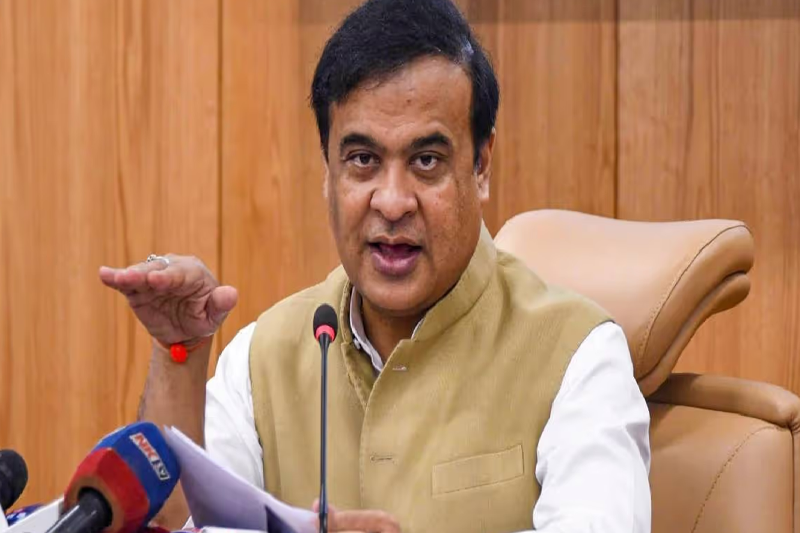
In a momentous stride for its education landscape, the northeastern Indian state of Assam has embarked on an ambitious programme to redefine learning environments for future generations. On 2 February 2026, Chief Minister Himanta Biswa Sarma officiated the inauguration of 67 newly constructed school buildings and laid the foundation stones for 61 additional institutions at a central ceremony in Sonapur, near Guwahati. With a combined investment of around ₹760 crore, this initiative reflects an intensified governmental resolve to modernise educational infrastructure and broaden access to quality schooling across the state.
Described by the Chief Minister as a “historic and transformative day” for Assam’s education sector, the event marked a significant milestone in a systematic effort to strengthen schooling facilities after decades of piecemeal development and infrastructural deficit.
From Makeshift Classrooms to World-Class Campuses
For many years, Assam’s government schools subsisted on ad hoc construction funded by individual legislators’ development schemes or local contributions. These improvised accommodations often lacked the space, design and amenities necessary for delivering contemporary education. That era, according to Mr Sarma, is being swiftly consigned to the past.
The newly inaugurated buildings are designed to be modern, spacious and future-ready. With up to 20 classrooms in each complex, dedicated rooms for leadership and faculty, science laboratories, libraries, and smart classrooms, they represent a comprehensive upgrade that supports both teaching quality and student engagement. Such facilities acknowledge the need for environments that allow learning to thrive beyond rote memorisation, embracing practical and interactive pedagogy consistent with global best practices.
Structured Investment, Strategic Vision
The ₹760 crore investment breaks down into two major components: approximately ₹483 crore for the 67 operational schools and around ₹277.55 crore for the 61 future constructions. Funding was sourced through several schemes, including the Prime Minister’s Development Initiative for the North Eastern Region (PM-DevINE), the North East Special Infrastructure Development Scheme, and the Rural Infrastructure Development Fund (RIDF).
This layered financing approach underscores the government's commitment to judicious fiscal planning. By integrating central and state resources to fund educational infrastructure, Assam is signalling its intent to convert educational equity from aspiration into measurable reality. It is noteworthy that this allocation reflects not just an expansion of physical space but a deliberate investment in holistic educational ecosystems across rural and semi-urban communities.
A Broader Educational Renaissance
The inauguration and foundation-laying ceremony is merely one facet of a broader educational renaissance unfolding in Assam. Since assuming office in 2021, the present administration has pursued a well-planned programme of reconstruction and development that has now touched over 1,300 schools. Renovations have been undertaken in historic institutions where heritage structures could be preserved, rather than demolished, reflecting a balance between reverence for tradition and commitment to modernity.
Significantly, this transformation is not restricted to campuses alone. Parallel increases in teacher recruitment, with roughly 70 per cent of government school educators now under the age of 45, point to a strategic infusion of energy and contemporary teaching practices into the public education system.
Reaching Out to Underserved Communities
An often-cited challenge for Assam’s education sector has been ensuring equitable access to quality schooling for students in tea garden areas and remote districts. These regions, historically underserved due to geographic isolation and economic marginalisation, often face compounded barriers to educational participation. Recognising this, Mr Sarma announced that in the coming days, 100 newly constructed schools in tea garden areas will be formally inaugurated.
This expansion is more than infrastructure enhancement; it is a powerful gesture towards inclusion, offering children in neglected localities tangible access to education that can catalyse community development and generational uplift. Such intentional outreach helps bridge the urban–rural divide and aligns Assam with global norms of educational equity.
Looking Ahead: A Network of 4,000 Schools
Beyond the immediate 128 school projects, Assam has set its sights on an even more ambitious horizon. According to regional reporting, the state aims to see its total number of high schools and higher secondary schools exceed 4,000 within the next five years. Each new institution is projected to cost between ₹4 crore and ₹9 crore, reflecting the scale and seriousness of this educational overhaul.
This projection signifies not merely quantitative expansion but qualitative transformation. It implies a systemic rethinking of how resources are allocated and how education is delivered to the state’s youth. With such momentum, Assam’s educational landscape may soon rival those of other more established Indian states, enhancing opportunities for learners and strengthening the state’s human capital at a critical juncture.
Broader Social and Economic Implications
The ripple effects of this educational expansion are already becoming clear. Beyond classrooms, new schools will anchor local economies, create employment opportunities and stimulate ancillary services. Well-equipped schools attract and retain qualified teachers, who in turn become community role models and agents of social change.
Furthermore, enhanced schooling environments are likely to improve learning outcomes, particularly in subjects requiring laboratory and library resources. Over time, this could result in higher achievement in national examinations, greater competitiveness for tertiary education placements, and an expanded pipeline of educated citizens ready to contribute to Assam’s economic ambitions.
Balancing Growth with Sustainability
While the pace and scale of developments are impressive, the state government acknowledges that infrastructure alone is not sufficient. Sustaining quality education requires continuous investments in teacher training, curricular innovation, student support systems, and performance assessment frameworks. By pairing physical expansion with personnel rejuvenation, Assam is moving towards a balanced model of growth that honours both form and function.
Long-term success will hinge on the ability of educators, policymakers and communities to collaborate, leveraging new facilities as catalysts for deeper pedagogical reform.
Conclusion: A New Chapter for Assam’s Students
The inauguration of 67 school buildings and the laying of foundations for 61 more marks a defining chapter in Assam’s ongoing educational evolution, one that champions inclusivity, modernity, and strategic investment. Underpinned by robust funding and purposeful vision, this initiative signals a resolute commitment to empowering learners across the state.
As these schools open their doors and construction progresses, the promise of improved educational access, conjoined with enriched teaching and learning environments stands to transform countless lives. In an era where knowledge and skills are currency for the future, Assam’s bold steps could well set a precedent for educational reform across India’s northeastern frontier and beyond.