TGPSC’s OTR Mandate: A Crucial Turning Point for Government Job Aspirants in Telangana
In the evolving landscape of public sector recruitment in India, candidate preparedness is no longer limited to eligibility criteria, academic milestones and competitive examinations. The Telangana State Public Service Commission (TGPSC) has recently reinforced this truth by issuing a significant directive that has immediate and far-reaching implications for aspirants across the state: updating and verifying One Time Registration (OTR) details is now mandatory for all future recruitments. This requirement comes with a firm deadline of 25 February 2026, after which candidates who have not completed the process will be ineligible to apply for government job notifications issued by the Commission.
This seemingly administrative step has become a defining moment of the 2026 recruitment cycle. It underscores both the importance of accurate candidate records and the Commission’s intent to streamline and professionalise what is, in practice, one of the most complex and consequential gateways to public service employment.
What Is One Time Registration (OTR) and Why It Matters
The OTR system is the foundation upon which TGPSC processes recruitments for various categories of government posts, from Group I through Group IV services, and beyond. It functions as a centralised digital profile that stores essential details about each candidate, including personal information, educational qualifications, category status and contact details. Once created, the OTR serves as the primary reference record for all recruitment notifications, obviating the need to repeatedly enter basic information for each individual application.
At first glance, the OTR system may seem straightforward: create a profile once, and it serves you for all future applications. Yet, the complexities of Indian recruitment, particularly those involving caste categorisation, reservation entitlements, educational updates and communication contacts, mean that accurate, verified OTR data is indispensable. If the data underpinning a candidate’s profile does not reflect their current qualifications or legal status, it can jeopardise not only specific job applications but potentially eligibility for entire categories of posts. It is for this reason that the TGPSC has made OTR updation compulsory, a procedural imperative that ensures the integrity, fairness and efficiency of forthcoming recruitment drives.
The Extended Deadline: A Window for Clarity and Correction
The OTR update window was initially opened on 19 January 2026, with an original closing date of 9 February. However, in response to requests from candidates and to accommodate revisions, including those related to Scheduled Castes categorisation, the Commission has extended the deadline to 25 February 2026.
This extension is not merely bureaucratic courtesy. It acknowledges the reality that many aspirants, particularly those from marginalised backgrounds or remote regions, may not have immediate access to digital resources or may have encountered errors in their original data entry. By granting a broader window, the TGPSC is signalling its intention to reduce avoidable disqualification and support candidates in presenting accurate, verifiable records for the upcoming recruitment cycle.
What Candidates Must Update
Updating the OTR is not a matter of superficial adjustments. The process demands careful scrutiny and, where necessary, verification of multiple data points. In broad terms, candidates are urged to review:
- Personal Details: Full name, date of birth, gender, correspondence address and contact information.
- Educational Records: All formal qualifications, including recent degrees or additional certifications.
- Category Information: Caste status (including Scheduled Castes or Scheduled Tribes classifications), Economically Weaker Section (EWS) and Non-Creamy Layer determinations - areas often subject to revision and legal consideration.
- Supporting Documentation: Uploading valid certificates, such as educational credentials and category certificates, as well as continuing to keep a recent passport-size colour photograph on file.
It is also critical to understand that a candidate may maintain only one OTR. Multiple registrations are expressly prohibited, a rule designed to maintain the integrity of the process and to prevent duplicative or fraudulent claims.
Yet it is equally important to note that not all fields in the OTR are editable. Certain core details, once verified and locked, cannot be changed through this update window. Editable sections tend to be those where candidates’ statuses are most likely to evolve: additional qualifications, contact information, EWS and Non-Creamy Layer status.
The Rationale Behind the Mandate
Why has the Commission chosen this moment to formalise and elevate the importance of OTR validation? There are several interlocking reasons:
- Accuracy in Recruitment Processes: With multiple recruitments anticipated in 2026, including priority notifications for Group I, II, III and IV posts, it is essential that the Commission’s candidate database is current and verified. An accurate OTR profile reduces the risk of inconsistencies between application forms and supporting documents, which can lead to disputes or disqualifications at later stages of selection.
- Updated Category and Reservation Information: Revisions to caste categorisation, particularly for Scheduled Castes and associated reservation entitlements, necessitate corresponding adjustments in candidate records. By requiring candidates to validate category details anew, the Commission ensures that reservation benefits are applied legitimately and transparently.
- Candidate Requests for Corrections: The update process also responds to repeated appeals from candidates who have realised, often belatedly, that their original OTR entries contained errors, whether in educational qualifications, contact details or other personal data. The mandatory update window grants such candidates an opportunity to rectify these issues before future recruitment notifications are issued.
In essence, the mandate is designed to strike a balance between candidate convenience and systemic rigour: to reduce unnecessary administrative burdens later in the recruitment process, and to ensure that only candidates with verified, authentic data proceed to the application stage.
Consequences of Non-Compliance
The stakes of ignoring this mandate are clear and non-negotiable: candidates who fail to update and verify their OTR details by the extended deadline will be rendered ineligible to apply for future TGPSC notifications.
This means that even if an aspirant meets all academic and eligibility criteria for a particular government job, they will be barred from applying if their OTR profile remains unverified. In practical terms, their entire candidacy could be invalidated before the recruitment process formally begins, i.e - a stringent but necessary safeguard in a system that must reconcile high volumes of applicants with transparent governance.
Practical Steps to Complete the Update
Candidates keen to remain competitive in the upcoming recruitment cycle should act promptly. The TGPSC recommends the following steps:
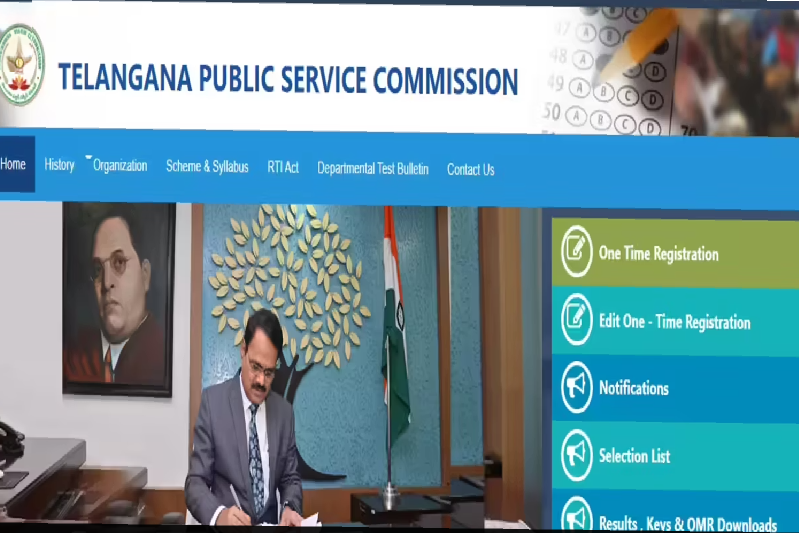
- Visit the Official Portal: Log in at the official TGPSC website (tgpsc.gov.in) using your OTR ID and other verification credentials.
- Review Your Details: Carefully inspect every section of your OTR profile, paying close attention to any required updates or corrections.
- Upload Supporting Documents: Where necessary, attach scanned copies of relevant certificates, photographs and category documents.
- Verify and Submit Before Deadline: Ensure the profile is validated and submitted before 25 February 2026 ideally well in advance, to avoid server congestion and last-minute technical issues.
Looking Ahead: A More Streamlined Recruitment Calendar
In mandating OTR validation ahead of future recruitment notifications, the Telangana Public Service Commission has not merely issued a procedural directive. It has also sent a broader signal that clarity of candidate records is foundational to the efficiency, fairness and credibility of public service recruitment.
By centralising and sanitising candidate data before the next major recruitments, the Commission aims to reduce avoidable delays, disputes and disqualifications. For aspirants who have been long prepared, perhaps for years, this mandate answers an implicit question: Are you truly ready for the competitive journey ahead? The answer, in large part, lies in the accuracy of the details you choose to present today.
Ultimately, the OTR update requirement underscores a vital truth of modern public sector hiring: preparation is not just about knowledge and eligibility, but also about systemic compliance and procedural foresight. In a landscape where thousands are vying for coveted government posts, those who take heed of administrative imperatives such as this are likely to be best positioned to translate aspiration into achievement.