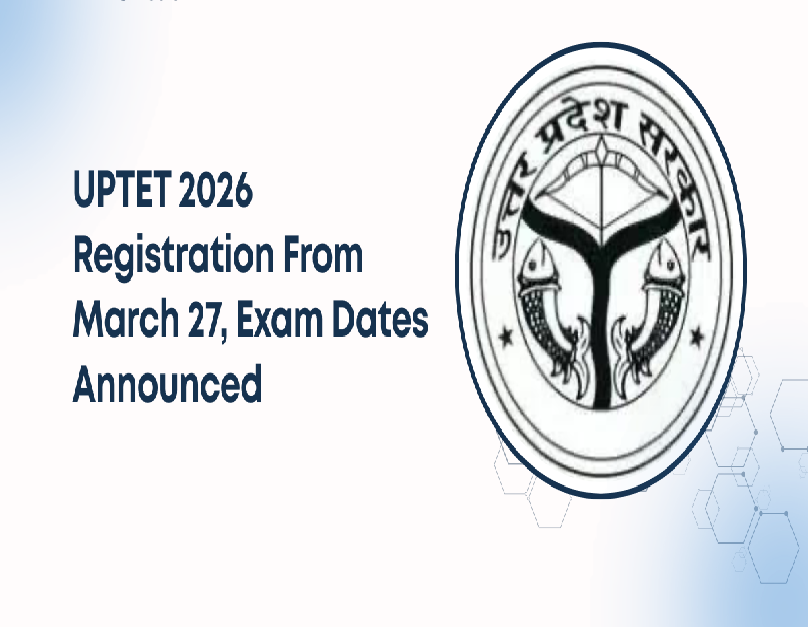
UPTET 2026 Notification Released: Applications Begin March 27 for Teacher Eligibility Test
UPTET 2026 Notification Released: A Defining Opportunity for Aspiring Educators
The release of the UPTET 2026 notification marks a significant moment in India’s teacher recruitment landscape, setting in motion a process that will shape the professional journeys of thousands of aspiring educators. Conducted by the Uttar Pradesh Basic Education Board, the Uttar Pradesh Teacher Eligibility Test (UPTET) serves as a foundational benchmark for individuals seeking to enter the teaching profession within the state.
With applications scheduled to commence from March 27, 2026, the announcement signals the beginning of a crucial phase for candidates preparing to demonstrate their eligibility and competence in one of the most vital sectors of public service - education.
A Gateway to the Teaching Profession
The UPTET examination is not merely another competitive test; it is a qualifying benchmark that determines a candidate’s eligibility to teach at the primary (Classes I to V) and upper primary (Classes VI to VIII) levels in schools across Uttar Pradesh.
Its significance lies in its role as a gatekeeper of quality in education. By establishing a standardised assessment framework, UPTET ensures that only candidates who meet defined pedagogical and academic criteria are deemed eligible to teach.
For aspiring educators, therefore, the notification represents both an opportunity and a responsibility, to prepare rigorously and to uphold the standards expected of the profession.
Application Timeline and Key Dates
According to the official notification, the application process for UPTET 2026 will begin on March 27, 2026, with candidates required to submit their forms through the designated online platform.
The structured timeline provides candidates with a clear framework within which to organise their application process. While the article highlights the commencement date, it also implicitly underscores the importance of adhering to deadlines, a critical aspect of all competitive examinations.
Candidates are advised to monitor official updates closely and ensure that all stages of the application process are completed within the stipulated timeframe.
Understanding Eligibility Criteria
One of the central components of the UPTET notification is the specification of eligibility criteria. These criteria are designed to ensure that candidates possess the necessary academic qualifications and training required for teaching roles.
For the primary level, candidates must typically meet educational requirements that align with foundational teaching competencies. For the upper primary level, the criteria are more specialised, reflecting the need for subject-specific knowledge and advanced pedagogical skills.
By clearly defining these requirements, the examination authority ensures that the recruitment process maintains both rigour and relevance.
The Structure of the Examination
The UPTET examination is typically conducted in two papers, corresponding to the two levels of teaching eligibility. Paper I is designed for candidates aspiring to teach at the primary level, while Paper II caters to those aiming for upper primary positions.
Each paper assesses a combination of pedagogical understanding, subject knowledge and general aptitude. The dual-paper structure allows candidates to select the level that aligns with their qualifications and career aspirations, or to attempt both papers if eligible.
This flexibility reflects the diverse pathways within the teaching profession and accommodates a wide range of candidate profiles.
The Importance of Teacher Eligibility Tests
Teacher Eligibility Tests such as UPTET play a crucial role in maintaining standards within the education system. By establishing a uniform benchmark for teaching competence, they contribute to the overall quality of education delivered in schools.
In a country as vast and diverse as India, where educational outcomes can vary significantly, such standardisation is essential. It ensures that all students, regardless of location, have access to educators who meet minimum professional standards.
The release of the UPTET 2026 notification thus carries implications that extend far beyond individual careers; it is a step towards strengthening the educational ecosystem as a whole.
Navigating the Application Process
The application process for UPTET 2026 is conducted online, reflecting the increasing digitalisation of examination systems. Candidates are required to register on the official portal, fill in their details, upload necessary documents and complete the fee payment.
While the process is designed to be user-friendly, it demands careful attention to detail. Errors in the application form can lead to complications at later stages, making accuracy and thoroughness essential.
Candidates are also advised to retain copies of their submitted forms and payment receipts for future reference.
Preparing for the Examination
With the notification now released and the application process about to commence, candidates must turn their attention to preparation. The UPTET examination requires a balanced approach, combining conceptual understanding with practical application.
Preparation strategies may include revising core subjects, practising previous years’ question papers and familiarising oneself with the examination pattern. Equally important is the development of pedagogical insight, which forms a key component of the assessment.
Time management and consistency are critical during this phase, enabling candidates to cover the syllabus comprehensively.
Challenges and Responsibilities
While the UPTET examination presents an opportunity, it also entails certain challenges. The competitive nature of the test means that candidates must not only meet eligibility criteria but also perform at a high level to secure qualification.
Additionally, the responsibility of entering the teaching profession carries significant weight. Educators play a pivotal role in shaping the intellectual and moral development of future generations, making it imperative that candidates approach the examination with seriousness and commitment.
A Broader Perspective on Educational Reform
The release of the UPTET 2026 notification can also be viewed within the broader context of educational reform in India. Efforts to improve teacher quality and accountability have been central to policy initiatives in recent years.
By reinforcing the importance of eligibility tests, authorities are emphasising the need for well-qualified and competent educators. This aligns with the overarching goal of enhancing educational outcomes and ensuring that schools are equipped with capable teaching professionals.
Looking Ahead
As the application window opens on March 27, candidates stand at the threshold of a process that could define their professional future. The journey from application to qualification requires dedication, discipline and a clear understanding of the examination’s requirements.
The structured nature of the UPTET process provides a roadmap, guiding candidates through each stage and ensuring that the selection process remains transparent and merit-based.
Conclusion: A Step Towards Educational Excellence
The release of the UPTET 2026 notification is a moment of considerable significance in the realm of teacher recruitment. It represents an opportunity for aspiring educators to demonstrate their competence and take the first step towards a rewarding career in education.
At the same time, it reinforces the importance of maintaining high standards within the teaching profession. By setting clear eligibility criteria and conducting a rigorous assessment, the examination ensures that only qualified individuals enter the classroom.
As candidates prepare to embark on this journey, the emphasis must remain on diligence, integrity and a commitment to excellence. In doing so, they not only advance their own careers but also contribute to the broader goal of strengthening the educational system.