NTA Moves to Social Media with Instagram and Facebook for Real-Time Student Updates
NTA’s Digital Leap: How Social Media Integration is Reshaping Exam Communication in India
In an era where immediacy defines information consumption, the National Testing Agency (NTA) has taken a significant step towards modernising its communication ecosystem. By launching official accounts on Instagram and Facebook, the agency has repositioned itself at the intersection of education and digital engagement. This move, while seemingly procedural, carries far-reaching implications for millions of aspirants navigating India’s competitive examination landscape.
A Timely Intervention in a High-Stakes Ecosystem
The NTA conducts some of the country’s most consequential entrance examinations, including engineering, medical and university admissions. These examinations are not merely academic milestones; they often determine the trajectory of a student’s professional future. In such a high-stakes environment, access to timely, accurate information is indispensable.
Historically, students have relied heavily on official websites, notifications, and a sprawling ecosystem of coaching institutes and unofficial platforms for updates. However, this decentralised information flow has frequently resulted in confusion, misinformation and missed deadlines. The NTA’s decision to establish a presence on widely used social media platforms directly addresses these longstanding inefficiencies.
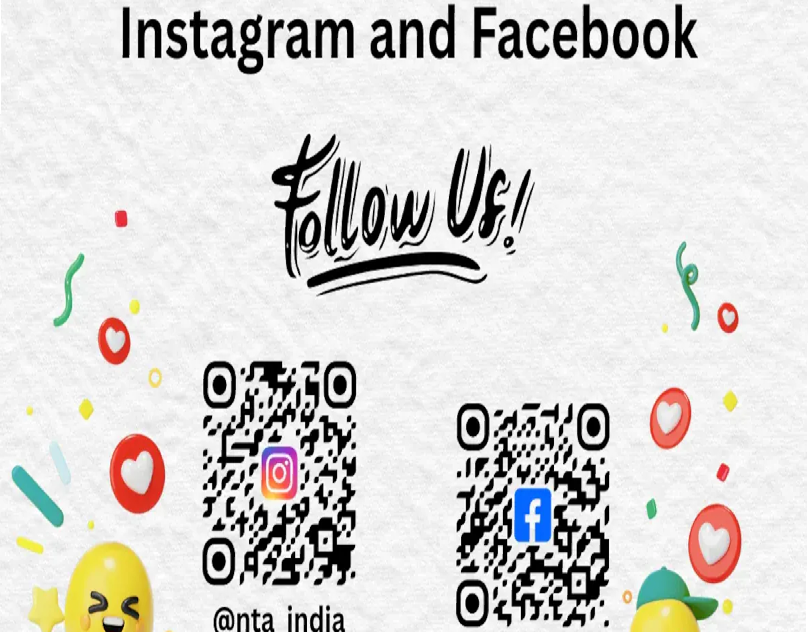
According to official announcements, the agency’s newly launched handles will provide real-time notifications, exam alerts and critical announcements, consolidating essential information within a single, easily accessible digital space.
From Static Portals to Dynamic Communication
The transition from traditional website-based updates to dynamic, platform-driven communication represents a paradigm shift. Websites, while authoritative, are inherently passive; they require users to actively seek information. Social media, by contrast, delivers updates instantaneously, often accompanied by notifications that ensure visibility.
This shift is particularly relevant in the context of contemporary student behaviour. Today’s aspirants are deeply embedded in digital ecosystems, with platforms like Instagram and Facebook integral to their daily routines. By meeting students where they already are, the NTA is effectively closing the gap between information dissemination and information consumption.
Moreover, the immediacy of social media ensures that critical updates, ranging from application deadlines to admit card releases, are less likely to be overlooked. During peak examination periods, when multiple announcements are issued in rapid succession, this real-time delivery mechanism becomes especially valuable.
What Students Stand to Gain
The benefits of this digital expansion are multifaceted. At the most fundamental level, students will receive instant alerts on key developments, including application forms, examination schedules, city intimation slips, admit cards, answer keys and results.
Beyond convenience, the initiative promises greater transparency. By providing verified information directly through official channels, the NTA aims to reduce reliance on third-party sources that may inadvertently propagate inaccuracies. In a landscape often marred by rumours and speculative updates, the presence of authoritative social media handles offers a much-needed anchor of credibility.
Equally significant is the potential for enhanced engagement. Unlike static websites, social media platforms allow for interactive communication. Features such as comments, direct messages and live updates could enable students to seek clarifications more efficiently, fostering a more responsive relationship between the agency and its stakeholders.
Combating Misinformation in the Digital Age
One of the most compelling rationales behind this move is the need to combat misinformation. In recent years, the proliferation of unofficial channels, ranging from messaging groups to speculative blogs, has complicated the information landscape for students.
By establishing verified accounts, the NTA is effectively creating a centralised source of truth. Students can now cross-check updates against official posts, reducing the risk of acting on incorrect or outdated information. This is particularly crucial in the context of national-level examinations, where even minor misinterpretations can have significant consequences.
The agency’s emphasis on authenticity is further reinforced by the use of QR codes and clearly identifiable handles, ensuring that students can easily locate and follow the correct accounts.
Aligning with Broader Digital Governance Trends
The NTA’s foray into social media is not an isolated development; it reflects a broader trend in public sector communication. Across domains, government bodies are increasingly leveraging digital platforms to enhance outreach, improve transparency and streamline service delivery.
In the context of education, this shift is particularly pertinent. The scale of India’s examination system, encompassing millions of candidates across diverse geographies, demands communication strategies that are both scalable and inclusive. Social media, with its extensive reach and low barriers to access, offers a compelling solution.
Furthermore, this initiative aligns with the government’s broader emphasis on digital transformation, wherein technology is harnessed to improve governance and citizen engagement. By integrating social media into its communication framework, the NTA is signalling its commitment to this evolving paradigm.
Challenges and Considerations
While the move is widely seen as progressive, it is not without its challenges. The very openness that makes social media appealing also introduces complexities. Managing large volumes of queries, moderating interactions and ensuring the accuracy of real-time updates will require robust administrative mechanisms.
There is also the question of digital equity. While a significant proportion of students are active on social media, disparities in access to smartphones and internet connectivity persist, particularly in rural areas. It is therefore imperative that the NTA continues to maintain its traditional communication channels alongside its digital expansion, ensuring that no student is inadvertently excluded.
Additionally, the success of this initiative will depend on sustained engagement. Merely establishing accounts is insufficient; the platforms must be actively managed, regularly updated and strategically utilised to deliver meaningful value to students.
A Cultural Shift in Institutional Communication
Beyond its immediate practical benefits, the NTA’s move represents a deeper cultural shift. It reflects a transition from a top-down, announcement-driven model of communication to a more participatory and student-centric approach.
In embracing platforms characterised by immediacy and interaction, the agency is acknowledging the evolving expectations of its audience. Today’s students are not passive recipients of information; they are active participants in digital ecosystems, accustomed to real-time updates and direct engagement.
By adapting to these expectations, the NTA is not only enhancing its operational efficiency but also redefining its relationship with students. It is positioning itself as a more accessible, responsive and transparent institution, qualities that are essential in building trust within the education system.
The Road Ahead
Looking ahead, integrating social media into the NTA’s communication strategy could pave the way for further innovation. One can envisage incorporating multimedia content, such as explanatory videos, live Q&A sessions, and interactive guides, to simplify complex processes and enhance students' understanding.
There is also potential for data-driven insights. By analysing engagement patterns, the agency could gain a deeper understanding of student concerns and information needs, enabling more targeted and effective communication.
However, the true measure of success will lie in the initiative’s impact on the student experience. If it succeeds in reducing confusion, improving accessibility and fostering greater trust, it could serve as a model for other educational bodies across the country.
Conclusion
The launch of official Instagram and Facebook accounts by the National Testing Agency marks a significant milestone in the evolution of educational communication in India. By embracing digital platforms, the agency has taken a decisive step towards making information more accessible, timely and transparent. In doing so, it has not only addressed longstanding challenges but also aligned itself with the expectations of a digitally native generation. While challenges remain, the initiative holds considerable promise. If implemented thoughtfully and sustained with diligence, it could transform the way students engage with examination