Bihar Board Class 10 Result 2026: Scrutiny Window Opens April 1
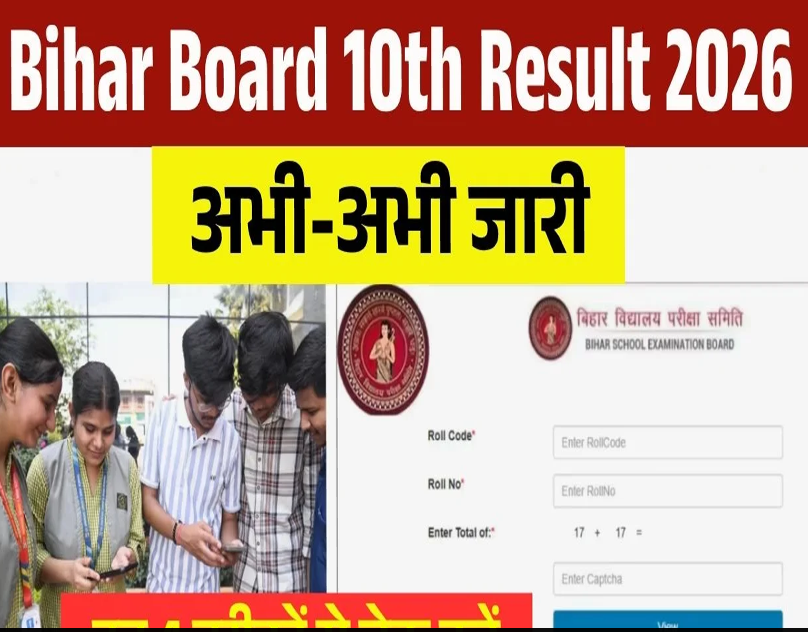
The declaration of the Class 10 (Matric) results for 2026 by the Bihar School Examination Board marks not merely the culmination of a statewide academic exercise, but the beginning of a critical corrective phase designed to uphold fairness, transparency, and student welfare. In a move that reflects both administrative efficiency and empathetic governance, the Board has announced the commencement of the scrutiny (re-evaluation) process from 1 April, alongside provisions for special and compartment examinations - ensuring that no student’s academic trajectory is unduly disrupted.
This dual-track approach, combining result declaration with immediate remedial mechanisms, underscores a broader shift in India’s examination ecosystem: one that increasingly prioritises flexibility, accountability, and student-centric outcomes.
A Swift Transition from Results to Redressal
Following the announcement of results on 29 March 2026, the Board has opened the scrutiny application window from 1 April to 7 April. During this period, students dissatisfied with their marks in one or more subjects may apply for a re-evaluation of their answer scripts.
The scrutiny process serves as a vital institutional safeguard. It allows for the verification of totalling errors, unchecked answers, or discrepancies in marking, issues that, though infrequent, can significantly impact a student’s academic progression. By enabling such a mechanism within days of the result declaration, the Board ensures that concerns are addressed promptly and systematically.
This timely intervention is particularly important in a high-stakes examination such as the Matric, where even marginal variations in marks can influence subject choices, stream allocation, and future career pathways.
Compartment and Special Examinations: A Second Opportunity
In parallel with the scrutiny process, the Board has also announced the schedule for special and compartment examinations. Applications for these will be accepted within the same window—1 April to 7 April, thereby streamlining administrative procedures and reducing uncertainty for students.
The results of these examinations are expected to be declared by 31 May 2026. This timeline is particularly significant, as it allows successful candidates to secure admission to higher secondary courses within the same academic session.
Such a provision reflects a conscious effort by the Board to eliminate the traditional “lost year” phenomenon, a longstanding concern in India’s examination system. By offering students a structured opportunity to improve or clear their results within a compressed timeframe, the Board reinforces the principle that academic setbacks need not translate into long-term disadvantage.
Scale, Participation and Performance
The Bihar Board examinations remain among the largest school-level assessments in the country. In 2026, over 15 lakh students appeared for the Class 10 examinations, conducted across nearly 1,700 centres statewide. This sheer scale highlights both the logistical complexity of the process and the critical role of the Board in shaping educational outcomes.
The overall pass percentage for the 2026 Matric examination stands at approximately 81.79%, reflecting a stable performance trend in recent years. While a substantial majority of students have successfully cleared the examination, a significant number remain eligible for scrutiny or compartment options, underscoring the importance of the Board’s post-result mechanisms.
Efficiency as Institutional Identity
One of the most notable aspects of the Bihar Board’s functioning in recent years has been its remarkable efficiency in conducting examinations and declaring results. For multiple consecutive years, the Board has been among the first in India to release both Intermediate and Matric results within March itself.
This accelerated timeline has far-reaching implications. Early result declaration allows students to make timely decisions regarding subject streams - Science, Commerce or Humanities and to initiate the admission process without delay. It also aligns the academic calendar more closely with national entrance examinations and institutional timelines.
The prompt initiation of scrutiny and compartment processes further reinforces this efficiency, creating a seamless continuum from examination to resolution.
Transparency and Trust in Evaluation
In an era where examination systems are increasingly scrutinised for fairness and accountability, the Bihar Board’s emphasis on transparency is particularly noteworthy. The scrutiny process, conducted through an online application system, enables students to engage directly with the evaluation mechanism.
By institutionalising re-evaluation as a formal, accessible process, the Board not only addresses individual grievances but also enhances overall trust in the system. Students are reassured that their performance is subject to verification, and that genuine discrepancies, if any, can be rectified.
This approach reflects a broader trend in educational governance, one that seeks to balance large-scale standardisation with individual fairness.
Supporting Continuity in Education
At the heart of the Board’s post-result strategy lies a clear objective: to ensure continuity in education. The scheduling of compartment and special examination results by the end of May is a deliberate effort to enable students to transition smoothly into higher secondary education.
In practical terms, this means that students who initially fall short of the qualifying criteria can still secure admission to Class 11 within the same academic year. This not only preserves academic momentum but also mitigates the psychological and social impact of failure.
Such measures are particularly significant in a state like Bihar, where access to educational opportunities plays a crucial role in socio-economic mobility. By preventing academic discontinuity, the Board contributes to a more inclusive and resilient education system.
A Student-Centric Examination Model
The Bihar Board’s approach to the 2026 Matric results reflects an evolving philosophy, one that places the student at the centre of the examination ecosystem. Rather than viewing results as a final verdict, the system recognises them as part of a broader learning journey, one that accommodates revision, improvement and second chances.
This perspective is evident in the integration of multiple pathways: scrutiny for re-evaluation, compartment examinations for subject clearance, and special examinations for broader academic recovery. Together, these mechanisms create a flexible framework that acknowledges the diverse challenges faced by students.
Implications for the Wider Education Landscape
The measures adopted by the Bihar Board may well serve as a model for other state boards and examination authorities. In a context where academic pressure and high-stakes testing often dominate the discourse, the emphasis on corrective opportunities and timely intervention offers a more balanced approach.
By aligning efficiency with empathy, and rigour with responsiveness, the Board demonstrates that large-scale examination systems can be both robust and humane.
Conclusion
The Bihar Board Class 10 Result 2026 is not merely an announcement of marks; it is a comprehensive framework for academic continuity and institutional accountability. The opening of the scrutiny window from 1 April, coupled with the provision for compartment and special examinations, reflects a deliberate and thoughtful approach to student welfare.
As thousands of students navigate the next phase of their academic journey, the Board’s initiatives ensure that no single result defines their future. Instead, it offers a system of support, correction, and opportunity, one that recognises the complexities of learning and the importance of second chances.
In doing so, the Bihar School Examination Board reaffirms its role not merely as an examining body, but as a steward of educational equity and progress.