Centre Strengthens NTA Leadership Amid Exam Reform Pressure
Centre Strengthens NTA Leadership Amid Mounting Pressure for Examination Reforms
The Central Government’s decision to appoint two joint secretaries and two joint directors in the National Testing Agency (NTA) marks more than a routine administrative reshuffle. Coming at a time when the country’s premier examination body faces intense scrutiny over the alleged NEET-UG 2026 paper leak controversy, the appointments reflect a broader attempt to restore institutional credibility and reinforce administrative oversight within one of India’s most consequential educational agencies.
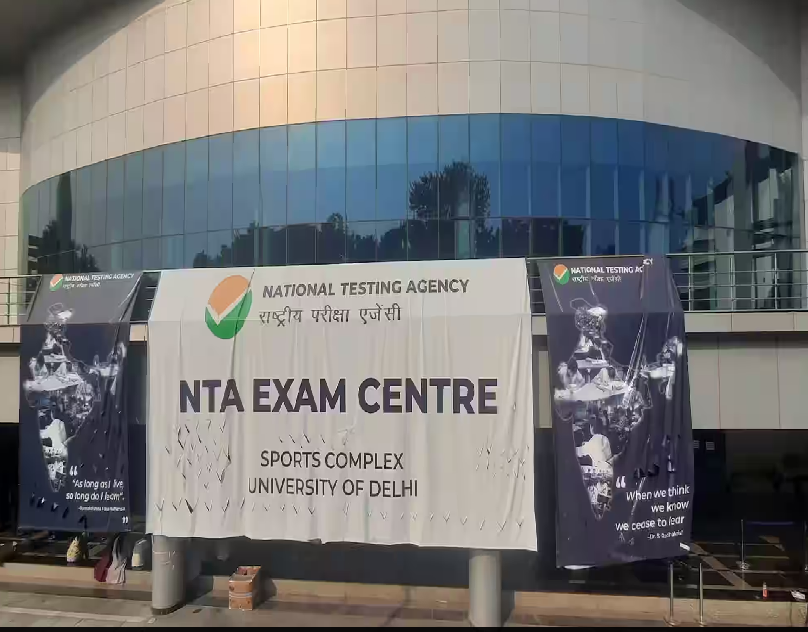
The newly appointed officials, Anuja Bapat and Ruchita Vij as joint secretaries, alongside Akash Jain and Aditya Rajendra Bhojgadhiya as joint directors, are expected to strengthen the operational and governance structure of the NTA, which currently oversees several of the country’s largest entrance examinations, including NEET, JEE Main, CUET and UGC-NET.
While the appointments themselves may appear bureaucratic in nature, their timing carries unmistakable significance. The NTA has spent recent months under sustained public criticism following allegations of examination irregularities, paper leaks and administrative lapses that have reignited long-standing concerns about the transparency and resilience of India’s competitive examination ecosystem.
Why the NTA Matters So Deeply in India’s Education System
Since its establishment in 2017, the National Testing Agency has evolved into one of the most influential institutions within India’s higher education framework. Conceived as an autonomous testing agency under the Ministry of Education, the organisation was tasked with conducting standardised entrance examinations for admissions into universities and professional institutions across the country.
Over the years, the scale of the NTA’s responsibilities has expanded dramatically. Today, the agency conducts examinations involving millions of students annually, many of whom view these tests as decisive turning points in their academic and professional futures.
The stakes attached to examinations such as NEET and JEE are extraordinarily high. A single examination outcome may determine access to medical colleges, IITs, scholarships or broader career opportunities. Consequently, even minor administrative irregularities often trigger widespread anxiety and political scrutiny.
This explains why controversies surrounding examination conduct rapidly evolve into national debates rather than isolated procedural concerns.
The NEET-UG 2026 Controversy and Public Fallout
The latest appointments come against the backdrop of the NEET-UG 2026 paper leak controversy, which has placed the NTA under unprecedented public and political pressure. Reports indicate that allegations of paper leaks and examination compromise led to the cancellation of the NEET-UG examination conducted on May 3, prompting investigations by the Central Bureau of Investigation (CBI).
Nearly 23 lakh candidates had reportedly registered for the examination, magnifying both the administrative challenge and public fallout associated with the controversy.
The scale of the issue has once again exposed the vulnerabilities of India’s highly centralised examination system. In an environment where millions compete for limited seats in medical and engineering institutions, public trust in examination integrity becomes essential.
For students, paper leak allegations are not merely institutional failures; they directly affect emotional stability, preparation cycles and perceptions of fairness. Months and often years of preparation become overshadowed by uncertainty regarding whether the examination process itself remains credible.
The controversy has therefore intensified broader demands for structural reforms in examination management, cybersecurity, accountability mechanisms and staffing practices within the NTA.
A Push Towards Administrative Reinforcement
According to official orders, Anuja Bapat, a 1998-batch Indian Statistical Service officer, and Ruchita Vij, a 2004-batch Indian Revenue Service officer, have been appointed as joint secretaries in the NTA for a tenure of five years. Akash Jain and Aditya Rajendra Bhojgadhiya have meanwhile been appointed as joint directors.
The appointments were approved by the Appointments Committee of the Cabinet (ACC), the central authority responsible for senior-level bureaucratic appointments within the Union Government.
Importantly, reports suggest that certain vacant deputy secretary and director-level posts within the NTA were temporarily upgraded to facilitate these appointments.
This indicates that the Centre may be attempting not merely to fill vacancies, but to enhance the institutional weight and supervisory capacity of the agency itself.
Administrative observers have long argued that the NTA’s rapid expansion was not always matched by proportional strengthening of permanent staffing and internal governance structures. The agency’s dependence on outsourced personnel and temporary operational arrangements has repeatedly drawn criticism, especially following examination-related controversies.
The latest appointments, therefore, appear designed to reinforce institutional accountability at a senior administrative level.
Examination Reforms Under Increasing Scrutiny
The paper leak controversy has reignited wider debates surrounding the structure of India’s competitive examination system. Critics argue that excessive centralisation, combined with immense candidate volumes, has created vulnerabilities difficult to manage through conventional administrative frameworks alone.
At the same time, the growing commercialisation of competitive coaching ecosystems and organised examination fraud networks has added further complexity to the challenge.
Several expert committees constituted in the aftermath of earlier examination controversies had already recommended significant reforms. Reports indicate that a committee chaired by former ISRO chief K Radhakrishnan had previously suggested increasing permanent staffing within the NTA to improve accountability and reduce operational dependence on outsourced systems.
A parliamentary panel had similarly emphasised the need to strengthen the agency internally following earlier examination-related concerns.
The latest appointments, therefore, appear connected to a broader institutional effort to implement at least some aspects of those recommendations.
The Challenge of Managing High-Stakes Examinations
India’s examination culture remains among the most intense and competitive in the world. Entrance tests such as NEET and JEE involve not only academic evaluation but also immense social expectations.
For many students, these examinations are viewed as gateways to economic mobility, social prestige and professional security. Families frequently invest substantial financial and emotional resources into years of preparation, often through expensive coaching systems concentrated in cities such as Kota, Hyderabad and Delhi.
In such an environment, public confidence in examination fairness becomes critically important.
Even isolated allegations of irregularity can trigger nationwide outrage because the examination system operates upon a foundational assumption of merit-based competition. Once that assumption is questioned, institutional credibility rapidly deteriorates.
This explains why examination governance now occupies a politically sensitive position within public policy discourse.
Technology Alone Cannot Solve Structural Problems
Over the past decade, Indian examination authorities have increasingly adopted digital systems aimed at improving transparency and efficiency. Computer-based testing, biometric verification, encrypted question paper distribution and AI-driven monitoring systems have all been introduced across multiple examinations.
Yet recent controversies demonstrate that technology alone cannot eliminate systemic vulnerabilities.
Experts frequently point out that examination integrity depends equally upon institutional culture, staffing quality, logistical coordination and accountability mechanisms. Sophisticated systems remain vulnerable if operational oversight weakens or if corruption networks exploit procedural gaps.
The NTA’s current challenges therefore reflect a broader lesson within modern educational governance: technological modernisation must be accompanied by institutional strengthening.
The appointment of experienced civil servants to senior positions within the agency may represent an attempt to address precisely this concern.
Public Trust and Institutional Reputation
Perhaps the greatest challenge facing the NTA today is not logistical but reputational.
Examination systems derive legitimacy from public trust. Students must believe that the process remains fair, secure and insulated from manipulation. Once repeated controversies emerge, rebuilding confidence becomes substantially more difficult than merely correcting procedural errors.
The current controversy has also amplified criticism regarding communication practices during crises. Students and parents often complain about uncertainty, delayed clarifications and inconsistent information during periods of examination disruption.
In today’s digital environment, misinformation spreads rapidly across social media platforms, often intensifying anxiety among candidates already under significant academic pressure.
This places additional responsibility upon institutions such as the NTA to maintain transparent, timely and responsive communication strategies alongside operational reforms.
A Broader Reflection on India’s Education System
The controversy surrounding the NTA ultimately reflects deeper structural tensions within India’s education ecosystem. The country’s higher education aspirations continue to expand rapidly, yet elite institutional capacity remains comparatively limited.
As millions compete for a relatively small number of high-demand seats in medical colleges, IITs and central universities, examination systems inevitably become high-pressure mechanisms carrying extraordinary social consequences.
This intensifies both competition and vulnerability to malpractice.
The challenge, therefore, extends beyond improving examination logistics alone. It involves broader questions surrounding educational expansion, institutional capacity and equitable access to opportunity.
Looking Ahead
The appointment of new joint secretaries and joint directors within the NTA may not immediately resolve the agency’s ongoing credibility crisis. However, it signals recognition at the highest administrative levels that institutional strengthening can no longer be delayed.
Whether these changes translate into meaningful reform will depend upon how effectively the agency addresses structural weaknesses, improves operational transparency and restores public confidence in the months ahead.
For millions of students preparing for future examinations, the stakes remain profoundly personal. Beyond policy debates and administrative restructuring lies a generation of aspirants whose educational futures depend upon systems they must be able to trust.
And in a country where competitive examinations shape the ambitions of millions each year, that trust remains the most important institution of all.