JEE Main 2026 Admit Card Released for April 2–4 Exams
The release of the admit card for the April session of the Joint Entrance Examination (Main) 2026 marks a decisive moment for lakhs of engineering aspirants across the country. Issued by the National Testing Agency, the hall tickets for candidates scheduled to appear on 2 and 4 April have now been made available on the official portal, signalling the imminent commencement of one of India’s most competitive examinations.
As candidates prepare to enter examination halls in the coming days, the release of the admit card is far more than a procedural milestone, it is a culmination of months, often years, of disciplined preparation and academic ambition.
A Phased Release Reflecting Administrative Precision
The admit cards for the April session commonly referred to as Session 2, were released on 29 March 2026. However, in a calibrated and phased approach, the NTA has initially issued hall tickets only for candidates scheduled to appear on 2 and 4 April.
Candidates with examination dates later in the cycle, namely 5, 6, 7 and 8 April are expected to receive their admit cards in due course. This staggered release reflects the scale and complexity of administering a nationwide computer-based examination involving over a million candidates. It also allows the testing agency to ensure accuracy and minimise logistical disruptions.
The April session itself is scheduled to be conducted across multiple days, with Paper 1 (B.E./B.Tech) examinations taking place on 2, 4, 5, 6, and 8 April and Paper 2 (B.Arch/B.Planning) slated for 7 April.
The Admit Card: More Than Just an Entry Pass
The admit card is not merely a document granting entry into the examination hall; it is a comprehensive record of a candidate’s examination identity. It contains essential details such as the candidate’s name, roll number, application number, examination date, shift timing, and centre address.
Additionally, the document includes critical instructions that candidates must adhere to on the day of the examination. These guidelines range from reporting time and permissible items to behavioural protocols within the examination centre.
Importantly, the admit card also carries a self-declaration form, which candidates are required to complete and present at the venue. In certain cases, an additional declaration form, particularly for candidates who have not used Aadhaar as an identification document, must also be submitted.
Given the significance of these requirements, candidates are strongly advised to download, verify, and print multiple copies of the admit card well in advance of their examination date.
How to Access the Admit Card
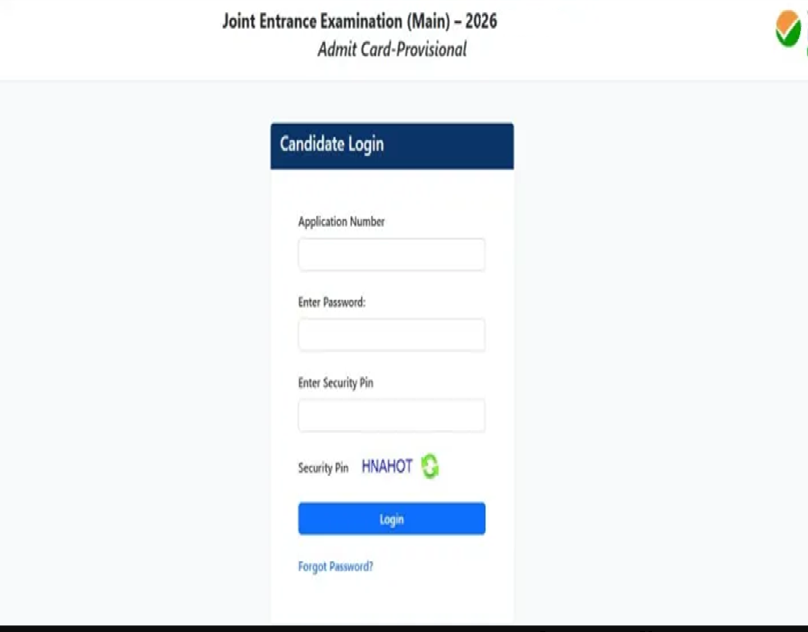
The process of downloading the admit card has been streamlined through the official examination portal. Candidates must log in using their application number and password or date of birth to access their hall ticket.
The steps are straightforward:
- Visit the official JEE Main website
- Click on the Session 2 admit card link
- Enter login credentials
- Download and print the admit card
While the process is technically simple, it is essential that candidates carefully review all details upon downloading the document. Any discrepancies, whether in personal information or examination centre allocation, must be reported immediately to the authorities.
The Scale and Significance of JEE Main
The Joint Entrance Examination Main stands as one of the most competitive entrance examinations in the country, serving as the gateway to premier institutions such as the National Institutes of Technology (NITs), Indian Institutes of Information Technology (IIITs), and other centrally funded technical institutions.
Conducted in two sessions annually, the examination provides candidates with multiple opportunities to improve their scores. The April session, in particular, often witnesses heightened competition, as many aspirants attempt to enhance their performance following the January attempt.
The examination is conducted in a computer-based format across a vast network of centres in India and abroad, reflecting its national and increasingly global reach.
Exam-Day Protocols and Candidate Responsibilities
With the examination dates drawing near, adherence to prescribed protocols becomes paramount. Candidates must carry a printed copy of the admit card along with a valid photo identification document. Entry to the examination centre without these documents is strictly prohibited.
Equally important is compliance with the instructions outlined in the admit card. These include reporting well before the designated time, adhering to dress codes (where applicable) and refraining from carrying prohibited items such as electronic devices.
In recent years, examination authorities have placed increasing emphasis on maintaining the integrity and fairness of the testing process. As such, candidates are expected to uphold the highest standards of conduct within the examination environment.
Navigating Logistical and Scheduling Considerations
The scheduling of examinations across multiple days inevitably introduces logistical considerations. Candidates must carefully note their allotted examination date, shift timing, and centre location.
In certain cases, external factors may necessitate adjustments. For instance, the examination originally scheduled for 5 April has been subject to rescheduling considerations due to its overlap with Easter Sunday, reflecting the authorities’ responsiveness to cultural and religious sensitivities.
Such developments highlight the dynamic nature of large-scale examinations and the importance of staying updated through official channels.
The Psychological Dimension of Examination Readiness
Beyond logistical preparation, the release of the admit card also marks a psychological transition for candidates from preparation to performance. It is at this stage that aspirants must consolidate their learning, manage stress and approach the examination with clarity and confidence.
The final days leading up to the examination are best utilised for revision, practice through mock tests, and the reinforcement of conceptual understanding. Equally important is the need for adequate rest and mental composure.
Transparency, Accessibility, and Digital Efficiency
The NTA’s digital-first approach to examination management has significantly enhanced accessibility and transparency. The online release of admit cards, coupled with clear instructions and real-time updates, ensures that candidates across diverse geographical locations can access essential information with ease.
This system also allows for rapid dissemination of updates, whether related to scheduling changes, examination guidelines, or technical clarifications. In a process as large and complex as JEE Main, such efficiency is indispensable.
Looking Ahead: Beyond the Examination
While the immediate focus remains on the April session, the broader significance of JEE Main extends beyond the examination itself. Performance in this test determines eligibility for admission to some of the country’s most prestigious engineering institutions, shaping the academic and professional trajectories of countless students.
For many, it also serves as a stepping stone to the Joint Entrance Examination Advanced, which opens the doors to the Indian Institutes of Technology (IITs).
Conclusion
The release of the JEE Main 2026 admit card for the April 2–4 examinations represents a pivotal moment in the academic journey of engineering aspirants. It is a document that symbolises not only eligibility but also opportunity, an invitation to compete on one of the most rigorous academic platforms in the country.
As candidates prepare to step into examination halls, they carry with them the weight of aspiration, the discipline of preparation, and the promise of possibility. In this defining moment, the admit card serves as both a gateway and a reminder: that success in such examinations is as much about perseverance and composure as it is about knowledge.
In the days ahead, as the examination unfolds across centres nationwide, the focus will shift from preparation to performance - marking the beginning of yet another chapter in India’s dynamic and ever-evolving education landscape.