43 New Medical Colleges Added, 11,682 MBBS Seats Cleared For 2025–26: Health Ministry Data
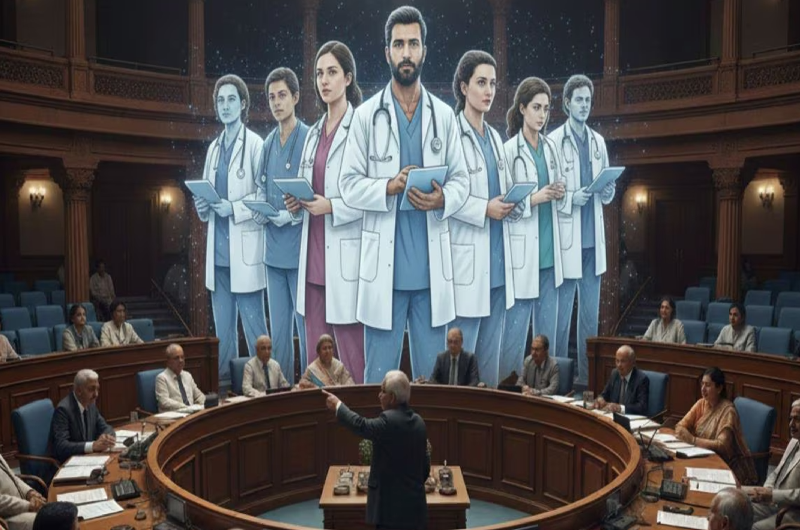
India’s medical education landscape is witnessing a significant expansion, with the Union government approving 11,682 additional MBBS seats and 8,967 postgraduate (PG) seats for the 2025–26 academic year. The development accompanies the establishment of 43 new medical colleges across the country, according to data presented by the Ministry of Health and Family Welfare in the Rajya Sabha.
The move represents another milestone in the government’s continuing effort to strengthen medical education infrastructure, improve the availability of trained healthcare professionals, and expand opportunities for students aspiring to pursue careers in medicine.
A Major Boost to Medical Education Capacity
The expansion of medical colleges and seats forms part of a broader strategy aimed at addressing the growing demand for doctors in India. In its response to Parliament, the government stated that the new additions are expected to significantly enhance the country’s medical education capacity and help bridge the gap between healthcare demand and the availability of trained professionals.
Medical education in India has undergone remarkable growth over the past decade. Data presented by the Ministry of Health indicates that the number of medical colleges has increased from 387 in 2014 to 818 in 2026.
This sharp rise reflects sustained policy efforts to expand both infrastructure and academic capacity within the healthcare education sector.
The increase in medical colleges has also led to a dramatic rise in the number of available seats. MBBS seats have grown from around 51,348 in 2014 to approximately 1,28,976 today, while postgraduate seats have expanded from 31,185 to 85,020 over the same period.
Such expansion is expected to play a crucial role in addressing India’s long-standing shortage of doctors, particularly in rural and underserved regions.
Parliamentary Announcement and Government Data
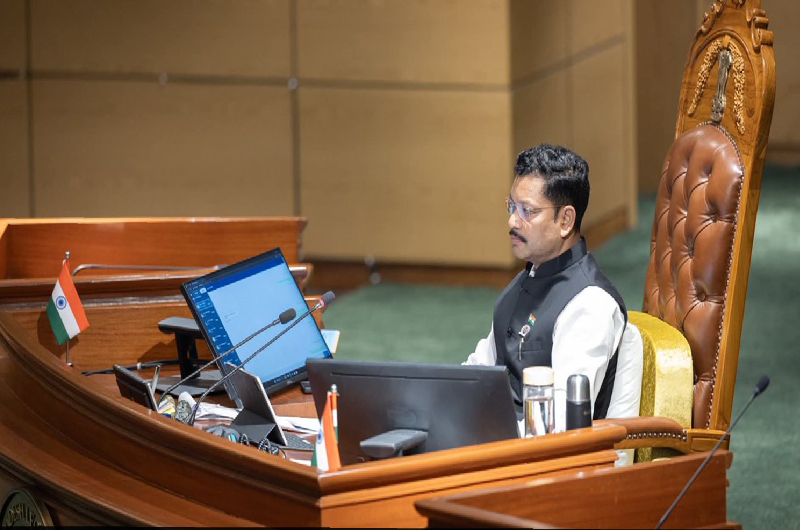
The latest figures were shared by Minister of State for Health and Family Welfare Anupriya Patel in a written reply in the Rajya Sabha. The information was based on data compiled by the National Medical Commission (NMC), the regulatory authority responsible for overseeing medical education and professional standards in India.
According to the data presented in Parliament, the government has granted approvals for 11,682 MBBS seats and 8,967 postgraduate medical seats for the 2025–26 academic session.
These seats are distributed across a range of institutions, including government medical colleges, private institutions, and specialised centres such as All India Institutes of Medical Sciences (AIIMS) and other Institutes of National Importance (INIs).
The increase in seats is the result of both the establishment of new colleges and the expansion of existing institutions that have upgraded their infrastructure to accommodate more students.
Role of the National Medical Commission
The approval and regulation of medical colleges in India fall under the purview of the National Medical Commission. The NMC evaluates applications submitted by institutions seeking permission to establish new medical colleges or increase their intake capacity.
Each year, the commission invites online applications from medical institutions and conducts detailed assessments before granting approvals.
These evaluations include strict scrutiny of:
- Infrastructure facilities
- Availability of teaching hospitals
- Faculty strength and qualifications
- Laboratory and research facilities
- Clinical training resources
Institutions must comply with a set of comprehensive regulations, including Minimum Standard Requirements for undergraduate and postgraduate medical education. Only those institutions that meet these rigorous standards are granted permission to admit students.
This regulatory framework is intended to ensure that the expansion of medical education does not compromise academic quality or clinical training standards.
Strengthening Healthcare Infrastructure
The expansion of medical colleges is not merely an academic initiative; it is closely linked to broader efforts to strengthen healthcare infrastructure across the country.
Many of the new colleges are being established through centrally sponsored schemes that aim to upgrade district hospitals into teaching institutions. This approach allows the government to simultaneously improve healthcare services and medical education capacity.
Under these schemes, district hospitals are equipped with additional infrastructure, faculty, and academic facilities so that they can function as fully operational medical colleges.
Such initiatives serve multiple purposes:
- They bring advanced healthcare facilities to smaller cities and rural areas.
- They reduce regional disparities in medical education.
- They provide training opportunities for students closer to underserved communities.
The strategy also helps improve patient care by linking medical education with active healthcare delivery systems.
Funding and Centre–State Collaboration
The establishment of new medical colleges typically involves a collaborative funding model between the central and state governments.
For most states, the cost of setting up new medical colleges is shared in a 60:40 ratio between the Centre and the states. However, for special category states and northeastern regions, the central government bears 90 per cent of the cost, with the remaining 10 per cent contributed by the respective state governments.
This funding arrangement ensures that financially weaker states can also develop robust medical education infrastructure without facing overwhelming fiscal burdens.
Through such collaborative frameworks, the government aims to ensure balanced development of healthcare and educational facilities across the country.
Opportunities for Medical Aspirants
The increase in medical colleges and seats is particularly significant for students preparing for competitive entrance examinations such as NEET-UG and NEET-PG.
Every year, millions of students appear for the National Eligibility-cum-Entrance Test (NEET) in the hope of securing admission to medical colleges. However, limited seat availability has historically made the competition extremely intense.
With the addition of 11,682 new MBBS seats, a larger number of students will now have the opportunity to pursue medical education.
Similarly, the approval of 8,967 additional postgraduate seats is expected to strengthen specialist training programmes, enabling more doctors to pursue advanced medical disciplines.
This expansion is likely to have a long-term impact on India’s healthcare system by increasing the number of qualified doctors and specialists available to serve the population.
Addressing the Doctor–Population Ratio
India has long faced challenges in maintaining an adequate doctor-to-population ratio, particularly in rural and remote regions. The expansion of medical education capacity is widely regarded as a crucial step toward addressing this issue.
By increasing the number of medical graduates each year, the government hopes to ensure that more doctors are available to serve communities across the country.
Furthermore, the integration of district hospitals into medical education systems may encourage newly trained doctors to work in smaller towns and rural districts, where healthcare services are often limited.
Over time, these initiatives are expected to improve healthcare accessibility and quality for millions of citizens.
A Decade of Rapid Growth
The latest approvals form part of a broader pattern of sustained expansion in India’s medical education system.
According to official figures, thousands of new MBBS and postgraduate seats have been added in recent years as part of government initiatives to strengthen the sector.
For instance, data from the National Medical Commission indicates that MBBS seats increased by over 48,000 between the academic years 2020–21 and 2025–26, while PG seats grew by more than 29,000 during the same period.
This sustained expansion reflects the government’s long-term vision of developing a robust healthcare workforce capable of meeting the needs of a growing population.
The Road Ahead for Medical Education
While the expansion of medical colleges and seats marks a positive development, experts emphasise that the focus must also remain on maintaining educational quality and clinical training standards.
Medical education is a resource-intensive field that requires highly qualified faculty, modern laboratories, well-equipped teaching hospitals, and robust research infrastructure.
Ensuring that newly established colleges meet these standards will be essential for maintaining the credibility and effectiveness of India’s healthcare education system.
At the same time, policymakers are exploring ways to integrate emerging technologies, telemedicine, and interdisciplinary research into medical education to prepare future doctors for evolving healthcare challenges.
Conclusion
The establishment of 43 new medical colleges and the approval of 11,682 additional MBBS seats for the 2025–26 academic year marks a significant milestone in the expansion of India’s medical education system.
By increasing the number of training institutions and expanding academic capacity, the government aims to create a stronger pipeline of healthcare professionals who can serve communities across the nation.
For aspiring medical students, the expansion brings renewed hope and opportunity in an otherwise highly competitive admission landscape. For the country as a whole, it represents an important step toward building a more resilient healthcare system capable of meeting the needs of its vast and diverse population.
As these new colleges begin operations and additional seats become available, the impact of these initiatives is likely to be felt not only in classrooms and hospitals but also in the improved health outcomes of communities across India.