FMGE 2026 Final Edit Window Opens for Application Corrections
FMGE 2026 Final Edit Window Opens: A Critical Opportunity for Candidates to Ensure Application Accuracy
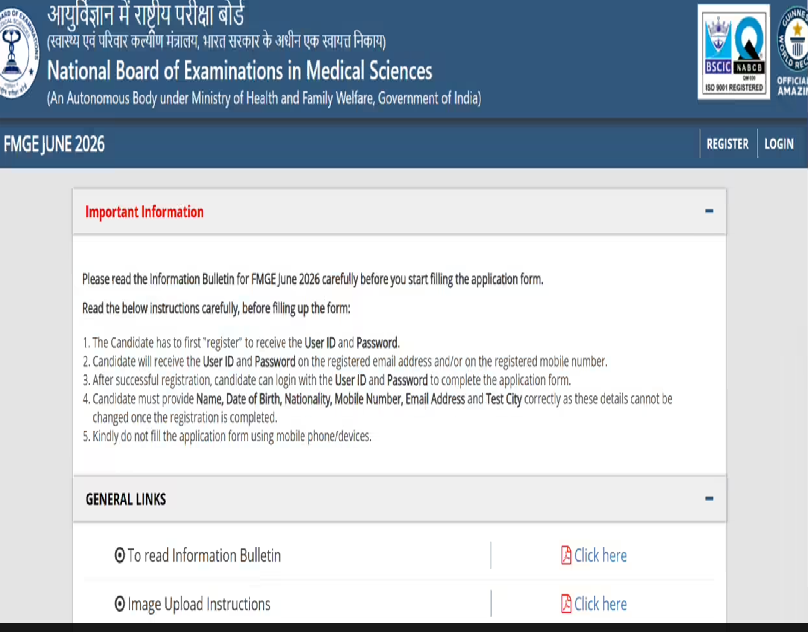
The opening of the final edit window for the Foreign Medical Graduate Examination (FMGE) 2026 marks a decisive moment for thousands of aspiring medical practitioners seeking to establish their professional credentials in India. Announced by the National Board of Examinations in Medical Sciences, this limited-time provision offers candidates one last opportunity to rectify errors in their application forms before the examination process advances further. In a system where procedural precision is paramount, the significance of this corrective window cannot be overstated.
Understanding the Purpose of the Edit Window
The final edit window is not merely an administrative formality; it is an essential safeguard within a high-stakes examination framework. Given the volume of applications and the complexity of documentation required, inadvertent errors are not uncommon. These may range from incorrect personal details to discrepancies in uploaded photographs, signatures, or supporting documents. By providing candidates with a final chance to make corrections, the examination authority seeks to ensure both fairness and accuracy. It allows applicants to present a complete and error-free submission, thereby reducing the likelihood of disqualification on technical grounds. At the same time, it reinforces the importance of diligence and attention to detail, qualities that are indispensable in the medical profession.
What Candidates Can and Cannot Edit
While the edit window offers flexibility, it is not without limitations. Typically, only specific fields are open for modification, such as images, signatures and select personal details. Core information, particularly that which establishes identity and eligibility, may remain non-editable to preserve the integrity of the application process. Candidates are therefore advised to approach this opportunity with clarity and caution. It is essential to review the official guidelines carefully, identify permissible changes, and ensure that all corrections are accurate and consistent with supporting documents. Any oversight at this stage could have lasting implications.
The High Stakes of Accuracy
In competitive examinations such as the FMGE, even minor discrepancies can lead to significant consequences. An incorrectly uploaded photograph, for instance, may result in rejection at the verification stage, regardless of a candidate’s academic competence. Similarly, inconsistencies in personal information can create complications during identity verification. The final edit window thus represents a critical checkpoint. It allows candidates to eliminate such risks and proceed with confidence. More broadly, it underscores a fundamental principle of professional practice: that precision matters and that attention to detail is not optional but essential.
FMGE: A Gateway to Medical Practice in India
The FMGE occupies a unique position within India’s medical education landscape. It serves as a mandatory screening test for Indian citizens and Overseas Citizens of India (OCI) who have obtained their medical qualifications abroad and wish to practise in the country. Conducted by NBEMS, the examination ensures that all practitioners meet a uniform standard of competence, irrespective of where they completed their studies. This standardisation is vital for maintaining the quality and credibility of healthcare services. By assessing fundamental medical knowledge and clinical understanding, the FMGE acts as a bridge between international education and domestic practice. Its rigorous structure reflects the responsibilities inherent in the medical profession, where competence directly impacts patient outcomes.
The Candidate Experience: Challenges and Responsibilities
For candidates, the journey towards the FMGE is often marked by considerable effort and investment. Many have pursued medical education in diverse international settings, adapting to different curricula, languages and clinical environments. Returning to India to undertake the FMGE introduces another layer of complexity, requiring alignment with local standards and expectations. Within this context, the application process assumes heightened importance. It is not merely a procedural step but a foundational requirement that enables candidates to participate in the examination. Ensuring its accuracy is therefore both a practical necessity and a professional responsibility.
Strategic Use of the Final Edit Window
To make the most of the final edit window, candidates should adopt a systematic approach. This begins with a thorough review of the submitted application, cross-checking each detail against official documents. Particular attention should be paid to photographs and signatures, as these are common sources of error.
It is also advisable to avoid last-minute corrections. Technical issues, server congestion, or simple oversight can complicate the process if left until the final hours. By addressing corrections well in advance, candidates can minimise stress and ensure a smoother experience.
Equally important is the need to adhere strictly to the prescribed specifications for uploads. Image dimensions, file formats and background requirements must be followed precisely. Failure to do so can result in rejection, even if the correction itself is conceptually accurate.
Digital Processes and Administrative Efficiency
The provision of an online edit window reflects the broader digitisation of examination processes in India. By leveraging digital platforms, authorities such as NBEMS have been able to enhance accessibility, streamline operations and reduce administrative delays. However, this efficiency also places greater responsibility on candidates. In a largely self-managed system, the accuracy of submissions depends on individual diligence. The final edit window, therefore, serves as both an opportunity and a test of organisational competence.
Beyond the Edit Window: Preparing for the Examination
While the immediate focus may be on application corrections, candidates must not lose sight of the larger objective, the examination itself. The FMGE demands a comprehensive understanding of medical concepts, clinical reasoning and the ability to apply knowledge in a structured manner. Balancing administrative tasks with academic preparation is essential. Once corrections are completed, candidates should redirect their attention to revision, practice tests and conceptual clarity. The edit window is a means to an end, not an end in itself.
A Broader Perspective on Professional Standards
The emphasis on accuracy within the FMGE application process reflects a broader ethos within the medical profession. Precision, accountability and adherence to standards are fundamental to effective practice. From patient records to clinical procedures, attention to detail can have profound implications. In this light, the final edit window can be seen as more than a procedural allowance. It is an extension of professional expectations, reinforcing the importance of meticulousness at every stage.
A Moment Not to Be Overlooked
The opening of the FMGE 2026 final edit window is a crucial development for candidates navigating the path towards medical practice in India. It offers a final opportunity to ensure that applications are accurate, complete and compliant with official requirements.
For aspirants, the message is clear: this is not a stage to be approached casually. It demands careful attention, thoughtful execution and a commitment to precision. By making effective use of this window, candidates can eliminate avoidable obstacles and focus on the challenges that truly matter.
As the examination process moves forward, the emphasis will shift from administrative accuracy to academic performance. Yet, the importance of this moment endures. It is a reminder that success in professional pathways is often determined not only by knowledge and skill, but also by the ability to manage details with care and responsibility.