IIT Madras Leads ONOS Usage as Research Access Crosses 11 Crore Downloads
IIT Madras Tops Usage As India's National Research Access Scheme Crosses 11 Crore Downloads
In a landmark development for India’s higher education and research ecosystem, the Indian Institute of Technology Madras has emerged as the leading user under the Centre’s ambitious One Nation One Subscription (ONOS) initiative, even as the scheme surpassed an extraordinary 11 crore research article downloads in 2025.
This milestone is more than a statistical achievement; it reflects a profound transformation in the accessibility of academic knowledge across the country. For decades, access to global scholarly resources remained uneven, often constrained by high subscription costs and institutional limitations. The ONOS initiative, however, signals a decisive shift, democratising research access and placing India’s academic community on a more equitable footing with its global counterparts.
A Transformative Leap in Research Accessibility
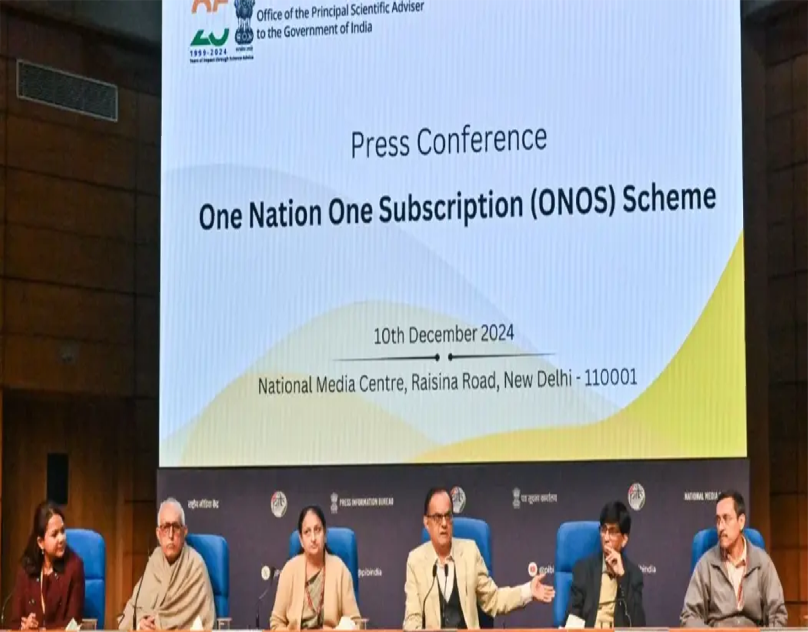
The ONOS scheme, launched on 1 January 2025 following Union Cabinet approval in late 2024, was conceived as a centralised mechanism to provide nationwide access to scholarly journals and research publications.
Within its very first year, the initiative enabled students, researchers, and faculty members across government institutions to download over 11.3 crore research articles, averaging nearly one crore downloads every month.
Such figures underscore not only the scale of adoption but also the latent demand for high-quality academic resources in India. Historically, access to international journals was limited to a select group of well-funded institutions. Smaller universities and colleges often struggled to afford subscriptions, resulting in disparities in research output and academic exposure.
By centralising subscriptions and removing financial barriers, ONOS has effectively levelled the playing field. Researchers from diverse institutional backgrounds can now engage with cutting-edge global scholarship, thereby enhancing both the quality and quantity of research emerging from India.
IIT Madras: Leading the Way
Among the institutions benefiting from this initiative, IIT Madras has distinguished itself with the highest usage, recording 40.3 lakh downloads during 2025.
This leadership is not incidental. IIT Madras has long been recognised as one of India’s foremost centres of academic excellence, consistently ranking at the top of national assessments and maintaining a strong emphasis on research and innovation.
Its high usage under ONOS reflects a deeply ingrained research culture, characterised by intellectual curiosity, interdisciplinary collaboration, and a commitment to addressing real-world challenges. The institute’s faculty and students actively engage with global literature, ensuring that their work remains informed by the latest developments across disciplines.
Closely following IIT Madras is the Indian Institute of Science Bengaluru, which recorded 28.3 lakh downloads, further highlighting the prominence of premier institutions in driving research engagement.
Broad-Based Participation Across Institutions
While leading institutions have demonstrated high usage, the success of ONOS is equally evident in its widespread adoption across a diverse range of universities. Central universities such as Banaras Hindu University and University of Delhi reported 15.3 lakh and 14.2 lakh downloads respectively, indicating robust engagement beyond elite institutions.
Similarly, institutions like Jawaharlal Nehru University and the Tata Institute of Fundamental Research have also recorded significant usage, reflecting the scheme’s broad-based impact.
State universities, too, have emerged as active participants. Institutions such as Anna University and Jadavpur University have demonstrated notable engagement, underscoring the scheme’s reach across different tiers of higher education.
This widespread participation is particularly significant in a country as diverse as India, where educational resources and infrastructure vary considerably across regions. ONOS has effectively bridged these gaps, enabling a more inclusive and interconnected academic ecosystem.
The Economics of Knowledge Access
One of the defining features of the ONOS initiative is its innovative funding model. With an allocation of approximately ₹6,000 crore for the period 2025–2027, the scheme centralises the procurement of journal subscriptions, with the government directly paying publishers.
This approach eliminates the need for individual institutions to negotiate and bear subscription costs, which can often be prohibitively expensive. By leveraging economies of scale, the government has secured access to journals from around 30 major international publishers, covering thousands of titles across disciplines.
The financial implications are substantial. Institutions can now redirect resources previously allocated to subscriptions towards other critical areas such as research infrastructure, faculty development, and student support.
Moreover, the scheme introduces a level of standardisation and transparency in access to academic resources, reducing disparities and ensuring that all participating institutions benefit from the same breadth of content.
Expanding the Scope of Academic Inquiry
The availability of extensive research literature has far-reaching implications for academic inquiry. Access to global scholarship enables researchers to build upon existing knowledge, identify gaps in the literature, and develop innovative solutions to complex problems.
Under ONOS, users have access to journals spanning a wide range of disciplines, from engineering and medicine to social sciences and humanities. This interdisciplinary access is particularly valuable in addressing contemporary challenges, which often require integrated approaches.
For instance, tackling climate change necessitates insights from environmental science, economics, policy studies, and technology. Similarly, advancements in healthcare rely on the convergence of medical research, data science, and engineering.
By facilitating such cross-disciplinary engagement, ONOS is fostering a more holistic and collaborative approach to research.
Strengthening India’s Global Research Standing
The implications of ONOS extend beyond domestic academia. Enhanced access to global literature positions Indian researchers to contribute more effectively to international scholarship.
Increased engagement with high-quality research resources is likely to translate into improved publication output, higher citation rates, and greater visibility in global academic forums. Over time, this can enhance India’s standing in international rankings and strengthen its reputation as a hub of innovation and intellectual capital.
Furthermore, the scheme aligns with broader national objectives of fostering a knowledge-driven economy. As industries increasingly rely on research and innovation, the availability of robust academic resources becomes a critical enabler of economic growth and competitiveness.
Challenges and the Road Ahead
While the success of ONOS in its initial year is undeniable, sustaining and building upon this momentum will require careful planning and continuous evaluation.
One potential challenge lies in ensuring that users are equipped to effectively utilise the vast resources available. Access alone is not sufficient; it must be complemented by training in research methodologies, data analysis, and academic writing.
Additionally, there is a need to encourage greater participation from institutions that may still be underutilising the platform. Targeted outreach, capacity-building initiatives, and awareness campaigns can play a crucial role in maximising the scheme’s impact.
Another consideration is the long-term sustainability of the funding model. While the current allocation is substantial, ensuring continued support and expansion will be essential as the volume of research and the number of users grow.
A Paradigm Shift in Indian Higher Education
The success of IIT Madras under the ONOS initiative is emblematic of a broader transformation in India’s higher education landscape. It highlights the potential of well-conceived policy interventions to address systemic challenges and unlock new opportunities.
By democratising access to knowledge, ONOS is not merely supporting individual researchers; it is reshaping the very foundations of academic engagement in the country. It fosters a culture of inquiry, collaboration, and excellence, qualities that are essential for navigating the complexities of the modern world.
As the scheme continues to evolve, it holds the promise of further strengthening India’s research ecosystem, empowering institutions, and inspiring a new generation of scholars.
In this context, the leadership of IIT Madras serves as both an achievement and an aspiration, a reminder of what is possible when access to knowledge is combined with a commitment to excellence.