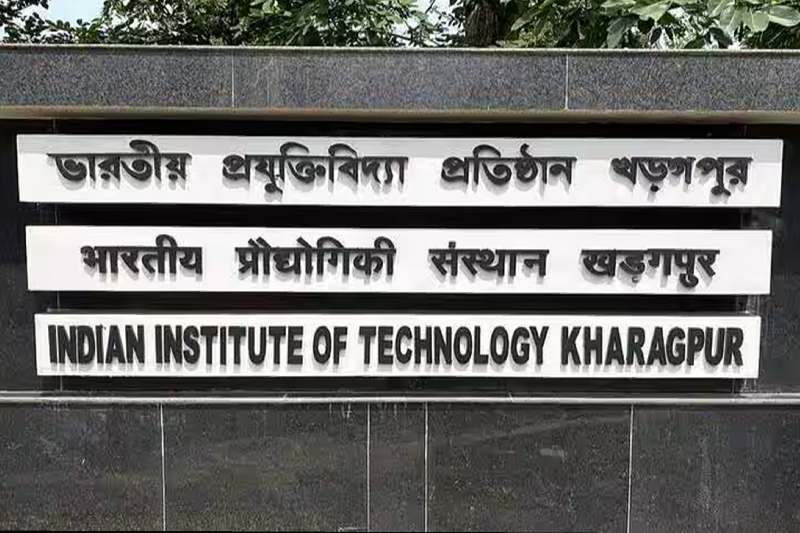
Indian Institute of Technology Kharagpur Launches School of Digital Learning, Applied AI & ML
In an era defined by rapid technological transformation, one of India’s premier educational institutions has taken a decisive step that promises to resonate well beyond academia and into the heart of global innovation. On 3 March 2026, the Indian Institute of Technology Kharagpur unveiled its newest venture: a dedicated school of digital learning, applied artificial intelligence (AI) and machine learning (ML), a visionary initiative poised to recalibrate the contours of technological education and research in the coming decade. This announcement marks more than just the addition of another specialised unit within an already illustrious institution; it signals a strategic pivot towards a translational, research-integrated model that harmonises cutting-edge science with real-world impact. In doing so, IIT Kharagpur stakes its claim at the forefront of an educational paradigm that intersects deep tech, industry collaboration and national development imperatives.
A Bold Vision: Redefining AI Education and Innovation
The newly established school, formally titled the Jyoti Chatterjee School of Digital Engineering, Applied Artificial Intelligence and Machine Learning, is not merely a typical academic department. It has been conceptualised as a horizontal, applied AI engine, one that cuts across traditional disciplinary boundaries to foster innovation ecosystems involving multiple academic and industrial verticals.
What distinguishes this initiative from conventional university programmes is its emphasis on translational research and real-world deployment. Rather than adhering strictly to conventional degree frameworks, the school is designed to function as a deep-tech innovation accelerator, a mechanism to incubate ideas from early conception through to tangible solutions that address complex socio-economic and technological challenges.
The initiative has been made possible through the philanthropic support of Dr Jyoti Chatterjee, a distinguished alumnus (BTech, 1977), who has pledged up to USD 5 million over the next five years through the IITKGP Foundation in the USA. An initial commitment of USD 1 million was formalised at the signing of the MoU, with structured annual funding to follow.
A New Framework to Bridge Academia, Industry and Government
At its core, the school embodies a structural reimagining of how applied AI should be institutionalised. Instead of categorically confining research to faculty silos or curricular parameters, IIT Kharagpur’s approach seeks to infuse AI and machine learning into a holistic ecosystem that includes digital engineering, next-generation computing, deep neural systems and industrial partnerships.
Operating under the Office of the Dean (Research & Development), the school will establish industry-hosted laboratories, AI testbeds and co-development platforms with government and corporate entities alike. These facilities are envisioned as crucibles where theoretical insight meets practical application from prototype to product, and from ideation to market readiness.
In a landscape where academic research too often concludes at publication, this school’s emphasis on translational impact represents a refreshing departure. Projects are expected not only to transcend disciplinary boundaries but also to engage directly with sectors such as healthcare, manufacturing, infrastructure, energy and smart systems.
Integration With Healthcare and Multidisciplinary Systems
A particularly compelling dimension of the initiative lies in its planned integration with healthcare research. The school will collaborate closely with several institutional partners within IIT Kharagpur, including the School of Medical Science and Technology (SMST) and the Common Research and Technology Development Hub (CRTDH) on Healthcare.
By dovetailing AI research with clinical environments such as the ecosystem of the Dr Shyama Prasad Mookerjee Super Speciality Hospital innovations will be tested and validated in real-world conditions. This model aims to shorten the often long and uncertain path from theoretical algorithm to practical clinical tool, accelerating development cycles for AI-powered solutions that could enhance diagnostics, patient care and system efficiency.
This bridge between rigorous laboratory research and field deployment exemplifies the school’s translational ambitions, marrying the computational with the corporeal in a way that could reshape healthcare delivery through intelligent systems.
Fostering Strategic and Ethical AI Development
Beyond technological prowess, IIT Kharagpur’s initiative positions itself within a broader narrative of responsible, sovereign AI development. In recent discourse across India’s AI landscape, experts have emphasised the need for indigenous capabilities, especially in a world increasingly dominated by externally produced AI platforms and datasets.
The school’s strategic orientation, which encourages collaboration with industry and government, reflects a recognition that AI innovation cannot be divorced from ethical and contextual considerations. From ensuring data privacy to validating systems in culturally nuanced settings, research here is expected to emphasise not only capability but accountability.
Indeed, this aligns neatly with India’s broader technological self-reliance mission, a drive to cultivate homegrown expertise and solutions that resonate with local needs while contributing to global advancements.
Educational Impact: Beyond Degrees to Lifelong Learning
While the school’s research focus is paramount, its educational implications are equally noteworthy. Aspiring students, researchers and professionals will benefit from a curriculum and ecosystem that transcends traditional boundaries. Instead of pursuing narrow specialisations confined to theoretical courses, learners will be immersed in an environment designed to equip them with the skills and perspectives needed for real-world innovation.
Aligned with parallel trends in expanding access to AI education nationally from foundational AI modules in schools to advanced professional programmes - IIT Kharagpur’s initiative dovetails with the demand for lifelong learning frameworks in the digital age.
This move also resonates with global shifts in AI education, where the emphasis is no longer solely on technical knowledge but on ethical reasoning, translational skills, and interdisciplinary fluency. By nurturing talent in this holistic mould, the school seeks to build a cadre of innovators capable of leading in academia, industry and public policy.
Positioning for Global and National Leadership
In championing an applied, research-driven model, IIT Kharagpur positions itself not only as a leader within India’s higher education ecosystem but also on the global stage of AI innovation. As nations and institutions vie to shape the future of intelligent systems, the Jyoti Chatterjee School stands as a testament to how academic vision, philanthropic support and strategic intent can converge to create something truly transformative.
The school is poised to become a lighthouse institution for responsible AI, one that inspires collaborators across borders and disciplines, and contributes meaningfully to the global discourse on how technology can be harnessed for societal good.
Conclusion: A New Dawn for AI and Digital Engineering
The launch of this school marks a pivotal chapter in the evolution of technological education and research in India. It embodies a shift from conventional academic models toward a dynamic, collaborative, impact-oriented ecosystem, one where innovation is not merely conceptual but demonstrably applied. As AI continues to redefine what is possible across industries, the establishment of such dedicated, forward-looking institutions will be integral to shaping a future that is technologically advanced, ethically grounded and socially beneficial. This initiative is, therefore, more than an academic milestone, it is a declaration of intent, an investment in possibility, and, perhaps most importantly, a beacon for future generations of thinkers, creators and leaders in the age of artificial intelligence.