JEE Main 2026 Session 2 Result Out, Scorecard & Cut-Off
JEE Main 2026 Session 2 Results Announced: A Detailed Guide to Scorecards, Cut-offs and What Lies Ahead
In a major update for engineering aspirants across India, the National Testing Agency (NTA) has officially declared the JEE Main 2026 Session 2 results on April 20. The results are now available on the official website, providing candidates with access to their scorecards, percentile scores, All India Rank (AIR) and eligibility status for the next stage, JEE Advanced. This announcement marks a pivotal moment in the national engineering admission cycle, shaping the academic trajectories of lakhs of students. The declaration of the results follows the successful conduct of the April session of the examination, which witnessed participation from over 11 lakh candidates across multiple test centres in India and abroad. The scale and competitiveness of the examination once again underline its significance as one of the most sought-after entrance tests in the country.
Understanding the Importance of JEE Main
JEE Main serves as a gateway to some of India’s most prestigious engineering institutions, including the National Institutes of Technology (NITs), Indian Institutes of Information Technology (IIITs), and other centrally funded technical institutions. Additionally, it acts as a qualifying examination for JEE Advanced, which is required for admission to the Indian Institutes of Technology (IITs). Given its national importance, the release of the JEE Main results is not merely an administrative milestone but a defining moment for students aiming to pursue careers in engineering and technology.
Key Highlights of JEE Main 2026 Session 2 Results
This year’s results have brought several notable highlights. A total of 26 candidates achieved a perfect 100 percentile score, reflecting the intense level of competition and the high standards maintained by the examination.
The results also include detailed information such as subject-wise percentile scores, overall percentile, All India Rank and qualification status for JEE Advanced 2026. These metrics provide a comprehensive overview of each candidate’s performance.
Furthermore, the NTA has released the category-wise cut-off percentile required to qualify for JEE Advanced. These cut-offs vary across categories and play a crucial role in determining eligibility for the next stage.
How to Check and Download the Scorecard
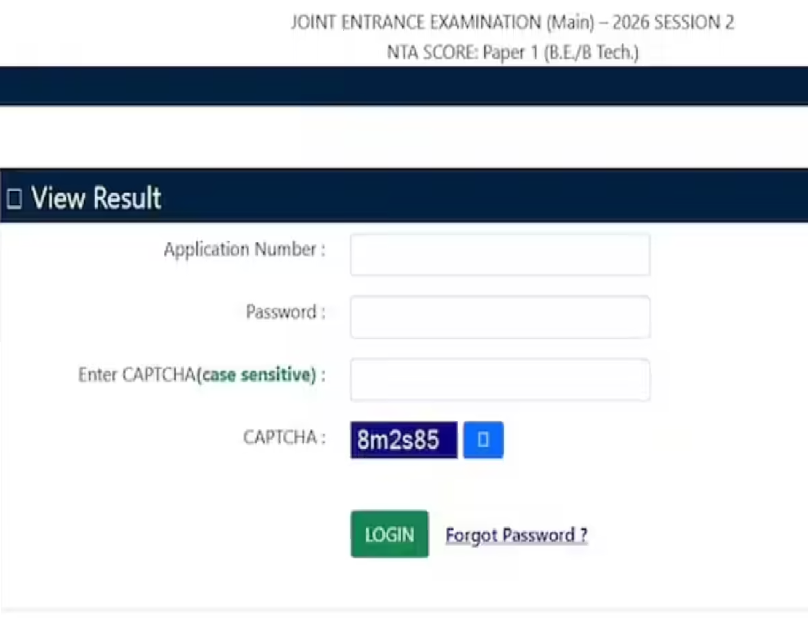
Candidates can access their results through the official portal, jeemain.nta.nic.in. The process is straightforward and requires login credentials.
To download the scorecard, candidates need to:
- Visit the official website
- Click on the link for “JEE Main 2026 Session 2 Result”
- Enter their application number and password
- View and download the scorecard for future reference
The scorecard is a vital document that will be required during counselling, admission procedures, and registration for JEE Advanced.
Components of the Scorecard
The JEE Main 2026 scorecard contains several important details. These include the candidate’s personal information, subject-wise percentile scores, overall percentile, All India Rank and qualifying status.
The percentile score is calculated using a normalisation process to ensure fairness across multiple shifts. Raw scores obtained by candidates are converted into percentiles based on their relative performance in each session.
This method ensures that variations in difficulty levels across different shifts do not disadvantage any candidate.
Best of Two Sessions Rule
One of the key features of JEE Main is the provision allowing candidates to appear in two sessions, January and April. For those who appeared in both sessions, the best percentile score is considered for the final ranking.
This approach offers students a second opportunity to improve their performance and reduces the pressure associated with a single attempt. The final merit list is prepared based on the highest percentile achieved by each candidate.
Cut-offs and Qualifications for JEE Advanced
The release of the results is accompanied by the announcement of cut-off percentiles required to qualify for JEE Advanced 2026. These cut-offs vary across categories such as General, OBC, EWS, SC and ST.
Candidates who meet or exceed the specified cut-off are eligible to register for JEE Advanced, the next stage in the admission process for IITs. According to reports, approximately 2.5 lakh candidates have qualified for JEE Advanced this year, further intensifying competition at the next level.
Understanding these cut-offs is crucial for candidates as they determine the immediate course of action in their academic journey.
Exam Structure and Performance Trends
The JEE Main 2026 Session 2 examination was conducted between April 2 and April 8 in computer-based mode across multiple shifts. The exam included papers for B.E./B.Tech (Paper 1), B.Arch and B.Planning, catering to a wide range of aspirants.
Performance trends indicate that achieving a high percentile requires not only accuracy but also consistency across subjects. Analytical data suggests that a score in the range of 180–195 marks is typically required to secure a 99 percentile, though this may vary depending on the difficulty level of the paper.
These insights help candidates contextualise their scores and assess their standing relative to peers.
What Happens After the Results?
The declaration of results sets in motion the next phases of the admission process. For candidates who qualify for JEE Advanced, the immediate priority is to register and prepare for the examination, which is scheduled for May 17, 2026.
For others, the focus shifts to the Joint Seat Allocation Authority (JoSAA) counselling process. This centralised counselling mechanism facilitates admission to NITs, IIITs and other participating institutions based on JEE Main ranks.
Candidates are advised to carefully review their options, analyse previous years’ cut-off trends and prioritise their preferences during counselling.
The Role of Transparency and Fairness
The JEE Main examination system has evolved significantly over the years to ensure transparency and fairness. From the use of computer-based testing to the implementation of normalisation techniques, every aspect is designed to provide a level playing field.
The publication of final answer keys before result declaration further enhances transparency, allowing candidates to understand the basis of their scores. Once the results are declared, they are considered final and are not subject to re-evaluation.
This structured approach reinforces the credibility of the examination and builds trust among candidates.
Challenges and Opportunities for Aspirants
While the announcement of results brings clarity, it also presents new challenges. Candidates must now make critical decisions regarding their academic future, often within tight timelines.
For high scorers, the focus is on securing admission to top institutions and preparing for JEE Advanced. For others, exploring alternative options such as state-level engineering colleges or private universities becomes equally important.
Regardless of the outcome, the experience of preparing for and appearing in JEE Main equips students with valuable skills, including time management, analytical thinking and resilience.
Strategic Steps for Candidates
At this stage, candidates should adopt a strategic approach. This includes downloading and safeguarding their scorecards, staying updated with official announcements, and preparing necessary documents for counselling.
Those eligible for JEE Advanced should begin focused preparation, while others should research colleges and courses aligned with their scores and interests.
Seeking guidance from mentors, analysing data on cut-offs and placements, and maintaining a clear understanding of personal goals can significantly enhance decision-making.
Conclusion
The release of the JEE Main 2026 Session 2 results marks a decisive moment in the academic journey of engineering aspirants. It not only reflects months of rigorous preparation but also opens doors to a wide range of opportunities in higher education. With 26 candidates achieving a perfect percentile and lakhs qualifying for the next stage, the results underscore both the competitiveness and the scale of the examination. As candidates move forward, the focus must shift from evaluation to action, whether it involves preparing for JEE Advanced or navigating the counselling process. With careful planning, informed choices, and sustained effort, students can make the most of the opportunities that lie ahead in their academic and professional journeys.