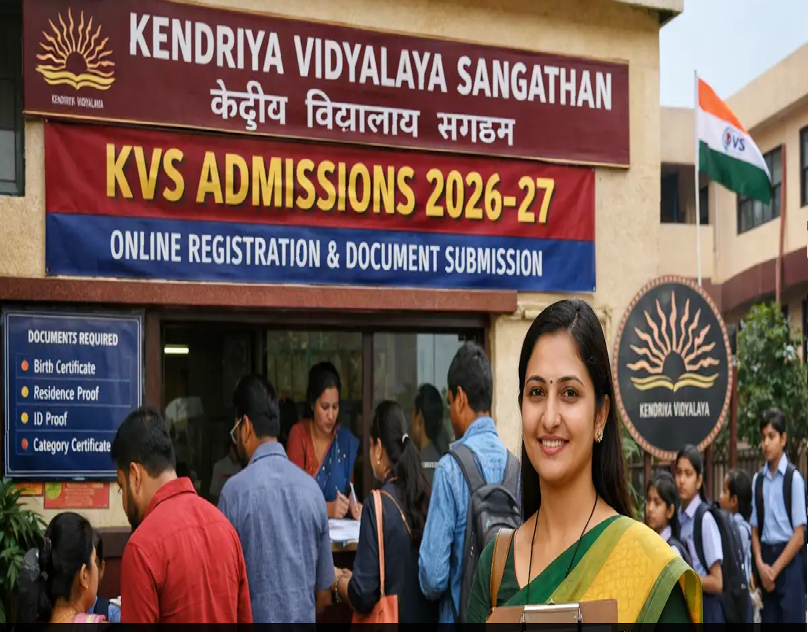
KVS Admission 2026 Registration Opens Today for Class 1 and Balvatika: Steps to ApplyKVS Admission 2026 Registration Opens Today: Steps to Apply
KVS admission 2026 registration window to open today: Check steps to apply here
In a much-anticipated development for parents and guardians across India, the Kendriya Vidyalaya Sangathan (KVS) has opened the registration window for admissions to the 2026–27 academic session. Known for its standardised curriculum, affordability and nationwide presence, the Kendriya Vidyalaya system continues to attract significant interest each year, making the admission cycle a crucial moment in the academic calendar.
The 2026 admissions process begins with applications for Class 1 and Balvatika levels, marking the first step in a structured and centralised system designed to ensure fairness, accessibility and transparency.
Commencement of the Admission Process
The registration window for KVS admissions has opened at 10 am, with applications being accepted through the official online portal. This digital-first approach continues the system adopted in recent years, enabling a streamlined and efficient application process for families across the country.
The initial phase focuses on admissions to Class 1 and Balvatika (pre-primary levels), which form the entry points into the Kendriya Vidyalaya system. Given the high demand for seats, particularly in metropolitan regions, the opening of the portal often sees a surge in applications within the first few days.
A Centralised and Transparent Admission Framework
KVS has consistently emphasised transparency in its admission procedures, and the 2026 cycle is no exception. The centralised online system ensures uniformity in the application process, minimising discrepancies and enhancing accountability.
Detailed guidelines have been released outlining eligibility criteria, documentation requirements and step-by-step instructions for applicants. This structured approach is intended to simplify the process for parents while maintaining clarity and fairness in seat allocation.
Moreover, provisions for both online and offline admissions, particularly for certain categories and higher classes, ensure inclusivity and accessibility for applicants from diverse backgrounds.
Understanding the Admission Structure
The KVS admission process is carefully tiered to accommodate different classes and categories. While Class 1 admissions are conducted entirely online, admissions for higher classes (subject to seat availability) are typically processed through offline modes.
For Class 1, there is no entrance examination. Instead, selection is carried out through a lottery system, particularly when applications exceed available seats. This method is designed to uphold fairness and eliminate biases, ensuring equal opportunity for all applicants.
The system also incorporates priority categories, giving preference to certain groups such as children of central government employees, defence personnel and other specified categories.
Eligibility Criteria and Age Requirements
Eligibility for KVS admissions is primarily determined by age criteria and, in some cases, category-specific provisions. For Class 1, children are generally required to be between six and eight years of age as of the specified cut-off date.
For Balvatika levels, age requirements vary depending on the specific level (Balvatika 1, 2 or 3), ensuring that children are placed in age-appropriate learning environments.
Parents are advised to carefully review these criteria before applying, as inaccuracies in age or documentation can lead to disqualification during the verification stage.
Step-by-Step Application Process
The online application process has been designed to be user-friendly, yet it requires careful attention to detail. Parents and guardians must first register on the official KVS admission portal, creating a login profile for the applicant.
Following registration, the application form must be completed with accurate personal, academic and contact details. Applicants are also required to upload essential documents, including proof of age, residence and other relevant certificates.
Once the form is submitted, applicants can track the status of their application through the portal. The digital system ensures that each stage of the process - from submission to selection, is transparent and easily accessible.
Document Verification and Admission Lists
After the completion of the application process, KVS releases provisional selection lists in phases. These lists are based on the lottery system and priority categories, ensuring a balanced and equitable allocation of seats.
Selected candidates are then required to undergo document verification at the respective Kendriya Vidyalaya. This stage is crucial, as any discrepancies in documentation can result in the cancellation of admission.
Subsequent lists may be released to fill remaining vacancies, particularly if selected candidates fail to confirm their admission within the stipulated timeframe.
Timeline and Important Milestones
The KVS admission cycle follows a well-defined timeline, beginning in March with the opening of the registration window. The application period typically extends over a few weeks, followed by the release of provisional selection lists within the same month.
Admissions for higher classes are usually conducted in April, subject to seat availability, while the entire process is expected to conclude by June, in time for the commencement of the academic session.
This structured schedule ensures that admissions are completed efficiently, allowing students to transition smoothly into the new academic year.
Ensuring Accessibility and Inclusivity
One of the defining features of the KVS admission system is its emphasis on inclusivity. By offering both online and offline modes of application, the system accommodates applicants from diverse socio-economic backgrounds.
Additionally, provisions under the Right to Education (RTE) Act and reserved categories ensure that opportunities are extended to underrepresented groups. This commitment to equitable access reflects the broader mandate of Kendriya Vidyalayas as institutions of public education.
High Demand and Competitive Landscape
Kendriya Vidyalayas are widely regarded as among the most sought-after public schooling options in India. Their affiliation with the Central Board of Secondary Education (CBSE), combined with a consistent academic framework and relatively low fees, makes them particularly attractive to families.
As a result, the number of applications often far exceeds the number of available seats, especially in urban centres. This high demand underscores the importance of adhering to deadlines and ensuring that all application requirements are met.
The Role of Technology in Modern Admissions
The continued reliance on digital platforms for KVS admissions highlights the growing role of technology in education administration. From online registration to real-time application tracking, technology has significantly enhanced efficiency and transparency.
The use of a centralised portal not only simplifies the process for applicants but also enables authorities to manage large volumes of data with greater accuracy. This digital transformation is indicative of a broader shift towards more efficient and accountable governance in the education sector.
Guidance for Parents and Applicants
For parents navigating the admission process, preparation and attention to detail are essential. Ensuring that all required documents are readily available, verifying eligibility criteria and completing the application well before the deadline can significantly reduce the risk of complications.
It is also advisable to regularly check the official KVS website for updates, as any changes to the schedule or guidelines are communicated through the portal.
Looking Ahead
The opening of the KVS admission window for 2026 marks the beginning of a critical phase for thousands of families seeking quality education for their children. As the process unfolds, the emphasis on transparency, efficiency and inclusivity is expected to remain central.
For students, securing admission to a Kendriya Vidyalaya represents not just an academic opportunity but also access to a structured and supportive learning environment.
Conclusion
The commencement of KVS admissions for the 2026–27 academic session underscores the enduring appeal and significance of the Kendriya Vidyalaya system in India’s educational landscape. Through a carefully designed process that balances accessibility with fairness, KVS continues to set a benchmark for public school admissions.
As applications progress and selections are finalised, the success of this cycle will ultimately be measured by its ability to uphold the principles of transparency, equity and excellence, principles that remain fundamental to the mission of Kendriya Vidyalaya Sangathan.