NEET UG 2026 Re-Exam on June 21 Amid Security Concerns
NEET UG 2026 Re-Exam: Restoring Trust Amid Heightened Scrutiny and Administrative Pressure
The Centre’s appeal to states and Union Territories for cooperation in conducting the NEET UG 2026 re-examination has brought renewed attention to the fragile intersection of public trust, administrative preparedness and educational accountability in India’s examination ecosystem. Scheduled for June 21, the re-examination is not merely another logistical exercise; it is a national corrective measure unfolding under extraordinary scrutiny.
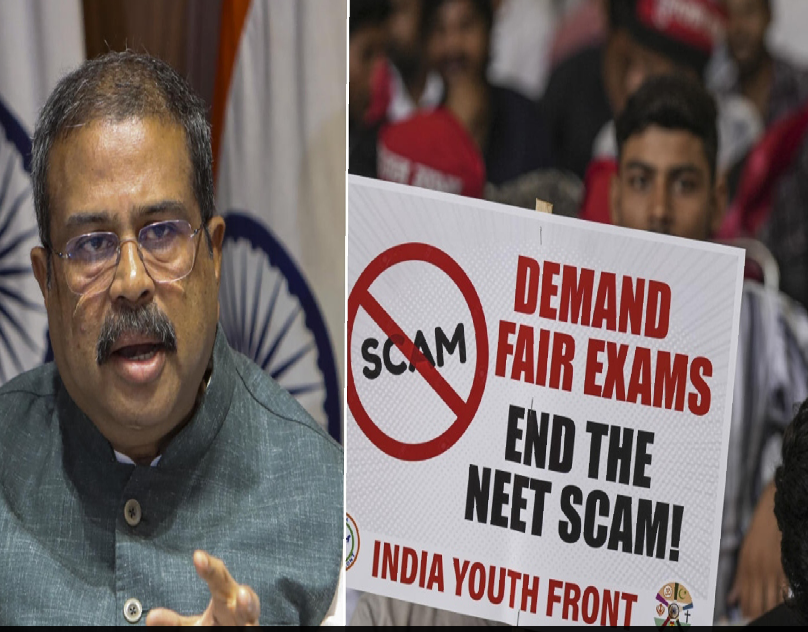
Union Education Minister Dharmendra Pradhan, in his communication to Chief Ministers, Lieutenant Governors and administrators, emphasised the importance of ensuring fairness, transparency and student welfare during the conduct of the examination. Particular attention was directed towards practical support measures, including transportation arrangements and facilities at examination centres, especially in light of prevailing heatwave conditions across several regions of the country.
The appeal reflects the magnitude of the challenge before authorities. NEET UG is not simply another entrance examination; it is India’s largest medical entrance test, shaping the academic futures of millions of aspirants each year. When such an examination encounters disruption, the consequences extend far beyond administrative inconvenience. They affect public confidence in institutional integrity itself.
The Context Behind the Re-Examination
The decision to conduct a re-examination follows allegations of irregularities and question paper leaks associated with the earlier examination cycle. The controversy rapidly escalated into a matter of national concern, prompting investigations and triggering intense public debate regarding the reliability of examination systems administered by the National Testing Agency (NTA).
For students and families, the repercussions were immediate and deeply unsettling. Competitive examinations in India already operate within an environment of immense psychological pressure. The prospect of compromised fairness only amplifies existing anxieties, particularly when years of preparation appear vulnerable to systemic lapses.
The June 21 re-examination is therefore being framed not merely as a procedural repetition but as an effort to restore credibility. The Centre’s insistence on enhanced security measures, coordinated state support, and improved logistical arrangements reflects an understanding that the examination’s legitimacy now depends as much on public perception as on operational execution.
Student Welfare Moves to the Forefront
One of the most striking aspects of the Centre’s recent communication has been its emphasis on candidate welfare. Amid severe summer temperatures affecting large parts of India, authorities have been instructed to ensure access to safe drinking water, shaded waiting areas, clean washrooms, uninterrupted electricity supply and adequate ventilation at examination centres.
Such directives may appear basic, yet their importance should not be underestimated. Large-scale competitive examinations often involve prolonged travel, overcrowded centres and extended waiting periods. Under extreme weather conditions, these factors can significantly affect physical well-being and mental performance.
The inclusion of transportation support within the Centre’s appeal further acknowledges the broader realities confronting candidates. Many students travel considerable distances to reach examination venues, often accompanied by parents or guardians. In economically vulnerable households, repeated travel associated with re-examinations imposes both financial and emotional strain.
Some political leaders and state administrations have even proposed subsidised or free transportation arrangements for candidates. Discussions surrounding such measures reflect growing recognition that examination equity extends beyond question papers and evaluation systems to include the practical conditions under which students participate.
Security and Surveillance in the Post-Leak Era
If welfare represents one pillar of the re-examination strategy, security constitutes the other. The government has reportedly directed the NTA to implement stricter monitoring protocols, enhanced digital tracking systems and tighter controls over the transportation and storage of examination materials.
These measures reflect lessons drawn from recent controversies, which exposed vulnerabilities within the existing examination infrastructure. The challenge before authorities is no longer confined to preventing leaks alone; it involves rebuilding confidence in the integrity of the entire process.
According to reports, coordination with district administrations, law enforcement agencies, and local authorities is being intensified to minimise risks. Randomisation procedures and increased surveillance are also expected to form part of the revised framework.
In addition, the Centre has reportedly engaged major digital platforms such as Meta, Google, and Telegram to curb misinformation and fake paper leak claims circulating online ahead of the examination. This development highlights an increasingly modern dimension of examination management: the battle against digital panic and misinformation.
In today’s hyperconnected environment, rumours can spread with alarming speed, often exacerbating student anxiety regardless of their factual basis. Managing information flows has therefore become an integral component of maintaining examination stability.
The Expanding Burden on the National Testing Agency
The controversy surrounding NEET UG has once again placed the National Testing Agency under intense public scrutiny. Established to streamline and professionalise entrance examinations, the NTA was envisioned as a specialised body capable of delivering standardised, transparent and technologically robust assessments.
Yet, recent years have witnessed recurring criticisms concerning operational lapses, technical irregularities, and alleged vulnerabilities within examination systems. These criticisms have raised broader questions regarding institutional capacity, accountability and the challenges inherent in conducting examinations at such an extraordinary scale.
The sheer magnitude of NEET UG complicates these concerns further. With over 22 lakh candidates appearing across thousands of centres in India and abroad, the logistical complexity is immense. Even minor disruptions can rapidly escalate into national controversies.
Consequently, the re-examination represents not only a test for candidates but also a test for the NTA itself. Its ability to conduct a secure, transparent and orderly examination may significantly shape public perceptions of institutional credibility going forward.
The Emotional Toll on Aspirants
Lost amid discussions of security protocols and administrative reforms is the emotional reality confronting students. Preparing for medical entrance examinations in India is an extraordinarily demanding process, often involving years of sustained study, financial sacrifice and social pressure.
The announcement of a re-examination introduces additional uncertainty into an already stressful environment. Candidates who believed their examination phase had concluded must once again reorient themselves psychologically and academically.
For many students, this repetition generates exhaustion as much as opportunity. Some may view the re-exam as a second chance; others may experience it as an extension of prolonged anxiety. The emotional consequences are particularly acute for candidates from rural or economically constrained backgrounds, where preparation itself often involves substantial personal and familial sacrifice.
The Centre’s emphasis on student welfare, therefore, carries symbolic significance as well. It signals an acknowledgement that educational administration cannot be reduced to procedural efficiency alone; it must also account for the human experience of those subjected to these systems.
Examinations and Public Trust
The NEET UG controversy ultimately raises a larger question: how does a society maintain faith in competitive examinations as instruments of merit and mobility?
In India, examinations occupy an unusually central role in shaping educational and professional opportunity. They are widely regarded as gateways through which talent, discipline and aspiration can transcend socio-economic constraints. When the integrity of these systems is questioned, public anxiety intensifies accordingly.
The legitimacy of examinations depends not merely on fairness in principle but on fairness that is visible, demonstrable and consistently upheld. Transparency, communication, accountability, and procedural reliability therefore become essential components of educational governance.
The current re-examination is significant precisely because it is unfolding within this broader context of institutional trust. Authorities are not simply organising another test; they are attempting to reaffirm confidence in the credibility of competitive selection itself.
Beyond the Re-Examination
As June 21 approaches, administrative agencies across the country face an enormous responsibility. Ensuring a smooth re-examination will require coordination across multiple levels of governance from central ministries and state administrations to district officials and examination staff.
For candidates, the coming weeks are likely to remain emotionally demanding. Yet the broader significance of this re-examination extends beyond individual outcomes. It represents a moment of institutional introspection for India’s examination ecosystem.
The lessons drawn from this episode may ultimately shape future reforms in examination security, digital monitoring, logistical preparedness and student welfare mechanisms. Whether these reforms succeed will depend not only on policy announcements but on sustained implementation and accountability.
What remains clear, however, is that public trust in examinations cannot be taken for granted. It must be earned repeatedly through fairness, transparency and competence. The NEET UG 2026 re-examination now stands as a critical opportunity to demonstrate precisely that.