Centre Partners With Meta, Google and Telegram to Strengthen NEET UG 2026 Exam Security
Centre Enlists Meta, Google and Telegram as NEET UG 2026 Security Measures Intensify
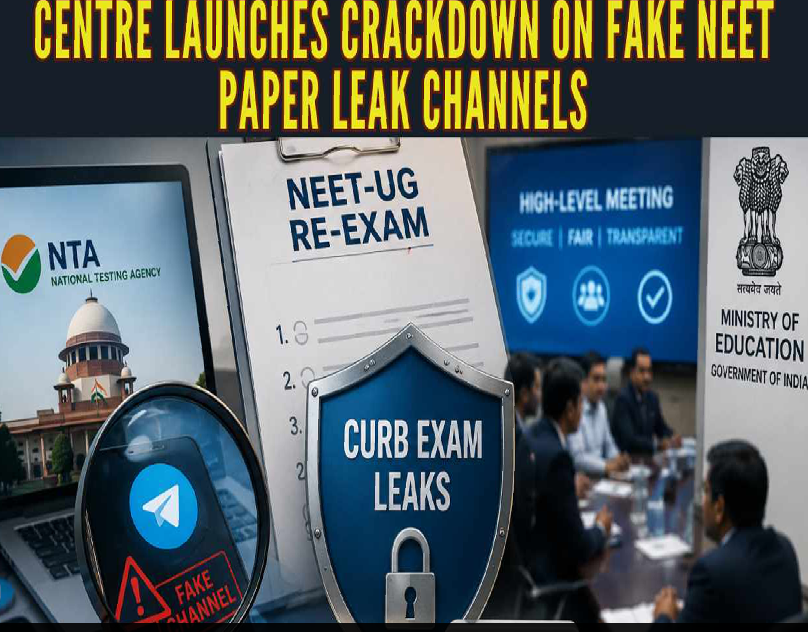
The ongoing fallout from the NEET UG 2026 paper leak controversy has prompted the Central government to adopt an increasingly technology-driven approach to examination security. In a significant development ahead of the NEET UG re-examination scheduled for June 21, authorities have partnered with major digital platforms, including Meta, Google and Telegram, to curb the spread of misinformation and prevent the circulation of fake paper leak claims online.
The move represents a notable shift in how public examinations are being monitored in India, reflecting the growing influence of social media and encrypted communication platforms in shaping public perception around competitive examinations. What was once largely a logistical and administrative exercise has now evolved into a digital security challenge requiring collaboration between the government and global technology companies.
The Context Behind the Government’s Move
The decision comes in the aftermath of the cancellation of the original NEET UG 2026 examination conducted on May 3, following allegations of a large-scale paper leak. The controversy triggered nationwide concern and placed the National Testing Agency under intense scrutiny.
As investigations widened, authorities began to recognise the role played by online platforms in amplifying rumours, spreading unverified claims and fuelling panic among candidates. Messaging applications and social media channels became flooded with alleged leaked question papers, answer keys, and misleading posts, many of which were later found to be fabricated or unverifiable.
Against this backdrop, the government’s engagement with major technology firms appears aimed at restoring credibility to the examination process while ensuring that misinformation does not undermine the upcoming re-examination.
High-Level Meetings and Coordinated Oversight
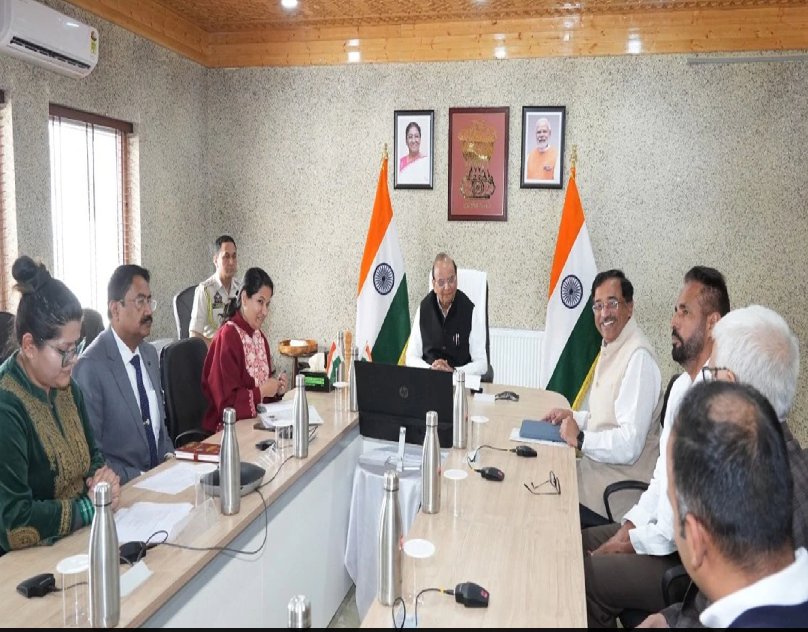
Union Education Minister Dharmendra Pradhan reportedly chaired a high-level review meeting to assess examination security measures and monitor suspicious activity across digital platforms. Particular attention was given to Telegram channels and online groups suspected of spreading false claims related to paper leaks.
The discussions are understood to have focused on multiple dimensions of examination security, including online surveillance, digital misinformation tracking and coordination between government agencies and platform operators. Authorities are also expected to intensify monitoring of social media activity in the days leading up to the re-examination.
This collaborative approach signals a recognition that safeguarding the integrity of modern examinations requires more than physical security at examination centres. In an era where information spreads instantaneously across digital networks, online ecosystems have become central to examination governance.
The Expanding Role of Technology Platforms
The involvement of companies such as Meta and Google highlights the increasingly complex relationship between technology platforms and public institutions. Social media networks now serve as primary sources of information for millions of students, making them powerful tools capable of both informing and misleading.
Telegram, in particular, has emerged as a focal point in the current controversy due to the rapid dissemination of messages through large private and public channels. Authorities have reportedly placed several such groups under surveillance following allegations that they were being used to circulate purported leaked material and create confusion among candidates.
The challenge for regulators lies not only in identifying malicious content but also in balancing enforcement with issues related to privacy, free expression and platform governance. As a result, cooperation with technology companies has become essential in tracking suspicious activity without disrupting legitimate communication.
Digital Surveillance and Examination Integrity
The government’s broader response to the NEET controversy has increasingly centred on technological safeguards. Reports indicate that enhanced digital surveillance mechanisms, encrypted question paper systems and stricter logistical controls are being introduced ahead of the re-examination.
According to recent reports, question papers for the upcoming examination are expected to be prepared and transmitted through encrypted digital frameworks designed to minimise unauthorised access. Additional safeguards are also being implemented in printing, transportation and distribution processes.
These developments reflect a larger institutional shift towards technology-enabled examination management. However, they also underscore the growing complexity of securing high-stakes examinations in a digitally interconnected environment.
The Wider Crisis of Trust in Competitive Examinations
The NEET UG 2026 controversy has evolved into more than a singular administrative issue; it has become emblematic of a broader crisis of trust surrounding competitive examinations in India. For millions of students, examinations such as NEET represent years of preparation, substantial financial investment and aspirations tied to future careers.
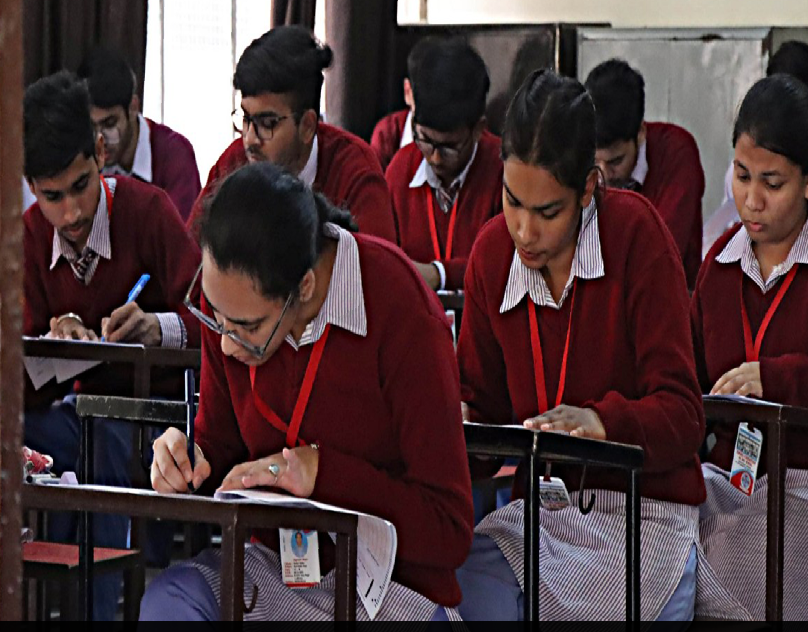
Any allegation of malpractice, therefore, carries consequences far beyond procedural inconvenience. The cancellation of the May 3 examination created uncertainty for nearly 23 lakh aspirants, many of whom were forced to resume preparation under emotionally taxing circumstances.
The spread of misinformation online has compounded this anxiety. False claims regarding leaked papers, fabricated answer keys and manipulated screenshots have circulated widely, making it increasingly difficult for candidates to distinguish between verified updates and misleading content.
Investigations and Expanding Scrutiny
Parallel to the government’s technological interventions, investigative agencies continue to probe the alleged leak network. The Central Bureau of Investigation (CBI) has reportedly made multiple arrests in connection with the case, including individuals linked to coaching centres and suspected intermediaries.
Investigators are examining the origins of the leak, the methods used to circulate materials and the possible involvement of insiders. Reports suggest that digital communication channels played a significant role in coordinating activities and distributing unauthorised content.
The expanding scope of the investigation has intensified pressure on the NTA and the Ministry of Education to implement systemic reforms capable of preventing similar incidents in the future.
Institutional Reforms and Structural Changes
In response to mounting criticism, the NTA has reportedly initiated a series of structural and technological reforms aimed at strengthening examination security. These measures include changes in question paper preparation, translation systems, logistics management and internal oversight mechanisms.
Officials have described these changes as part of a broader effort to rebuild trust in the examination process and improve operational efficiency. Senior officers have also reportedly been appointed to strengthen leadership and institutional accountability within the agency.
While these measures represent an important step, their effectiveness will ultimately depend on implementation and sustained oversight.
The Psychological Impact on Students
Beyond the institutional and technological dimensions, the controversy has had a profound psychological impact on students preparing for the re-examination. For aspirants already coping with the pressures of a highly competitive medical entrance test, the uncertainty surrounding the examination process has added another layer of stress. The constant circulation of rumours online has further heightened anxiety, particularly among students attempting to identify reliable sources of information. In this context, efforts to curb misinformation are not merely administrative measures; they are essential to preserving candidate confidence and mental well-being.
The Road Ahead
As the June 21 re-examination approaches, the government’s collaboration with major technology platforms marks a significant evolution in the management of competitive examinations. The integration of digital monitoring, platform-level coordination and technological safeguards reflects the realities of an increasingly connected world where examination security extends beyond physical centres into the online domain.
The coming weeks will be critical not only for the successful conduct of NEET UG 2026 but also for the credibility of India’s broader examination framework. Authorities now face the challenge of demonstrating that lessons have been learned and that meaningful reforms are underway.
Ultimately, restoring public trust will require more than reactive measures. It will depend on sustained institutional accountability, transparent communication and the creation of examination systems resilient enough to withstand both technological vulnerabilities and organised malpractice. The NEET UG 2026 episode may well become a defining moment in how India reimagines the governance and security of high-stakes examinations in the digital age.