NII PhD Admissions 2026 Open: Apply by April 30 for Biomedical Research Programme in Delhi
BRIC-NII PhD Admissions 2026: Advancing Scientific Research Through Opportunity and Innovation
In an era where scientific discovery increasingly shapes global progress, the opening of PhD admissions at the BRIC - National Institute of Immunology (NII), New Delhi, for the Monsoon Session 2026–27 represents a significant opportunity for aspiring researchers. Renowned for its contributions to biomedical sciences, the institute has once again invited applications from candidates eager to engage in rigorous, interdisciplinary research. This announcement is not merely procedural; it reflects the continued expansion of India’s research ecosystem and the growing emphasis on innovation-led academic pathways. The programme offers a platform for students to immerse themselves in cutting-edge scientific exploration, contributing to fields that have direct implications for public health, biotechnology and global scientific advancement.
The Institute and Its Academic Legacy
The BRIC - National Institute of Immunology has long been recognised as a premier research institution in India. With a strong focus on immunology and allied disciplines, it plays a pivotal role in advancing knowledge related to infectious diseases, immune responses and molecular biology.
The institute’s doctoral programme is designed to nurture independent researchers capable of addressing complex scientific challenges. Each year, a select group of scholars is admitted through a highly competitive process, ensuring that the academic environment remains both rigorous and collaborative.
What distinguishes NII is its emphasis on interdisciplinary engagement. Rather than confining research within narrow boundaries, the institute encourages cross-domain inquiry, allowing students to explore intersections between biology, chemistry, computational sciences and medicine.
Interdisciplinary Research at the Core
The PhD programme for the Monsoon Session 2026–27 encompasses a wide spectrum of research areas. These include immunology, molecular and cellular biology, infectious and chronic disease biology, structural biology and computational biology. Such diversity reflects the evolving nature of scientific research, where complex problems demand integrated approaches. For instance, understanding immune responses to emerging pathogens requires not only biological insight but also computational modelling and data analysis. By offering exposure to multiple disciplines, the programme equips students with the intellectual flexibility required in modern research environments.
Application Timeline and Process
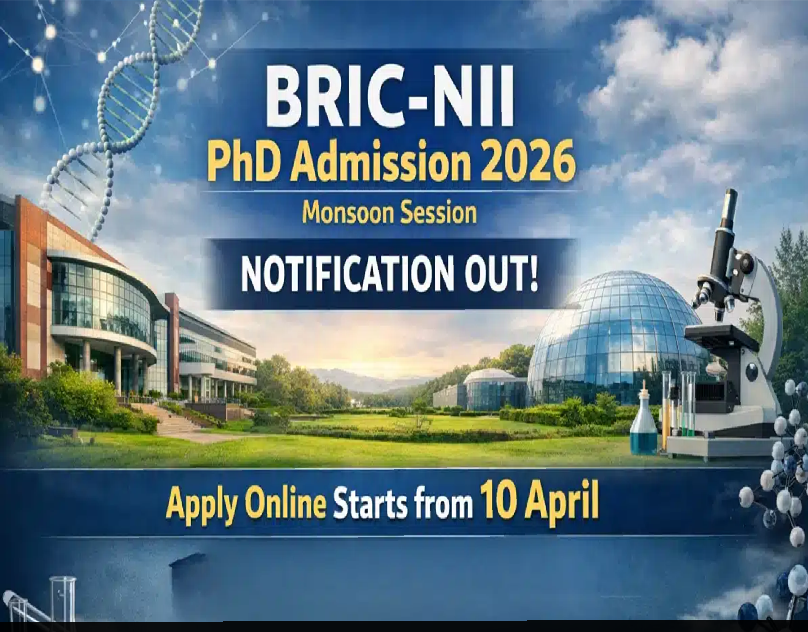
The application window for the programme is open from April 10 to April 30, 2026, providing candidates with a defined period to submit their applications online.
The process has been streamlined to ensure accessibility and transparency. Candidates are required to register through the institute’s official portal, submit relevant academic and fellowship details, and upload necessary documents. The clarity of this process reflects an institutional commitment to efficiency and fairness.
Importantly, applicants must ensure that their credentials align with the eligibility criteria outlined in the official notification, as discrepancies may affect their candidature during later stages.
Eligibility Criteria: A Focus on Academic Excellence
Admission to the PhD programme is contingent upon meeting specific academic and professional requirements. Candidates must hold a Master’s degree or a four-year Bachelor’s degree in a relevant field of science or technology. Additionally, degrees such as MBBS or M.V.Sc. are also considered eligible.
A defining requirement is the possession of a valid national-level research fellowship from recognised bodies such as UGC, CSIR, DBT or ICMR. This criterion underscores the institute’s emphasis on research readiness, ensuring that admitted candidates have already demonstrated a commitment to scientific inquiry.
Minimum academic performance thresholds further reinforce the programme’s competitive nature, while reservation policies ensure equitable access in line with national guidelines.
Selection Process: Merit and Potential
The selection process is structured to identify candidates who not only meet academic benchmarks but also exhibit research aptitude and intellectual curiosity. Applicants are shortlisted based on their academic profiles and fellowship credentials, following which they are invited for interviews.
The interviews, scheduled between June 8 and June 12, 2026, will be conducted at the institute’s campus in New Delhi. This stage allows faculty members to assess candidates’ understanding of their chosen fields, their ability to think critically and their potential for original research.
Unlike many programmes that rely heavily on written examinations, the emphasis here is on direct interaction and evaluation, reflecting a more holistic approach to selection.
Programme Structure and Academic Experience
The PhD programme is set to commence in early July 2026, marking the beginning of an intensive academic journey. Upon joining, students are assigned laboratories and research supervisors based on their interests and interactions with faculty.
The programme is affiliated with the Regional Centre for Biotechnology (RCB), Faridabad, which awards the doctoral degree. This affiliation adds an additional layer of academic credibility and institutional support.
Students are expected to engage in full-time research, supported by their fellowships. The emphasis is on independent inquiry, guided by mentorship and collaborative engagement. Access to advanced laboratory facilities and research infrastructure further enhances the learning experience.
Research Environment and Infrastructure
One of the defining strengths of NII is its research environment. The institute offers state-of-the-art laboratories, specialised equipment and a collaborative academic culture.
Students benefit from interactions with experienced faculty members who are actively engaged in pioneering research. This exposure not only enriches their academic journey but also prepares them for future roles in academia, industry or policy-making. The institute’s residential campus further fosters a sense of community, enabling continuous intellectual exchange and collaboration among scholars.
The Broader Significance of the Programme
The opening of PhD admissions at NII must be viewed within the broader context of India’s scientific ambitions. As the country seeks to strengthen its position in global research and innovation, institutions like NII play a critical role in nurturing talent and advancing knowledge. Programmes such as this contribute to the development of a skilled scientific workforce capable of addressing challenges ranging from disease outbreaks to technological advancements. They also reinforce the importance of sustained investment in research and higher education.
Opportunities and Challenges for Aspirants
For aspiring researchers, the programme offers numerous opportunities. It provides access to high-quality mentorship, exposure to cutting-edge research and the chance to contribute to meaningful scientific discoveries.
However, the path is not without challenges. The competitive nature of the selection process requires candidates to demonstrate not only academic excellence but also a clear research vision. Additionally, the demands of doctoral research, ranging from long hours in the laboratory to the pressures of publication - require resilience and dedication.
Nevertheless, for those committed to a career in science, the rewards are substantial, both intellectually and professionally.
Encouraging Diversity and Inclusion
An important aspect of the programme is its commitment to inclusivity. Reservation policies in accordance with government norms ensure representation across different social categories. Furthermore, the encouragement of applications from diverse backgrounds, including women candidates, reflects a broader effort to create an inclusive academic environment. Diversity in research not only enriches perspectives but also enhances the quality and impact of scientific inquiry.
A Step Towards Future Scientific Leadership
The BRIC–NII PhD programme is more than an academic course; it is a pathway to becoming part of a global scientific community. Graduates of the programme are well-positioned to pursue careers in academia, research institutions, biotechnology firms and international organisations. By equipping students with both technical expertise and critical thinking skills, the programme prepares them to lead in an increasingly knowledge-driven world.
Conclusion
The opening of PhD admissions for the Monsoon Session 2026–27 at the BRIC–National Institute of Immunology represents a significant opportunity for aspiring scientists. With its strong emphasis on interdisciplinary research, rigorous selection process and supportive academic environment, the programme stands as a testament to the evolving landscape of higher education in India. For those willing to embrace the challenges of doctoral research, it offers not only a chance to advance their careers but also the opportunity to contribute to the broader pursuit of scientific knowledge. In doing so, it reaffirms the vital role of research in shaping the future, both within India and beyond.