No Verification of Marks After Class-12 Results from 2026 as CBSE Resorts to Digital Evaluation
The evolving landscape of educational assessment continues to reflect broader technological transformations, and India’s school examination ecosystem is no exception. In a significant reform aimed at improving accuracy, efficiency, and transparency, the Central Board of Secondary Education (CBSE) has announced that post-result verification of Class-12 marks will no longer be necessary from 2026 onwards. The decision follows the board’s adoption of a fully digital evaluation system based on On-Screen Marking (OSM), marking a notable departure from traditional paper-based assessment practices.
This transition signals more than administrative convenience; it represents a structural shift in how large-scale public examinations are evaluated, monitored, and managed.
The Rationale Behind Digital Evaluation
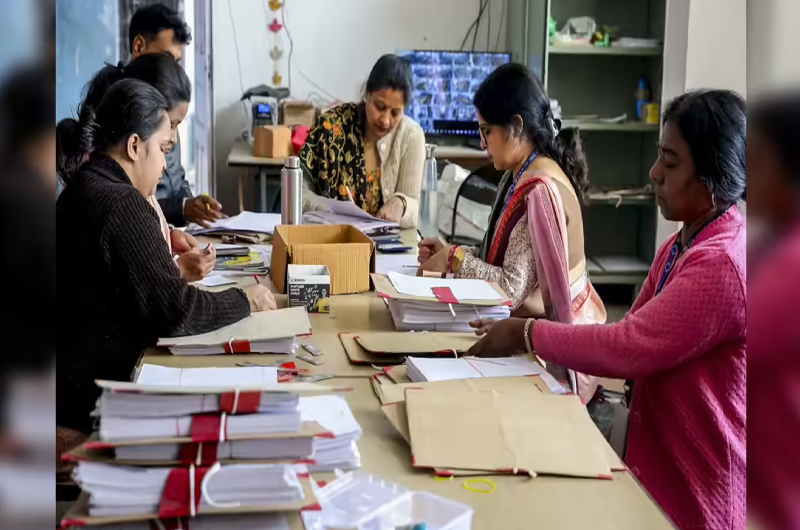
For decades, examination boards across India relied on physical answer scripts evaluated manually by teachers at designated centres. While the system maintained academic credibility, it inevitably faced logistical challenges. Transportation of answer sheets, manual totalling of marks, and multi-layer verification processes often contributed to delays, occasional discrepancies, and administrative burdens.
Digital evaluation aims to address these concerns comprehensively. By scanning answer sheets and enabling examiners to assess them electronically, the system significantly reduces manual intervention. Automated calculation of marks eliminates arithmetic errors, while digital storage ensures secure record-keeping.
According to CBSE officials, the primary objective is not merely technological modernisation but enhancement of reliability and fairness in the evaluation process.
End of Post-Result Verification for Class-12
One of the most consequential outcomes of this reform is the discontinuation of post-result mark verification for Class-12 board examinations. Traditionally, students frequently applied for verification to check for totalling mistakes, missing entries, or clerical oversights.
With digital marking systems automatically calculating totals and flagging inconsistencies, such errors are expected to diminish substantially. Examination Controller Sanyam Bhardwaj has indicated that the new framework leaves little scope for numerical discrepancies, thereby making post-result verification largely redundant.
For students, this development may reduce anxiety associated with result disputes while expediting final score confirmation.
Continued Physical Evaluation for Class-10
While the digital evaluation system will be implemented for Class-12 examinations from 2026, Class-10 answer books will continue to be assessed through traditional physical methods for the time being. This staggered approach allows the board to monitor implementation closely and address operational challenges before extending the system more broadly.
Such phased adoption reflects prudent administrative planning. Large examination boards cater to millions of students, and incremental transitions help ensure stability while embracing innovation.
Preparation and System Development
Officials emphasise that the reform is the culmination of extensive preparation rather than an abrupt policy shift. The board reportedly undertook multiple preparatory steps, including system redesign, pilot testing, stakeholder consultations, and global benchmarking of digital evaluation practices.
Dry runs were conducted to identify technical glitches, assess examiner adaptability, and test data security protocols. Feedback from teachers, administrators, and technical experts informed refinements to the system.
This preparatory phase underscores the complexity of transitioning to digital evaluation at a national scale, particularly for an examination system serving millions annually.
Workshops and Capacity Building
To facilitate a smooth transition, CBSE has conducted workshops for school principals and teachers detailing operational aspects of the On-Screen Marking system. These sessions aim to familiarise educators with digital interfaces, evaluation protocols, and security measures.
Teacher readiness is central to the success of digital evaluation. While many educators are already comfortable with digital tools, structured training ensures consistency, reduces apprehension, and promotes confidence in using new technologies.
Moreover, digital evaluation allows teachers to participate remotely from their own institutions, reducing travel requirements and enabling them to balance regular teaching duties alongside examination responsibilities.
Efficiency and Speed in Result Processing
One of the most anticipated advantages of digital evaluation is faster processing of examination results. Physical answer scripts often required transportation across regions, followed by sequential evaluation and verification stages.
Digital scanning eliminates transit delays, while automated workflows streamline marking, moderation, and result compilation. Real-time monitoring of evaluation progress also allows administrators to identify bottlenecks quickly and allocate resources accordingly.
Faster result declaration benefits not only students but also universities and professional institutions that depend on timely academic records for admissions.
Environmental Sustainability
Beyond operational efficiency, the shift towards digital evaluation aligns with broader environmental sustainability goals. Reduced transportation of answer scripts lowers carbon emissions, while decreased reliance on paper handling supports conservation efforts.
Educational institutions increasingly recognise their environmental responsibilities, and digital evaluation represents a practical step towards greener administrative practices.
Although answer sheets themselves still require printing, the overall reduction in logistical movement and paper processing contributes positively to sustainability objectives.
Improved Accuracy and Transparency
Digital marking systems enhance accuracy through structured evaluation schemes embedded within the software. Examiners can reference marking guidelines directly while assessing scripts, promoting consistency across evaluators.
Additionally, digital archives create an auditable trail of evaluation activity. Scripts can be revisited easily for quality checks, moderation, or academic research, enhancing transparency.
Such traceability strengthens institutional credibility and reinforces stakeholder confidence in examination outcomes.
Wider Teacher Participation
Digital evaluation also expands opportunities for teacher participation. Previously, educators often had to travel to central marking locations, sometimes for extended periods. This logistical demand limited participation, particularly for teachers with institutional or personal commitments.
Remote digital evaluation allows broader inclusion while enabling teachers to remain engaged with their schools. This flexibility may contribute to more diverse examiner pools and balanced workload distribution.
Challenges and Considerations
Despite its advantages, digital evaluation is not without challenges. Robust technological infrastructure, reliable internet connectivity, and strong cybersecurity safeguards are essential prerequisites.
Data protection remains a critical concern, requiring continuous vigilance against potential breaches or technical disruptions. Authorities must ensure secure servers, encrypted data transmission, and strict access controls.
Furthermore, ongoing training and technical support will be necessary to help educators adapt comfortably to digital interfaces.
Implications for Students
For students, the transition promises faster results, fewer clerical errors, and enhanced reliability in assessment. However, it also necessitates awareness of evolving evaluation practices.
Transparency in communication will be crucial. Students and parents must understand how digital evaluation works, what safeguards exist, and how grievances if any will be addressed under the new system.
Clear communication fosters trust and helps mitigate apprehension during periods of systemic change.
A Step Towards Future-Ready Assessment
The introduction of fully digital evaluation reflects broader global trends in educational assessment. Many examination boards worldwide are integrating technology to enhance efficiency, accuracy, and accessibility.
CBSE’s initiative positions India’s school examination framework within this evolving global context. As educational systems increasingly incorporate digital tools, such reforms may pave the way for further innovations, including adaptive testing, digital credentialing, and advanced analytics in academic assessment.
Conclusion
The decision to eliminate post-result verification of Class-12 marks following the adoption of digital evaluation marks a significant milestone in India’s educational administration. By embracing On-Screen Marking, CBSE aims to enhance accuracy, streamline processes, reduce environmental impact, and support more efficient result declaration.
While challenges remain particularly regarding infrastructure, cybersecurity, and stakeholder adaptation the reform represents a forward-looking step towards modernising large-scale examination systems.
Ultimately, the success of digital evaluation will depend not only on technological robustness but also on sustained collaboration among educators, administrators, policymakers, and students. If implemented thoughtfully, this initiative may well redefine examination practices in India, setting new benchmarks for efficiency, transparency, and academic integrity in the years ahead.