Sundar Pichai Launches Google AI Professional Certificate To Deepen India-US Tech Ties
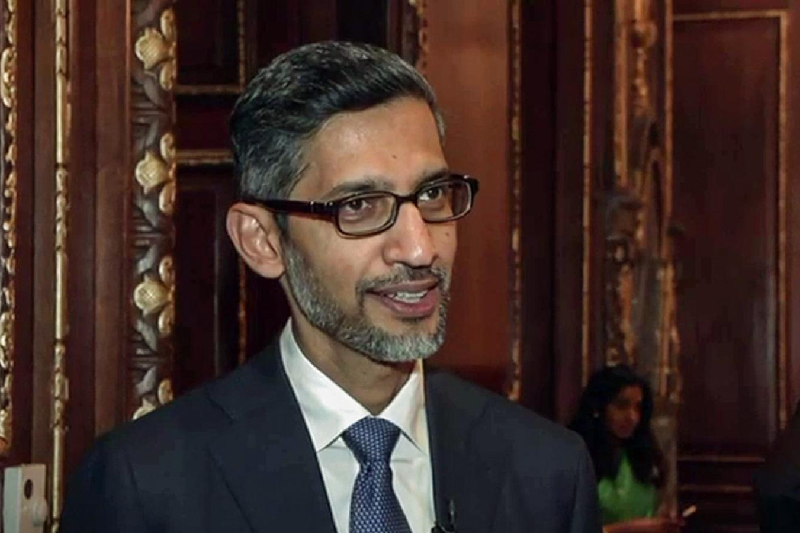
In a significant announcement underscoring the growing strategic alignment between India and the United States in advanced technologies, Sundar Pichai unveiled the Google AI Professional Certificate at the Artificial Intelligence (AI) Summit in New Delhi. The initiative signals not merely the launch of another digital course, but a carefully calibrated effort to expand AI capability, enhance workforce readiness and fortify cross-border technological collaboration.
The summit, convened amid accelerating global interest in artificial intelligence, provided a fitting backdrop for a declaration that blends infrastructure ambition with human capital development. As Chief Executive Officer of Google, Pichai articulated a vision in which connectivity, compute power and skills form a mutually reinforcing triad.
The Google AI Professional Certificate: Democratising Advanced Skills
At the centre of the announcement lies the Google AI Professional Certificate, a structured learning pathway designed to equip professionals with practical, workplace-oriented AI competencies. The programme aims to bridge the often-cited divide between theoretical familiarity and applied proficiency.
The curriculum encompasses foundational and advanced concepts in artificial intelligence, including machine learning methodologies, neural networks and real-world deployment strategies. Rather than limiting instruction to abstract theory, the course promises hands-on engagement with Google’s AI tools and platforms. Participants will be guided in applying AI techniques to professional contexts, enabling them to integrate intelligent systems into business operations, analytics workflows and product development cycles.
In launching the certificate, Pichai emphasised the imperative of investing in skilling alongside infrastructure expansion. The rapid evolution of AI technologies demands not only robust digital backbones but also a workforce capable of harnessing them effectively. The certificate programme, therefore, is positioned as a strategic response to the surging demand for AI-literate professionals across sectors.
India-America Connect Initiative: Reimagining Digital Connectivity
Beyond education and skilling, the summit witnessed the unveiling of the India-America Connect Initiative. This ambitious plan will introduce new subsea cable routes designed to strengthen AI connectivity between India, the United States and multiple locations across the southern hemisphere.
Subsea cable infrastructure forms the invisible yet indispensable backbone of the global digital economy. By expanding connectivity pathways, Google aims to ensure low-latency, high-capacity data transmission, a prerequisite for advanced AI operations, cloud computing and data-intensive applications.
Enhanced connectivity between India and the United States carries implications extending beyond technological efficiency. It symbolises a deepening of bilateral cooperation in critical digital infrastructure, reinforcing the role of both nations as pivotal players in shaping the global AI landscape. In practical terms, the initiative promises to accelerate data exchange, facilitate research collaboration and enable seamless integration of distributed computing resources.
A USD 15 Billion Infrastructure Commitment
The announcement also forms part of a broader USD 15 billion infrastructure investment by Google in India. Central to this commitment is the establishment of a full-stack AI hub in Visakhapatnam, often referred to as Vizag, a coastal city in the state of Andhra Pradesh.
The proposed hub will house gigawatt-scale compute capabilities and a new international subsea cable gateway. Such infrastructure positions Visakhapatnam as a potential nerve centre for advanced AI operations, capable of supporting large-scale model training, cloud services and enterprise solutions.
Reflecting on the transformation of the city, Pichai remarked that he once knew Vizag as a quiet coastal town brimming with latent potential. The prospect of its evolution into a global AI hub illustrates the rapid pace at which digital economies can reshape regional trajectories. By situating substantial infrastructure in India, Google not only reinforces its long-term commitment to the market but also catalyses employment generation and ancillary ecosystem development.
Integrating Infrastructure and Human Capital
A defining feature of Google’s strategy, as articulated at the summit, is the parallel emphasis on infrastructure and skilling. Investments in subsea cables and compute clusters, while vital, yield their fullest returns only when complemented by a capable workforce.
The Google AI Professional Certificate thus operates as the human capital counterpart to infrastructural expansion. By offering a pathway for professionals to master AI tools and methodologies, the company aims to cultivate a talent pool prepared to exploit the enhanced connectivity and computational capacity being established.
This dual-track approach reflects a nuanced understanding of digital transformation. Infrastructure provides the skeleton; skills supply the muscle and intellect. Without the latter, even the most advanced networks risk underutilisation.
Implications for India’s Digital Economy
India’s emergence as a global technology powerhouse has been underpinned by its expansive talent base and entrepreneurial dynamism. The introduction of a globally recognised AI certificate may further consolidate the country’s standing in high-value technology domains.
AI is rapidly permeating sectors ranging from healthcare and finance to manufacturing and governance. Professionals equipped with practical AI expertise are likely to find themselves in strong demand, both domestically and internationally. The certificate’s focus on applied learning could help accelerate the integration of AI solutions into Indian enterprises, thereby enhancing productivity and innovation.
Moreover, the full-stack AI hub in Visakhapatnam may stimulate regional economic development. Large-scale compute facilities necessitate skilled technicians, engineers and support staff, creating direct and indirect employment opportunities. The associated ecosystem including start-ups, research institutions and service providers stands to benefit from proximity to advanced infrastructure.
Strengthening India-US Technological Alignment
The confluence of skilling initiatives and connectivity expansion serves to deepen India-US technological ties. As two of the world’s largest democracies with robust innovation ecosystems, both countries share a vested interest in shaping the ethical, regulatory and economic contours of artificial intelligence.
Enhanced digital connectivity and shared professional standards in AI training may facilitate smoother collaboration between institutions and enterprises on both sides. From joint research projects to cross-border service delivery, the strengthened digital bridge is poised to reduce friction and foster mutual growth.
In geopolitical terms, such collaboration underscores the strategic importance of resilient and diversified digital infrastructure. By investing in subsea routes linking India and the United States, Google contributes to a broader effort to ensure secure, high-capacity global communications.
A Forward-Looking Vision
The launch of the Google AI Professional Certificate at the AI Summit represents more than a corporate product announcement. It encapsulates a forward-looking vision in which infrastructure, skills and international cooperation coalesce to drive technological advancement.
As artificial intelligence continues to redefine industries and reshape labour markets, initiatives that democratise access to advanced learning will assume increasing significance. The certificate programme offers professionals an opportunity to future-proof their careers, while the infrastructural investments promise to embed India more deeply within the global AI value chain.
Ultimately, the announcements made in New Delhi articulate a coherent strategy: invest in the networks that carry data, build the compute that processes it, and cultivate the minds that transform it into innovation. If realised in full, this integrated approach may well reinforce India’s ascent as a central node in the global AI ecosystem and further solidify the technological partnership between India and the United States.