A Distinguished Academic at the Helm: M Jagadesh Kumar’s Appointment as Chairperson of IIM Calcutta’s Board of Governors
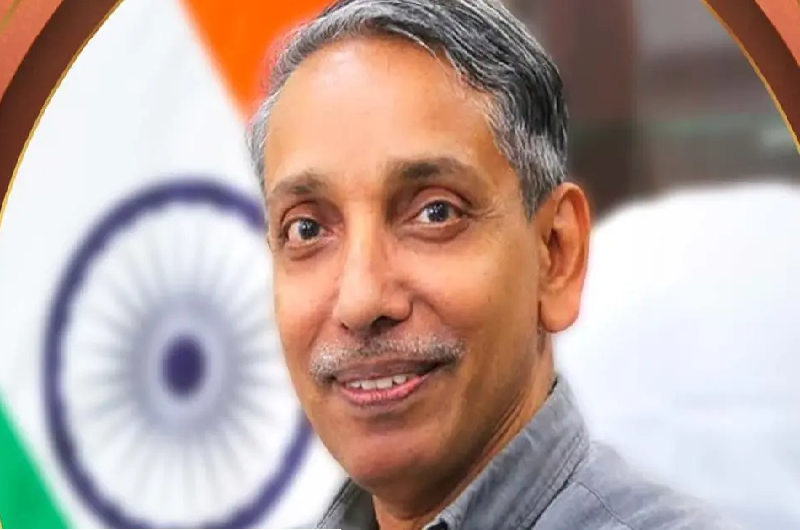
In a significant development for India’s higher education landscape, Professor Mamidala Jagadesh Kumar, a towering figure in academia with decades of leadership experience, has been appointed as the Chairperson of the Board of Governors (BoG) of the Indian Institute of Management (IIM) Calcutta. This prestigious assignment, approved by the President of India, represents not only a recognition of Professor Kumar’s formidable career but also a strategic move to fortify governance at one of the country’s foremost management institutions.
As institutions of higher learning navigate an ever‑evolving global environment, the role of leadership assumes heightened significance. At its core, this appointment underscores the confluence of academic excellence, institutional stewardship and visionary governance, imperatives that have seldom been more vital. In this blog, we explore the contours of Professor Kumar’s professional journey, the responsibilities that await him at IIM Calcutta, and the broader implications of this appointment for Indian management education.
The Appointment: Terms and Institutional Significance
The Ministry of Education’s formal order, dated 5 March 2026, confirmed that Professor M Jagadesh Kumar has been appointed as BoG Chairperson at IIM Calcutta for a term of four years or until he attains the age of seventy, whichever is earlier.
This role is a cornerstone of the IIM governance structure established under the Indian Institutes of Management Act, 2017. The BoG stands as the principal executive body for each IIM, responsible for charting strategic direction, approving policies, steering financial decisions and safeguarding institutional autonomy. Its composition typically includes eminent academicians, leading industry figures and government representatives - a blend that reflects the multifaceted demands of world‑class higher education.
In assuming this mantle, Professor Kumar succeeds a line of distinguished predecessors and enters a role characterised by broad institutional authority. The BoG’s decisions profoundly influence academic programmes, faculty recruitment, research priorities, financial strategy and international collaborations, all elements that define an institution’s competitive stature in a global knowledge economy.
An Illustrious Career: From Engineering Scholar to National Education Leader
Professor M Jagadesh Kumar’s professional odyssey spans several of India’s most influential academic platforms, underscored by scholarship, administrative leadership and sector‑wide impact.
Born in the early 1960s in Mamidala, Telangana, he embarked on his academic pursuits with a Master’s and doctoral degree in Electrical Engineering from the Indian Institute of Technology (IIT) Madras. His early career was defined by research excellence in nanoscience, nano‑electronics and semiconductor device design, which positioned him as a respected authority in his field.
At IIT Delhi, Professor Kumar rose to prominence as a faculty member in the Department of Electrical Engineering. There, he held the prestigious NXP Chair Professorship and coordinated the VLSI (Very Large Scale Integration) Design programme, cementing his reputation as both a scholar and educator.
His transition to university administration began with his appointment as the Vice‑Chancellor of Jawaharlal Nehru University (JNU), a position he held from January 2016 to February 2022. JNU, one of India’s most influential and vibrant universities, presented a complex ecosystem of academic dynamism and institutional challenges. His tenure there, while marked by debate and scrutiny, was nonetheless a formative period that sharpened his administrative acumen.
In February 2022, he was appointed Chairman of the University Grants Commission (UGC), India’s apex regulatory body for higher education, where he served until April 2025. His leadership at the UGC was defined by efforts to rationalise and revitalise university governance, expand access through digital platforms, and align regulatory frameworks with the goals of the National Education Policy 2020.
Amid these responsibilities, Professor Kumar’s contributions were formally recognised by the Government of India with the Padma Shri, one of the country’s highest civilian honours, awarded in 2026 for his distinguished service to education and literature.
The Board of Governors: Strategic Stewardship in Education
To appreciate the importance of Professor Kumar’s new role, it is essential to understand the function and influence of the Board of Governors at IIMs.
Under the IIM Act, the BoG serves as the apex authority at each Indian Institute of Management. Its core responsibilities include:
- Strategic Visioning: Providing a long‑term roadmap that balances global relevance with national priorities.
- Policy Formulation: Crafting frameworks that govern academic standards, faculty appointments, admissions criteria and institutional ethos.
- Financial Governance: Approving budgets, ensuring fiscal discipline, and enabling investment in research and infrastructure.
- Quality Assurance: Upholding academic rigour, ethical standards and institutional autonomy.
The chairperson’s role is especially pivotal, as it anchors deliberations, facilitates stakeholder consensus and steers governance through complex policy landscapes. With appointments often involving the President of India acting on the recommendation of the Ministry of Education, the chairperson is entrusted with both administrative authority and symbolic representation of the institution’s mission.
Leadership by Experience: What Professor Kumar Brings to IIM Calcutta
The synergy between Professor Kumar’s scholarly grounding and his administrative stewardship positions him uniquely for this role. His experience at the UGC, particularly in steering reforms that interface regulatory oversight with institutional innovation, offers valuable insights into the governance of a prestigious management institute.
At JNU, his leadership was shaped by navigating a large, diverse academic community. That exposure carries relevance for IIM Calcutta, which similarly demands sensitivity to faculty aspirations, student needs and global competitiveness.
His tenure as an engineering academic ensures a deep appreciation for research excellence, an asset for IIM Calcutta as it positions itself not only as a management school but also as a centre for interdisciplinary inquiry, thought leadership and industry collaboration.
Furthermore, his advocacy for digital platforms and distance learning during his UGC tenure aligns with the contemporary imperative for blended and technology‑enhanced education. Such perspectives could influence strategic decisions at IIM Calcutta pertaining to curriculum design, pedagogical innovation and international engagement.
Looking Ahead: Opportunities and Expectations
The appointment of Professor M Jagadesh Kumar comes at a moment when Indian business schools, including IIMs, are navigating multiple frontiers - globalisation of management education, integration of digital and AI‑centric competencies, and the pursuit of academic excellence that resonates with industry demands.
Under his guidance, stakeholders will anticipate several key outcomes:
- Strengthened Governance: Clear visioning that enhances institutional agility and policy coherence.
- Academic Innovation: Strategic emphasis on research, curriculum modernisation and cross‑disciplinary programmes.
- Global Outreach: Enhanced opportunities for international partnerships and student mobility.
- Industry Engagement: Deeper linkages with corporate ecosystems to enrich experiential learning and placements.
The confluence of these factors will influence how IIM Calcutta navigates its next chapter, both as a premier Indian management school and as an institution with global resonance.
Conclusion: Leadership in an Era of Educational Transformation
Professor M Jagadesh Kumar’s appointment as Chairperson of IIM Calcutta’s Board of Governors stands as a noteworthy moment in the trajectory of Indian higher education governance. It is an affirmation of scholarly achievement, administrative leadership and a commitment to nurturing academic excellence.
In a landscape where institutions must balance tradition with innovation, and autonomy with accountability, his stewardship promises to bring clarity of vision and depth of experience. For students, faculty and the broader academic community, this represents not just a change in leadership, but a renewed opportunity to reaffirm IIM Calcutta’s standing as a beacon of management education that is both aspirational and grounded in robust governance.