AI, Management and the Future: How IIM Lucknow Is Redefining Higher Education
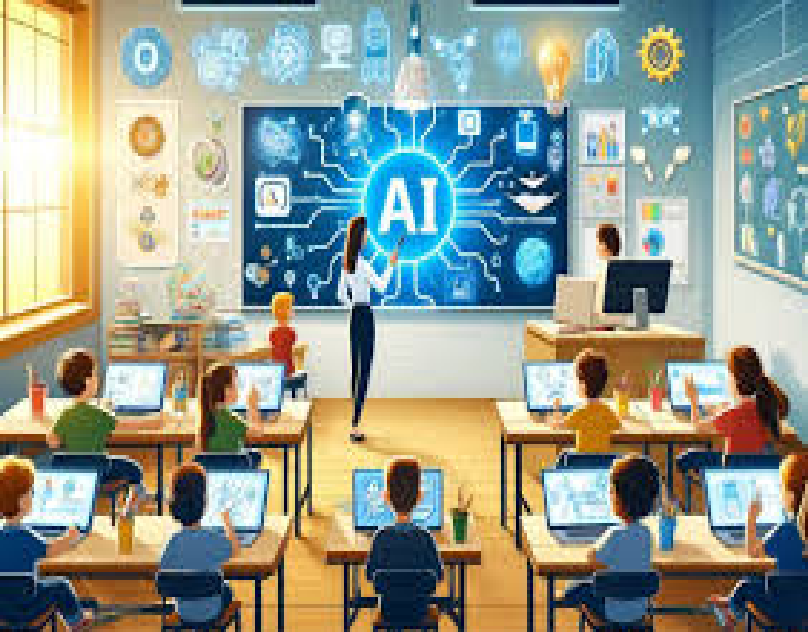
Artificial Intelligence is no longer a distant technological frontier; it is rapidly becoming the structural backbone of economies, governance systems and industries worldwide. From predictive healthcare to intelligent logistics, AI is reshaping how societies function and how organisations compete. Recognising this profound shift, IIM Lucknow has launched a suite of undergraduate, postgraduate and doctoral programmes centred on Artificial Intelligence, signalling a decisive step towards integrating advanced technology with management, public policy and societal development. This initiative reflects a broader educational transformation underway in India, one that seeks not merely to adopt AI tools but to cultivate leaders capable of shaping ethical, inclusive and economically meaningful AI ecosystems.
The Strategic Context: Why AI Education Matters Now
Artificial Intelligence is poised to redefine productivity, innovation and competitiveness across virtually every sector. Nations that successfully nurture AI talent and research capabilities are likely to shape global economic narratives in the decades ahead. Consequently, educational institutions face increasing pressure to produce graduates who are not only technologically proficient but also ethically grounded and strategically aware. India’s rapidly expanding digital economy, combined with its demographic advantage, places it in a uniquely promising position. However, capitalising on this opportunity requires carefully designed academic programmes that bridge the gap between theoretical AI knowledge, business strategy and public policy. The new programmes at IIM Lucknow attempt precisely this synthesis. By combining management education with technological literacy, the institute aims to cultivate professionals who can translate AI potential into practical, socially responsible solutions.
Government Vision and National Priorities
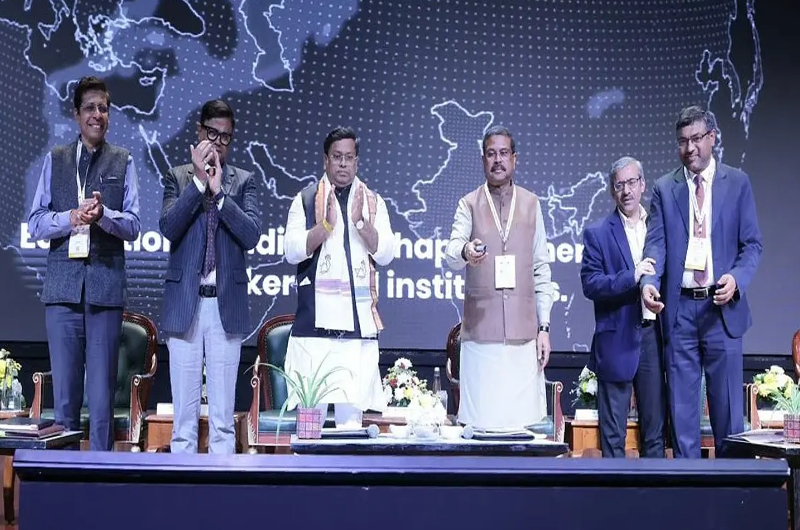
The programmes were inaugurated by Dharmendra Pradhan, whose remarks underscored the government’s ambition to position India as a global AI leader. He emphasised that AI development must remain ethical, inclusive and accessible, ensuring that technological advancement benefits educators, students, businesses and society alike. This perspective aligns with the broader national vision articulated by Narendra Modi, who has repeatedly highlighted the need to make India “AI-ready”. The emphasis is not solely on technological sophistication but on building AI systems that reflect national priorities, cultural contexts and developmental needs. Such alignment between academia, government policy and industry demand suggests a maturing ecosystem where AI education is increasingly seen as a strategic national asset rather than merely a specialised technical discipline.
Programme Architecture: Bridging Technology and Leadership
A distinctive feature of IIM Lucknow’s initiative lies in its modular academic structure. The programmes are designed to ensure that students acquire both technical competence and managerial insight, a combination often missing in traditional curricula.
1. BS in Artificial Intelligence and Business Analytics (Four Years)
This undergraduate programme, expected to commence in the 2026–27 academic session, targets students completing secondary education who demonstrate strong aptitude in mathematics, computing and analytical reasoning. By blending AI fundamentals with business analytics, the programme aims to cultivate graduates capable of translating data insights into strategic organisational decisions.
2. Tech MBA (Two Years)
Scheduled for launch in 2027–28, this postgraduate programme integrates technological fluency with managerial expertise. It seeks to prepare leaders who can navigate AI-driven enterprises, oversee digital transformation initiatives and manage innovation responsibly.
3. Integrated BS + Tech MBA (Five Years)
For students seeking a seamless academic pathway, this integrated option allows progression from undergraduate AI studies directly into advanced management education. Such continuity is likely to produce professionals with deep technical grounding alongside executive-level strategic skills. Together, these programmes reflect an educational philosophy that treats AI not as an isolated technical subject but as a foundational element of future leadership.
Responsible AI: Ethics, Inclusion and Sovereignty
One of the most striking themes emerging from the initiative is the emphasis on responsible AI. Rapid technological adoption often raises concerns about bias, privacy, employment displacement and ethical governance. Addressing these concerns requires professionals who understand not only algorithms but also societal implications.
The programmes aim to instil:
- Ethical decision-making in AI deployment
- Awareness of social equity issues
- Sensitivity to cultural and policy contexts
- Commitment to transparency and accountability
Such priorities are particularly significant for a diverse country like India, where AI solutions must accommodate linguistic, economic and social diversity.
Aligning With National Digital Initiatives
The academic initiative also complements flagship national programmes such as Digital India and IndiaAI Mission. These initiatives seek to expand digital infrastructure, promote AI research and ensure widespread technological accessibility. By producing graduates equipped with both AI expertise and managerial acumen, IIM Lucknow contributes to:
- Digital transformation across industries
- Strengthening India’s innovation ecosystem
- Enhancing global competitiveness
- Encouraging AI-driven entrepreneurship
Such alignment ensures that academic output remains relevant to national developmental goals rather than existing in isolation.
Industry Implications: Talent, Innovation and Competitiveness
From a business perspective, the availability of AI-trained managers could significantly accelerate organisational transformation. Industries increasingly require professionals capable of:
- Interpreting complex datasets
- Implementing AI-driven operational efficiencies
- Navigating regulatory landscapes
- Leading cross-disciplinary teams
The institute’s emphasis on practical application suggests that graduates will be prepared not only to analyse data but also to lead innovation initiatives and manage organisational change.
Moreover, the integration of AI education with public policy opens pathways for graduates to contribute to governance, regulatory frameworks and social impact initiatives, areas where technological expertise is urgently needed.
Research Potential and Global Collaboration
Beyond teaching, the programmes are expected to stimulate research at the intersection of AI, business strategy and public policy. Such interdisciplinary research could address pressing global challenges including climate resilience, healthcare accessibility, sustainable supply chains and inclusive economic development. International collaboration is also likely to expand as global institutions seek partnerships in AI research and education. This could enhance India’s visibility as a knowledge hub while offering students exposure to global best practices.
Building a Future-Ready Talent Ecosystem
Professor M. P. Gupta, Director of the institute, has described the curriculum as a thoughtfully designed effort to create a “future-ready talent ecosystem”. This concept extends beyond academic instruction to include:
- Entrepreneurship incubation
- Industry partnerships
- Applied research opportunities
- Leadership development
Such ecosystem-building is essential for sustaining long-term innovation and ensuring that academic initiatives translate into tangible societal benefits.
Challenges Ahead
While the initiative is promising, it also faces several challenges:
- Ensuring curriculum agility in a rapidly evolving field
- Maintaining ethical oversight as AI applications expand
- Bridging the urban-rural digital divide
- Balancing technological advancement with employment considerations
Addressing these challenges will require ongoing collaboration among academia, industry, policymakers and civil society.
The Broader Educational Transformation
The launch of AI-focused programmes at IIM Lucknow reflects a larger shift within higher education. Institutions worldwide are moving towards interdisciplinary curricula that integrate technology, humanities and management.
Such integration recognises that future leaders must combine:
- Technical literacy
- Strategic thinking
- Ethical judgement
- Cultural awareness
This holistic approach represents a departure from siloed education models and aligns more closely with real-world complexity.
Conclusion: A Defining Moment for AI Education
The introduction of AI-focused undergraduate, postgraduate and doctoral programmes at IIM Lucknow marks a significant milestone in India’s educational landscape. By combining Artificial Intelligence with management and public policy, the institute is preparing graduates not merely to participate in technological change but to shape it responsibly. As AI continues to redefine industries, economies and governance systems, initiatives like this will play a crucial role in ensuring that technological advancement remains aligned with human values and societal needs. If executed effectively, the programmes could contribute substantially to India’s aspiration to emerge as a global leader in ethical, inclusive and innovation-driven AI development. In many ways, this development signals more than an academic expansion; it represents a strategic commitment to building a future where technology, leadership and social responsibility advance hand in hand.