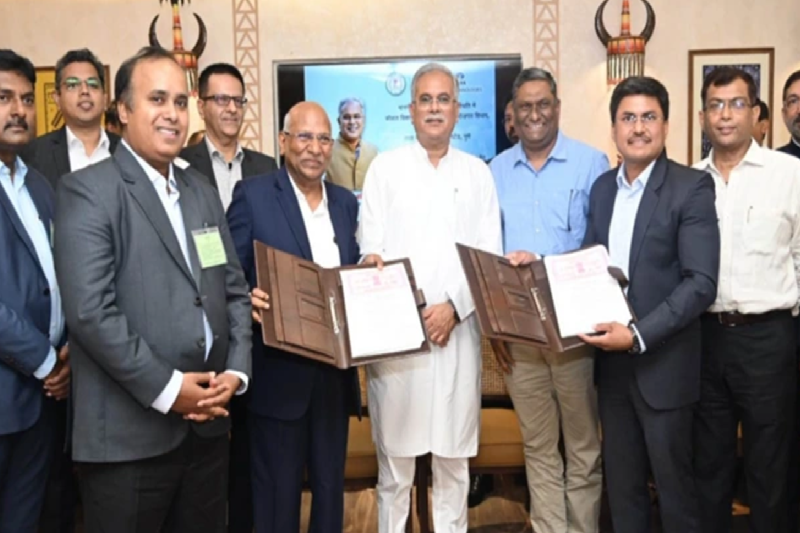
Odisha Signs Landmark MoUs with Tata Technologies to Transform 22 ITIs into Centres of Excellence
In a decisive move to recalibrate the state’s skilling ecosystem and align it with the evolving demands of modern industry, the Government of Odisha has signed four significant Memoranda of Understanding (MoUs), headlined by a transformative partnership with Tata Technologies. The agreement seeks to upgrade 22 state-run Industrial Training Institutes (ITIs) into Centres of Excellence, ushering in a new chapter for technical education and workforce preparedness in the state.
The MoUs were formalised in Bhubaneswar in the presence of Industries and Skill Development Minister Sampad Chandra Swain, who described the initiative as a strategic intervention to make Odisha’s youth truly industry-ready. More than an administrative exercise, the partnership reflects a deliberate effort to embed skill development at the heart of the state’s economic growth agenda.
A ₹779 Crore Commitment to Modernisation
At the core of this ambitious undertaking lies a substantial financial outlay of ₹779 crore. Under the terms of the agreement, the Odisha government will bear 14 per cent of the total project cost, while Tata Technologies will fund the remaining share. This public-private collaboration represents one of the most comprehensive efforts in recent years to modernise vocational education infrastructure in the state.
The 22 selected ITIs will be transformed into state-of-the-art Centres of Excellence, equipped with advanced laboratories and industry-grade machinery. The objective is not merely aesthetic or infrastructural enhancement, but a substantive reconfiguration of training environments to mirror real-world industrial conditions. By aligning teaching tools and workshop facilities with contemporary manufacturing standards, the initiative seeks to close the longstanding gap between classroom instruction and workplace expectations.
Minister Swain underscored the philosophical underpinning of the initiative, observing that while infrastructure builds industries, it is skills that furnish the human capital necessary for sustained economic expansion. He further emphasised that skill development is not a peripheral welfare measure but a core economic strategy capable of driving inclusive growth and global competitiveness.
Focus on High-Growth and Emerging Sectors
The upgraded Centres of Excellence will concentrate on sectors that are widely regarded as engines of future growth. These include the automotive sector with particular emphasis on electric vehicles as well as design and verification tools, 3D printing and additive manufacturing, the Internet of Things (IoT), robotics, advanced manufacturing technologies, and sophisticated CNC and VMC machining systems.
Such a sectoral focus is both timely and strategic. As industries worldwide pivot towards automation, electrification and digital integration, the demand for technically proficient, adaptable professionals continues to intensify. By orienting ITI training towards these high-growth domains, Odisha is positioning its workforce to participate meaningfully in advanced manufacturing ecosystems, both domestically and internationally.
The inclusion of emerging technologies such as robotics and IoT also signals a recognition that vocational education must evolve in tandem with Industry 4.0 paradigms. Rather than restricting trainees to conventional mechanical trades, the new curriculum framework is expected to foster multi-disciplinary competencies, equipping learners with the agility to navigate complex technological landscapes.
Five Years of Industry Handholding
A distinguishing feature of the MoU with Tata Technologies is the provision for five years of comprehensive handholding support. This extends beyond the installation of equipment and includes the deployment of specialised trainers, ongoing maintenance of machinery, and facilitation of placements to ensure strong industry linkage.
Such sustained engagement is crucial. Too often, infrastructural upgrades falter due to inadequate maintenance or insufficiently trained faculty. By committing to long-term operational support, Tata Technologies aims to ensure that the Centres of Excellence do not become static showcases, but dynamic hubs of learning that remain responsive to technological advancements and market trends.
The placement facilitation component further reinforces the outcome-oriented ethos of the initiative. Employability, rather than mere certification, lies at the heart of the reform. By fostering direct connections with industry stakeholders, the programme aspires to create tangible pathways from training to employment.
Expanding the Skilling Ecosystem: Additional MoUs
While the partnership with Tata Technologies constitutes the flagship element, three additional MoUs signed on the occasion broaden the scope of Odisha’s skilling ambitions.
A collaboration with UNICEF will leverage the YouthHub platform to facilitate the placement of over 2,000 girls through digital skilling initiatives and an outcome-based funding model. This component introduces a gender-sensitive dimension to the broader reform, acknowledging the importance of expanding opportunities for young women in technical and digital domains. By integrating digital competencies with structured placement support, the initiative seeks to enhance both access and retention.
In another strategic move, the World Skill Centre has partnered with Kawasaki Robotics India Private Limited to strengthen capacity in robotics, automation and Industry 4.0 technologies. This partnership is expected to enrich the technical depth of training programmes, offering learners exposure to cutting-edge automation systems and industrial robotics solutions. Such exposure is indispensable in preparing youth for advanced manufacturing ecosystems where automation and precision engineering are increasingly standard.
A further MoU between the World Skill Centre and Atreya Global Private Limited seeks to create structured overseas employment pathways, particularly in Germany and other European nations. By integrating skills with language training, placement facilitation and post-placement support, the partnership aims to ensure that candidates are not only technically competent but also culturally and linguistically prepared for international work environments. This global orientation reflects a broader understanding of labour mobility in a connected world economy.
Skill Development as Economic Strategy
Collectively, these agreements articulate a coherent vision: skill development as a strategic lever of economic transformation. Rather than treating vocational education as a secondary track, Odisha is attempting to elevate it to a position of central importance in its development narrative.
The state’s emphasis on Centres of Excellence, international partnerships and sector-specific training suggests a shift from generic skill provisioning to targeted, industry-responsive models. This approach aligns with global best practices, where close collaboration between government, industry and training institutions has proven instrumental in driving productivity and innovation.
Moreover, the integration of overseas employment pathways indicates a pragmatic recognition of global labour demand. By equipping youth with internationally recognised skills and facilitating structured migration channels, the state may enhance remittance flows while simultaneously addressing domestic unemployment challenges.
A Blueprint for Inclusive Growth
The reform agenda also carries significant implications for inclusive growth. By upgrading state-run ITIs, institutions that traditionally cater to students from modest socio-economic backgrounds, the initiative democratises access to high-quality technical education. In doing so, it creates opportunities for upward mobility among segments of society that might otherwise remain excluded from high-growth sectors.
The specific focus on girls’ digital skilling through the UNICEF collaboration further strengthens this inclusivity framework. Empowering young women with future-ready skills not only enhances their economic prospects but also contributes to broader social transformation.
Looking Ahead
As the MoUs transition from ceremonial signing to on-ground implementation, the true measure of success will lie in execution. Infrastructure must be complemented by curriculum reform, faculty upskilling and continuous industry engagement. Sustained monitoring and evaluation will be essential to ensure that the Centres of Excellence deliver on their promise.
Nevertheless, the intent is unequivocal. With a substantial financial commitment, robust industry partnerships and a forward-looking sectoral focus, Odisha has signalled its determination to reposition its skilling ecosystem for the demands of the 21st century.
In an era where technological change is relentless and labour markets increasingly competitive, such proactive measures are not merely desirable; they are indispensable. If effectively implemented, the transformation of 22 ITIs into Centres of Excellence may well serve as a blueprint for other states seeking to harmonise vocational education with the imperatives of modern industry.