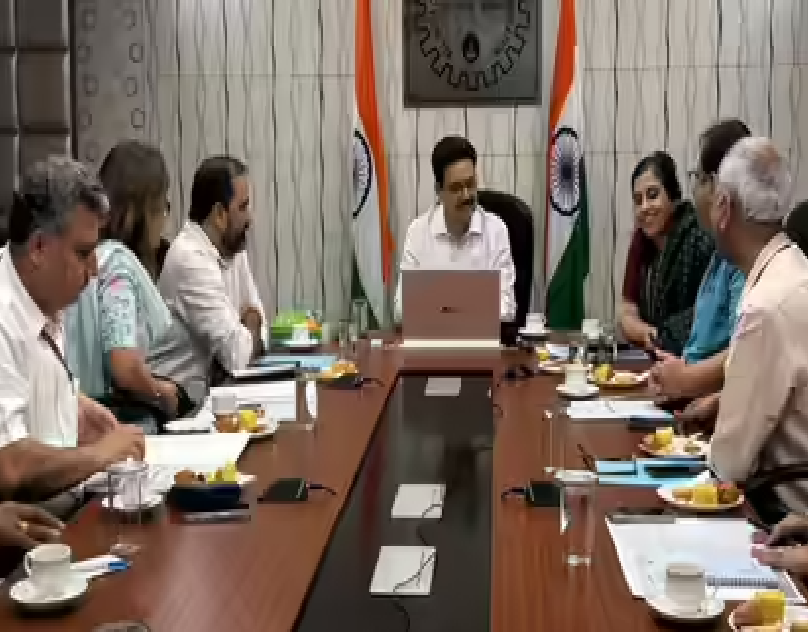
AICTE VAANI Scheme 3rd Edition Launched for Technical Education
Third Edition of AICTE-VAANI Scheme Launched: Reimagining Technical Education Through India’s Linguistic Diversity
In a decisive stride towards fostering inclusivity in higher education, the All India Council for Technical Education has unveiled the third edition of its flagship AICTE-VAANI Scheme. The initiative, formally launched under the stewardship of AICTE Chairman Prof. Yogesh Singh, marks a renewed commitment to embedding Indian languages within the framework of technical education. At a time when education systems across the globe are grappling with questions of accessibility and inclusivity, the expansion of this scheme underscores India’s distinctive approach, one that seeks to harmonise technological advancement with linguistic plurality.
A Vision Rooted in Linguistic Inclusivity
The AICTE-VAANI initiative, an acronym for Vibrant Advocacy for Advancement and Nurturing of Indian Languages, is not merely a policy intervention but a philosophical reorientation of technical education. At its core lies the belief that language should not be a barrier to knowledge, particularly in fields that shape the future, such as engineering, artificial intelligence and emerging technologies.
Historically, technical education in India has been overwhelmingly dominated by English, often placing students from vernacular backgrounds at a disadvantage. The VAANI scheme seeks to address this imbalance by encouraging the use of Indian languages in academic discourse, research and pedagogy.
The third edition builds upon the foundations laid in previous iterations, expanding both its reach and its ambition.
What the Third Edition Brings to the Table
The newly launched phase of the scheme introduces enhanced accessibility and streamlined processes. Alongside the official launch, AICTE has released an updated scheme document and a dedicated online portal to facilitate institutional participation.
These developments signal a shift towards greater transparency and efficiency, enabling institutions across the country to engage more actively with the initiative. By digitising application and monitoring processes, AICTE aims to ensure that the benefits of the scheme are disseminated widely and equitably.
The third edition is expected to continue offering financial assistance to AICTE-approved institutions for organising conferences, seminars, and workshops in Indian languages. These events typically focus on emerging areas of technical education, thereby bridging the gap between cutting-edge knowledge and linguistic accessibility.
Bridging the Gap Between Language and Technology
One of the most compelling aspects of the VAANI scheme is its emphasis on emerging technological domains. From artificial intelligence and quantum computing to cybersecurity and sustainable energy, the initiative encourages discourse in areas that are traditionally perceived as linguistically exclusive.
By facilitating academic events in regional languages, the scheme enables students and researchers to engage with complex concepts in a more intuitive and meaningful manner. This, in turn, enhances comprehension, fosters innovation and encourages broader participation.
Moreover, the initiative plays a pivotal role in nurturing a knowledge ecosystem that is both inclusive and contextually relevant. It allows for the localisation of technical knowledge, making it more applicable to regional challenges and opportunities.
Empowering Institutions and Educators
The success of the AICTE-VAANI scheme hinges significantly on the active participation of educational institutions. By providing financial support, often up to ₹2 lakh per event, the scheme incentivises colleges and universities to organise high-quality academic programmes in Indian languages.
These programmes serve as platforms for intellectual exchange, bringing together academicians, researchers, industry professionals and students. They facilitate discussions on contemporary issues, encourage collaborative research and promote the dissemination of knowledge beyond linguistic boundaries.
For educators, the scheme presents an opportunity to rethink pedagogical approaches. It challenges conventional notions of language in education and encourages the development of teaching methodologies that are more inclusive and effective.
Expanding the Linguistic Landscape
Previous editions of the VAANI scheme have already demonstrated its potential to transform the educational landscape. By encompassing a wide range of Indian languages, including Hindi, Tamil, Telugu, Bengali, Kannada and several others, the initiative has significantly broadened the scope of technical education.
The third edition is expected to further expand this linguistic repertoire, reinforcing the idea that knowledge should be accessible in multiple languages. This approach not only preserves linguistic heritage but also enhances the reach of technical education.
In a country as linguistically diverse as India, such initiatives are crucial for ensuring that no student is left behind due to language constraints.
Aligning with the National Education Policy
The launch of the third edition of the AICTE-VAANI scheme aligns seamlessly with the objectives of the National Education Policy 2020, which advocates for the use of mother tongues and regional languages as mediums of instruction.
The policy emphasises that learning in one’s native language can significantly improve understanding and retention, particularly in foundational years. By extending this principle to technical education, the VAANI scheme represents a logical and necessary progression.
It also complements broader efforts to democratise education, ensuring that students from diverse socio-economic backgrounds have equal access to quality learning opportunities.
A Catalyst for Research and Innovation
Beyond teaching and learning, the VAANI scheme holds immense potential for advancing research in Indian languages. Encouraging the publication of academic work in regional languages, it opens new avenues for scholarly communication.
This is particularly significant in fields where local context plays a crucial role. For instance, research on agriculture, climate change or rural development can benefit immensely from being conducted and disseminated in local languages.
Furthermore, the scheme fosters collaboration between academia and industry, creating opportunities for innovation that are both technologically advanced and socially relevant.
Challenges and the Road Ahead
While the AICTE-VAANI scheme is undoubtedly a transformative initiative, its implementation is not without challenges. One of the primary hurdles lies in the availability of technical vocabulary and resources in Indian languages.
Developing standardised terminologies, translating complex concepts, and training educators to teach in regional languages require sustained effort and investment.
Additionally, there is a need to ensure quality and consistency across programmes conducted under the scheme. This necessitates robust monitoring mechanisms and continuous feedback from stakeholders.
However, these challenges are not insurmountable. With strategic planning and collaborative efforts, the scheme has the potential to redefine the contours of technical education in India.
A Step Towards Educational Equity
At its essence, the AICTE-VAANI scheme is about equity, about ensuring that language does not become a barrier to opportunity. It recognises that true progress lies not merely in technological advancement but in making that advancement accessible to all. The launch of its third edition is therefore more than an administrative milestone; it is a reaffirmation of a vision that places inclusivity at the heart of education.
Conclusion: Towards a Multilingual Knowledge Future
As India continues to position itself as a global leader in technology and innovation, initiatives such as the AICTE-VAANI scheme assume critical importance. They ensure that progress is not confined to a select few but is shared across linguistic and cultural boundaries. The third edition of the scheme represents a significant step forward in this journey. By promoting Indian languages in technical education, it not only enriches the learning experience but also strengthens the very foundations of the knowledge economy. In the years to come, the success of this initiative will depend on sustained commitment, collaborative effort and a willingness to embrace change. If implemented effectively, it has the potential to transform not only how India learns but also how it innovates. In a nation defined by its diversity, the future of education may well be multilingual and the AICTE-VAANI scheme is leading the way.