PGCIL Diploma Trainee Recruitment 2026: 668 Vacancies Open
PGCIL Diploma Trainee Recruitment 2026: A Gateway to Technical Careers in India’s Power Sector
In a significant development for engineering diploma holders across the country, the Power Grid Corporation of India Limited (PGCIL) has announced its Diploma Trainee Recruitment 2026, opening the door to 668 vacancies in one of India’s most prestigious public sector undertakings. As registration is set to commence on 20 April 2026, the announcement has generated considerable interest among aspiring candidates seeking stable and rewarding careers in the power transmission sector. This recruitment drive not only reflects the growing demand for technically skilled professionals but also underscores the government’s continued investment in strengthening India’s power infrastructure. For young diploma holders, particularly those specialising in core engineering disciplines, this opportunity represents a vital stepping stone into the public sector.
A Strategic Opportunity in a Critical Sector
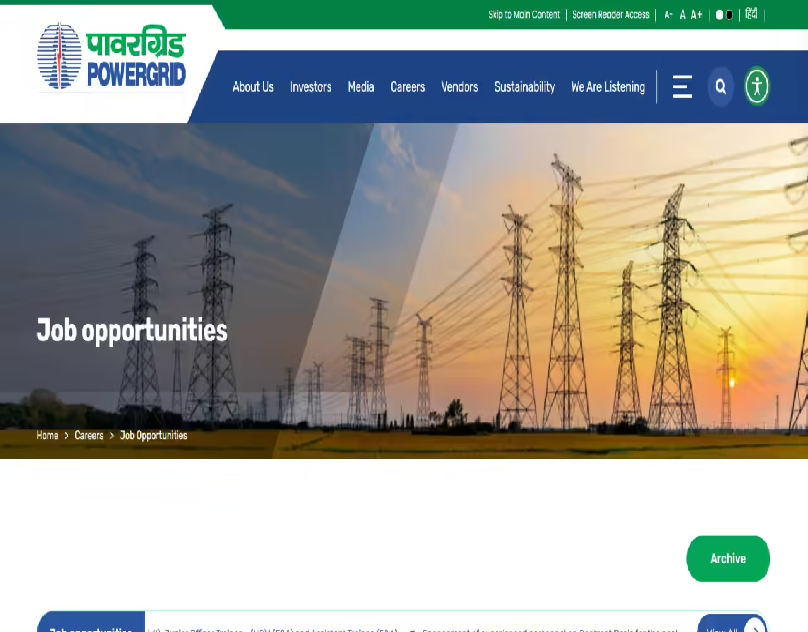
PGCIL, often referred to as POWERGRID, plays a central role in India’s electricity transmission network. As a Maharatna PSU under the Ministry of Power, it is responsible for transmitting a substantial portion of the country’s electricity across vast geographical regions. Against this backdrop, the recruitment of diploma trainees assumes strategic importance.
The 2026 notification outlines a total of 668 posts, signalling a large-scale hiring initiative aimed at enhancing operational efficiency and meeting the growing demands of the national grid.
For candidates, the appeal lies not only in the number of vacancies but also in the stature of the organisation. A position within PGCIL offers job security, competitive remuneration and long-term career progression, factors that continue to make public sector roles highly desirable.
Key Dates and Application Timeline
One of the most crucial aspects for prospective applicants is the recruitment timeline. According to the official notification, the online registration process will begin on 20 April 2026.
While the closing date for applications has not been highlighted in the summary, candidates are strongly advised to apply early to avoid last-minute technical issues or submission errors. Given the scale of the recruitment, the application window is expected to attract a high volume of candidates from across the country.
The application process is conducted entirely online, ensuring accessibility and convenience. However, applicants must exercise diligence in completing each step, including document uploads and fee payments, as incomplete applications are typically rejected.
Eligibility Criteria: Academic and Age Requirements
To be considered for the Diploma Trainee posts, candidates must meet specific eligibility criteria relating to educational qualifications and age limits. The recruitment is primarily targeted at individuals who hold a diploma in relevant engineering disciplines such as Electrical, Civil or Electronics.
Typically, candidates are required to have completed a three-year diploma from a recognised institution, often with a minimum percentage threshold. While the precise requirements are detailed in the official notification, prior recruitment cycles suggest that academic consistency and technical proficiency are key considerations.
In terms of age, applicants must fall within a prescribed range, usually between 18 and 27 years, although relaxations may be applicable for candidates belonging to reserved categories as per government norms.
These criteria ensure that the recruitment process remains both competitive and inclusive, providing opportunities to a diverse pool of candidates.
Selection Process: Merit Through Assessment
The selection procedure for PGCIL Diploma Trainee Recruitment 2026 is expected to follow a structured and merit-based approach. As indicated in the notification, candidates will likely be assessed through a written examination or computer-based test (CBT).
This examination typically evaluates both technical knowledge and general aptitude. The technical section focuses on core engineering concepts relevant to the candidate’s discipline, while the aptitude section assesses reasoning, quantitative ability and comprehension skills.
Candidates who perform well in the examination are subsequently shortlisted for further stages, which may include document verification. The emphasis on a standardised testing process ensures transparency and fairness in the selection.
Application Fee and Documentation
Applicants are required to pay a nominal application fee as part of the registration process. While fee exemptions are generally provided for candidates belonging to SC/ST, PwBD, and certain other categories, general and OBC candidates are expected to pay the prescribed amount online.
In addition to the fee, candidates must upload essential documents, including educational certificates, proof of identity and recent photographs. Accuracy and clarity in documentation are critical, as discrepancies may lead to disqualification at later stages.
Why This Recruitment Matters
The significance of the PGCIL Diploma Trainee Recruitment extends beyond individual employment opportunities. It reflects broader trends in India’s economic and infrastructural development.
Firstly, the recruitment highlights the increasing importance of skilled technical manpower in sustaining and expanding the country’s power transmission capabilities. As India continues to modernise its energy infrastructure, organisations like PGCIL require a steady influx of trained professionals.
Secondly, the initiative aligns with the government’s focus on employment generation, particularly for technically qualified youth. By offering structured training and career progression, PGCIL contributes to both skill development and workforce stability.
Finally, the recruitment underscores the enduring relevance of diploma-level education. In an era often dominated by degree programmes, this initiative reaffirms the value of practical, industry-oriented training.
Preparation Strategies for Aspirants
Given the competitive nature of the recruitment process, candidates must adopt a strategic approach to preparation. A thorough understanding of the syllabus, combined with consistent practice, is essential.
Aspirants should begin by revising core technical subjects, focusing on fundamental concepts and problem-solving techniques. Simultaneously, they should strengthen their aptitude skills, particularly in areas such as numerical reasoning and logical analysis.
Mock tests and previous years’ question papers serve as invaluable resources, enabling candidates to familiarise themselves with the exam pattern and improve time management. Regular practice not only enhances accuracy but also builds confidence.
Equally important is staying updated with official announcements and notifications. Candidates should rely on authentic sources to track changes in exam dates, syllabus or application procedures.
A Competitive Yet Rewarding Journey
While the scale of the recruitment presents a significant opportunity, it also implies intense competition. Thousands of candidates are expected to apply, making it imperative for aspirants to distinguish themselves through preparation and performance. However, the rewards justify the effort. A career with PGCIL offers not only financial stability but also the chance to contribute to a critical national infrastructure. Employees benefit from structured training, professional growth and exposure to cutting-edge technologies in the power sector.
Looking Ahead
The PGCIL Diploma Trainee Recruitment 2026 stands as a testament to the evolving landscape of technical employment in India. It bridges the gap between education and industry, providing diploma holders with a platform to translate their skills into meaningful careers. As the registration window opens on 20 April 2026, aspiring candidates must act promptly and prepare diligently. In doing so, they position themselves to seize an opportunity that could shape their professional trajectory for years to come. In a nation striving for energy security and infrastructural excellence, initiatives such as this are not merely recruitment drives; they are investments in the future.