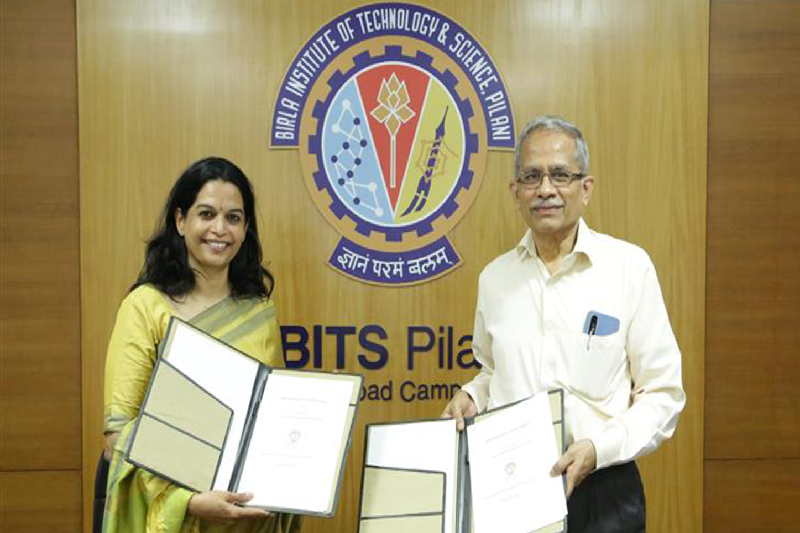
BITS Pilani and Siemens Unite to Shape the Future of PCB Design Education
In an era defined by accelerating technological advancement, the demand for specialised engineering skills has never been more pronounced. The electronics industry, in particular, sits at the heart of contemporary innovation, powering everything from consumer devices and healthcare equipment to aerospace systems and industrial automation. Against this backdrop, the recent collaboration between the Birla Institute of Technology and Science (BITS) Pilani and Siemens Digital Industries Software represents a timely and significant initiative aimed at bridging academia and industry. Their joint certification programme in printed circuit board (PCB) design and analysis marks a strategic effort to cultivate industry-ready talent equipped to meet emerging technological challenges.
A Strategic Academic–Industry Partnership
BITS Pilani has long enjoyed a reputation as one of India’s most distinguished private institutions for engineering and scientific education. Siemens, meanwhile, stands as a global leader in industrial software, automation technologies, and digital transformation solutions. Their partnership reflects a broader trend in higher education: institutions increasingly recognise that traditional curricula alone cannot keep pace with industry’s rapidly evolving skill requirements.
The newly introduced certification programme focuses on PCB design and analysis, a specialised yet critical domain within electronics engineering. Printed circuit boards form the backbone of virtually all modern electronic devices, acting as the structural and electrical framework that enables components to communicate effectively. Expertise in PCB design therefore directly influences product performance, reliability, and efficiency.
By integrating Siemens’ advanced software tools with BITS Pilani’s academic expertise, the programme aims to deliver a blend of theoretical depth and practical proficiency. Students will gain exposure not only to conceptual principles but also to industry-standard design environments widely used in professional engineering practice.
Addressing the Industry Skills Gap
The global electronics sector continues to expand rapidly, fuelled by developments in artificial intelligence, electric mobility, renewable energy systems, telecommunications infrastructure, and consumer electronics. Yet employers frequently highlight a persistent gap between academic training and workplace expectations. Graduates often possess strong theoretical foundations but lack hands-on experience with sophisticated design tools and real-world engineering workflows.
This collaboration directly addresses that disparity. Through specialised training modules, practical assignments, and industry-aligned curricula, the programme seeks to ensure that participants graduate with competencies immediately applicable in professional settings. The involvement of Siemens is particularly noteworthy, as access to industrial-grade software platforms provides students with exposure to tools they are likely to encounter in their careers.
Such initiatives are increasingly essential. Employers value graduates who can transition seamlessly into productive roles without requiring extensive retraining. Consequently, certification programmes combining academic rigour with industry engagement are gaining prominence across global higher education systems.
Enhancing Employability Through Certification
Beyond knowledge acquisition, formal certification carries considerable professional weight. Credentials endorsed by both a prestigious academic institution and a leading multinational corporation can significantly enhance graduates’ employability prospects. They signal to employers not only technical competence but also familiarity with industry standards and best practices.
For students, this translates into tangible career advantages. Expertise in PCB design opens pathways across diverse sectors, including telecommunications, automotive electronics, defence technology, medical instrumentation, robotics, and consumer electronics manufacturing. As digitalisation intensifies worldwide, demand for engineers skilled in electronics design is expected to grow steadily.
Furthermore, certification programmes often encourage project-based learning, fostering problem-solving abilities, teamwork, and innovation. These attributes are increasingly prized alongside technical knowledge, particularly in multidisciplinary engineering environments.
Curriculum Integration and Learning Outcomes
Although detailed curricular specifics may evolve, the programme is expected to cover fundamental aspects of PCB design, simulation, testing methodologies, and advanced analysis techniques. Students will likely engage with topics such as signal integrity, electromagnetic compatibility, thermal management, manufacturability considerations, and design optimisation.
Practical exposure to Siemens’ digital design ecosystem will allow participants to simulate real engineering challenges. This experiential learning approach enhances conceptual understanding while cultivating confidence in professional design workflows. Importantly, such training also familiarises students with emerging trends in electronics design, including automation, digital twin technologies, and integrated simulation environments.
The programme thus exemplifies a modern educational paradigm in which theoretical learning is continuously reinforced through applied practice.
Strengthening India’s Electronics Ecosystem
India’s ambitions to expand its electronics manufacturing capabilities add further significance to this collaboration. National initiatives promoting semiconductor fabrication, electronics manufacturing clusters, and indigenous technology development require a skilled workforce proficient in advanced design methodologies.
Educational partnerships such as this contribute to building that workforce. By equipping students with specialised expertise, institutions help strengthen domestic innovation capacity while reducing reliance on external technological resources. In the long term, such initiatives can support economic growth, technological sovereignty, and global competitiveness.
Moreover, collaborations between academia and multinational corporations facilitate knowledge transfer, exposing students to international standards and professional cultures. This global perspective is increasingly vital in an interconnected technological landscape.
The Broader Educational Implications
The BITS Pilani–Siemens initiative also reflects broader shifts within higher education. Universities worldwide are re-evaluating pedagogical models to ensure relevance in rapidly evolving industries. Interdisciplinary programmes, industry collaborations, experiential learning modules, and certification pathways are becoming integral components of contemporary academic ecosystems.
Such transformations benefit multiple stakeholders:
- Students gain practical skills and enhanced employability.
- Universities strengthen industry relevance and research collaborations.
- Companies access a pipeline of well-prepared graduates.
- Economies benefit from innovation-driven growth.
Consequently, partnerships like this may serve as templates for future collaborations across diverse engineering disciplines.
Challenges and Considerations
While the advantages are compelling, effective implementation remains crucial. Certification programmes must maintain academic rigour while ensuring industry alignment. Faculty development, curriculum updates, infrastructure investment, and ongoing collaboration with industry partners are essential for sustained success.
Additionally, accessibility is an important consideration. Ensuring that opportunities extend beyond elite institutions can help democratise access to advanced technical education. Expanding similar programmes across multiple universities could amplify their impact on national workforce development.
Finally, continuous curriculum evolution is necessary. Electronics technology evolves rapidly, and educational programmes must adapt accordingly to remain relevant.
Looking Ahead
The collaboration between BITS Pilani and Siemens represents more than a single academic initiative; it symbolises the evolving relationship between education and industry in the twenty-first century. As technological complexity increases, the boundaries between classroom learning and professional practice continue to blur.
Students entering engineering fields today require not only theoretical knowledge but also adaptability, interdisciplinary awareness, and practical experience with cutting-edge tools. Certification programmes integrating academic excellence with industrial expertise offer a compelling pathway to achieving these objectives.
If successfully executed, this initiative could inspire similar collaborations across India and beyond, strengthening engineering education while fostering innovation-driven economic growth.
Conclusion
The launch of the joint PCB design and analysis certification programme by BITS Pilani and Siemens Digital Industries Software underscores the growing importance of industry-academic partnerships in contemporary education. By combining academic rigour with real-world technological expertise, the initiative seeks to equip future engineers with skills aligned to evolving industrial demands.
As electronics continue to underpin global technological progress, cultivating specialised design expertise becomes increasingly critical. Programmes such as this not only enhance student employability but also contribute to broader national and global innovation ecosystems.
Ultimately, the collaboration exemplifies a forward-looking approach to education, one that recognises that preparing the next generation of engineers requires close dialogue between academia and industry, continuous adaptation to technological change, and an unwavering commitment to excellence.