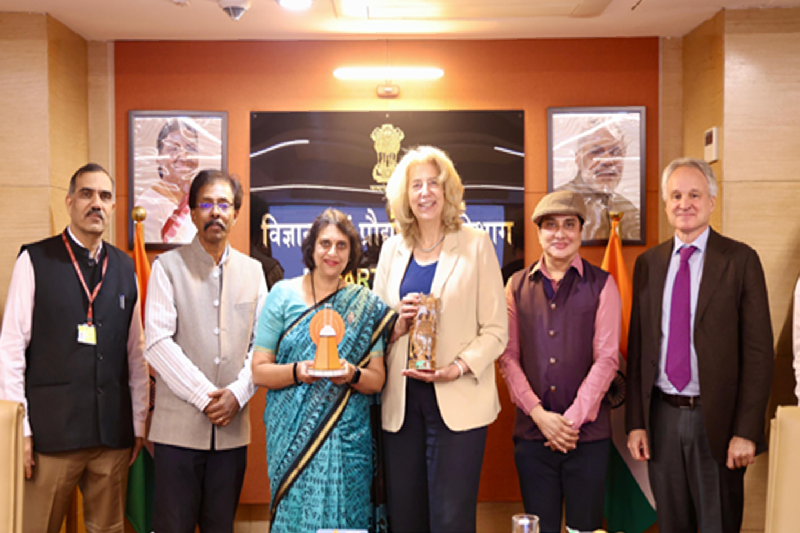
India–Netherlands Green Hydrogen Collaboration: Advancing a Shared Vision for Clean Energy Innovation
The global transition towards sustainable energy systems has increasingly become a defining priority of the twenty-first century. As nations grapple with climate commitments, industrial decarbonisation, and energy security, green hydrogen has emerged as a transformative solution. Against this backdrop, the recent strengthening of cooperation between India and the Netherlands in hydrogen research and innovation marks a noteworthy development in international clean-energy diplomacy.
The two nations have taken a decisive step by launching the India-Netherlands Hydrogen Fellowship Programme alongside a new academic partnership between the University of Groningen and nineteen Indian Institutes of Technology (IITs). Facilitated by India’s Department of Science and Technology (DST), these initiatives aim to expand research capacity, foster talent development, and accelerate deployment-oriented innovation in green hydrogen technologies.
While the announcement may appear technical at first glance, its implications extend far beyond academic collaboration. It signals a broader convergence of strategic interests between two countries seeking to lead in sustainable energy transformation.
Green Hydrogen: The Cornerstone of Future Energy
Green hydrogen, produced using renewable energy sources such as solar or wind power, offers a pathway to decarbonise sectors that are traditionally difficult to electrify. Heavy industries, long-distance transport, shipping, aviation, and fertilizer production all stand to benefit from hydrogen-based solutions.
India’s commitment to reducing carbon emissions while sustaining economic growth has positioned hydrogen as a key element of its energy roadmap. Similarly, the Netherlands has invested significantly in hydrogen infrastructure and research, recognising its role in Europe’s clean energy transition.
The Indo-Dutch collaboration therefore reflects complementary strengths: India’s expanding renewable energy capacity and research talent, combined with Dutch technological expertise and established hydrogen ecosystems.
The India-Netherlands Hydrogen Fellowship Programme
Central to the new partnership is the Hydrogen Fellowship Programme, conceived as a national capacity-building initiative. The programme invites doctoral candidates, postdoctoral researchers, and faculty members from Indian institutions to engage with advanced hydrogen research environments in the Netherlands.
Participants will gain structured exposure to multiple aspects of hydrogen science and technology, including:
- System integration and infrastructure development
- Safety protocols and regulatory frameworks
- Techno-economic feasibility analysis
- Life-cycle assessment methodologies
- Strategies for localisation and indigenisation of technology
Such exposure is expected to cultivate a new generation of specialists capable of translating theoretical research into practical industrial solutions.
Importantly, the fellowship underscores a shift in scientific collaboration from purely academic exchange towards deployment-focused innovation. This aligns with the growing recognition that climate solutions must move swiftly from laboratory research to scalable application.
Academic Partnerships: The IIT–Groningen Framework
Alongside the fellowship programme, the signing of a Memorandum of Understanding between the University of Groningen and nineteen IITs represents a substantial expansion of academic cooperation.
This institutional framework enables:
- Faculty and student exchange programmes
- Joint research initiatives
- Shared access to scientific expertise
- Collaborative development of hydrogen technologies
Notably, the agreement operates without automatic financial commitments, emphasising flexibility while encouraging sustained scholarly engagement. Such arrangements often foster innovation by reducing bureaucratic constraints and allowing institutions to pursue mutually beneficial projects organically.
For India’s IITs, globally recognised centres of engineering excellence, this partnership offers enhanced exposure to European research networks. Conversely, Dutch institutions gain access to India’s vast talent pool and rapidly evolving clean-energy ecosystem.
Strategic Alignment with National Energy Goals
The Ministry of Science and Technology has indicated that the fellowship and academic collaboration are designed to support India’s broader energy objectives. These include:
- The National Green Hydrogen Mission
- The goal of energy independence by 2047
- Achieving net-zero emissions by 2070
These ambitious targets reflect India’s dual challenge: maintaining economic momentum while transitioning towards low-carbon development. Hydrogen technology, particularly when derived from renewable energy, offers a bridge between these imperatives.
International collaboration accelerates this journey by facilitating technology transfer, knowledge exchange, and shared innovation ecosystems.
Diplomatic and Scientific Dimensions
Senior representatives from both nations have emphasised the strategic significance of the collaboration. Officials highlighted the strong alignment between India and the Netherlands in hydrogen research priorities and energy transition goals, while academic leaders underscored the value of sustained institutional partnerships in addressing global environmental challenges.
Such statements reflect a broader trend in science diplomacy, where research collaboration serves as both an intellectual and geopolitical bridge. Shared technological ambitions often foster deeper economic and diplomatic ties.
For India, partnerships with technologically advanced European nations enhance its global standing as a leader in sustainable innovation. For the Netherlands, collaboration with a rapidly growing economy expands opportunities for technological diffusion and market engagement.
Building Human Capital for the Hydrogen Economy
A particularly notable aspect of the initiative is its focus on human capital development. Experts increasingly recognise that technological transitions are not driven solely by infrastructure investment but by skilled professionals capable of designing, implementing, and managing complex systems.
By enabling Indian researchers to engage with advanced hydrogen ecosystems, the fellowship programme aims to cultivate precisely such expertise. Over time, this could contribute to:
- Domestic innovation capacity
- Industrial competitiveness
- Enhanced research collaboration
- Workforce readiness for emerging energy sectors
This emphasis on talent development reflects a forward-looking approach to energy transition policy.
Implications for Industry and Innovation
Although currently centred on academic collaboration, the initiative holds significant implications for industry.
Green hydrogen applications span multiple sectors:
- Steel and cement manufacturing
- Chemical production
- Renewable energy storage
- Transportation fuels
Collaborative research can accelerate commercial viability, reduce costs, and encourage private sector investment. For India, where industrial decarbonisation is a pressing challenge, such partnerships may prove instrumental in achieving climate commitments without compromising economic growth.
Challenges on the Horizon
Despite its promise, the hydrogen economy faces several challenges:
- High production costs relative to conventional fuels
- Infrastructure requirements for storage and transport
- Regulatory and safety frameworks
- Market demand uncertainty
Addressing these issues requires sustained research, policy alignment, and international cooperation. The Indo-Dutch partnership represents one step in this broader global effort.
A Model for Future Collaboration
The India–Netherlands hydrogen partnership illustrates how scientific diplomacy can address shared global challenges. By combining academic collaboration, talent development, and strategic policy alignment, the initiative offers a template for future international energy partnerships.
As climate imperatives intensify, such collaborations are likely to become increasingly common. They enable nations to pool resources, share expertise, and accelerate innovation in ways that unilateral efforts often cannot achieve.
Conclusion: Towards a Sustainable Energy Future
The deepening cooperation between India and the Netherlands in green hydrogen research signals both ambition and pragmatism. It reflects recognition that sustainable energy transitions demand collective effort, interdisciplinary expertise, and long-term commitment.
Through the Hydrogen Fellowship Programme and the IIT–Groningen partnership, the two nations are investing not merely in technology but in knowledge, talent, and shared vision. These initiatives strengthen the foundations for a future where clean energy is not an aspiration but an operational reality.
For India, striving towards energy independence and net-zero emissions, such partnerships are invaluable. For the global community, they exemplify how international collaboration can drive meaningful progress in addressing climate change.
The journey towards a hydrogen-powered future remains complex, yet with sustained cooperation and scientific innovation, it is increasingly within reach.