Tamil Nadu Guest Lecturer Recruitment 2026: Opportunities, Impact, and What Aspirants Should Know
Higher education in India continues to expand in response to growing enrolment, evolving skill demands, and the aspiration for broader academic access. Tamil Nadu, widely recognised for its progressive educational policies, has taken another significant step in this direction with the announcement of guest lecturer recruitment for 2026. The state government’s latest initiative to appoint lecturers in government Arts and Science colleges reflects both a pragmatic response to faculty shortages and a broader commitment to strengthening public higher education.
This recruitment drive is not merely an administrative exercise; it represents a strategic intervention aimed at sustaining academic continuity, supporting disadvantaged learners, and ensuring that expanding institutions remain academically vibrant. For aspiring educators, it also offers a timely professional opportunity.
Overview of the Recruitment Initiative
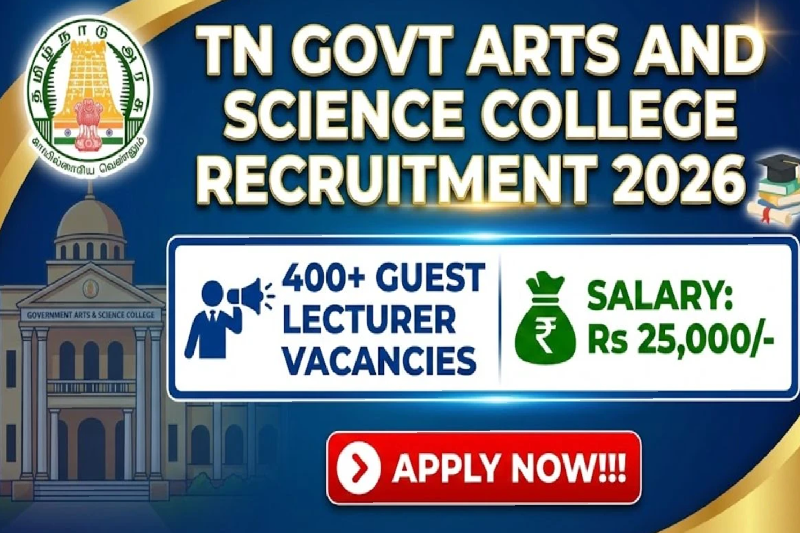
The Tamil Nadu government has invited applications for 426 guest lecturer positions across government Arts and Science colleges in the state. The initiative, announced by Higher Education Minister Govi Chezhian under the direction of Chief Minister M. K. Stalin, seeks to ensure uninterrupted teaching while permanent faculty recruitment processes are underway.
These temporary appointments are particularly crucial as the state continues to broaden access to higher education. With increased student enrolment and new academic programmes emerging, the immediate availability of qualified teaching staff becomes essential. Guest lecturers thus serve as a bridge between institutional expansion and long-term faculty appointments.
Expanding Access to Higher Education
Tamil Nadu’s higher education landscape has undergone substantial growth in recent years. The government has established 37 new Government Arts and Science Colleges, primarily to meet the educational needs of underprivileged and rural students.
Such expansion reflects a recognition that higher education must not remain the preserve of urban elites. By decentralising institutions and bringing colleges closer to underserved communities, the state aims to democratise educational opportunity. However, expansion inevitably creates staffing demands, which this recruitment drive seeks to address.
Moreover, the introduction of additional courses and increased student intake reportedly exceeding 15,000 extra seats for the 2025–26 academic year has intensified the need for qualified educators.
In this context, guest lecturers play a vital stabilising role, ensuring that academic programmes continue without disruption while structural recruitment catches up with institutional growth.
A Continuation of Earlier Recruitment Efforts
The current recruitment phase is not an isolated development. Earlier rounds of temporary appointments have already seen substantial progress. Advertisements were previously issued for 574 positions and later another 823 posts, resulting in 1,277 guest lecturers already appointed across colleges.
The present notification adds 306 new lecturer posts for Tamil and English language courses, combined with 120 previously announced but unfilled vacancies, bringing the total to 426 positions in this phase.
This continuity suggests a deliberate, phased approach rather than a reactive policy measure. It also highlights the government’s attempt to balance expansion with educational quality.
Application Process and Timeline
Eligible candidates can submit applications through official government portals within the specified registration window. According to official information, applications opened on 4 February 2026 and will close on 9 February 2026.
Applicants must provide accurate personal and educational details, along with scanned documents such as academic certificates, photographs, and signatures. Ensuring precision during submission is crucial, as discrepancies may affect eligibility or selection.
Aspiring candidates are encouraged to consult official websites for subject-specific eligibility criteria and procedural updates. Given the short application window, timely preparation becomes essential.
Selection Criteria and Assessment
The selection of guest lecturers will follow Tamil Nadu government norms, typically based on academic qualifications, teaching credentials, and performance in interviews.
While temporary in nature, these roles demand professional competence comparable to permanent faculty positions. Institutions rely on guest lecturers not merely for teaching hours but also for academic mentorship, curriculum delivery, and student engagement.
For candidates, this selection process provides an opportunity to demonstrate both subject expertise and pedagogical aptitude.
The Role of Guest Lecturers in Academic Ecosystems
Guest lecturers occupy a distinctive position within higher education. Although their appointments are temporary, their impact can be substantial. They often bring fresh perspectives, specialised expertise, and professional flexibility to academic institutions.
In many cases, guest lecturers:
- Sustain teaching continuity during faculty transitions
- Introduce interdisciplinary or industry-relevant insights
- Support newly established courses or departments
- Provide mentorship to first-generation college students
In states like Tamil Nadu, where higher education expansion is rapid, such roles become particularly vital.
Professional Benefits for Aspirants
For early-career academics, guest lecturer positions can serve as a valuable entry point into higher education teaching. Benefits often include:
- Practical teaching experience in reputed government institutions
- Opportunities to build academic networks
- Exposure to diverse student communities
- Enhanced prospects for future permanent appointments
While the contractual nature of such roles may present challenges, the professional experience gained can significantly strengthen academic profiles.
Challenges Associated with Temporary Appointments
Despite their advantages, guest lecturer roles also raise important policy questions. Temporary appointments can sometimes lead to concerns about job security, remuneration stability, and career progression.
Balancing institutional flexibility with fair employment conditions remains an ongoing policy conversation in Indian higher education. Ensuring equitable compensation, professional development opportunities, and transparent selection processes will be critical for sustaining the effectiveness of such initiatives.
Broader Implications for Higher Education Policy
Tamil Nadu’s recruitment initiative reflects a broader national trend: expanding access to higher education while navigating faculty shortages. Across India, governments are increasingly adopting flexible staffing models to cope with rising enrolments.
However, long-term academic excellence depends on a balanced approach. Temporary appointments must complement and not replace systematic investment in permanent faculty recruitment, infrastructure, and research capacity.
Tamil Nadu’s phased strategy suggests awareness of this balance, combining immediate staffing solutions with longer-term educational planning.
Advice for Prospective Applicants
For candidates considering application to the guest lecturer posts, several practical considerations may prove helpful:
1. Review eligibility criteria carefully
Ensure academic qualifications align precisely with subject requirements.
2. Prepare documentation in advance
Incomplete or inaccurate submissions may lead to disqualification.
3. Strengthen teaching portfolios
Demonstrating teaching experience, research work, or academic publications can enhance selection prospects.
4. Stay informed through official sources
Government portals provide the most reliable updates regarding deadlines and procedures.
Conclusion
The Tamil Nadu Guest Lecturer Recruitment 2026 initiative represents a meaningful step in sustaining educational continuity amid rapid institutional expansion. By appointing 426 lecturers across government Arts and Science colleges, the state seeks to maintain academic quality while extending access to higher education for a broader population.
For aspiring academics, this recruitment drive offers a significant professional opportunity. For policymakers, it underscores the importance of adaptive staffing strategies in an evolving educational landscape. And for students, it promises continuity in teaching and learning at a time when higher education is expanding in both scale and ambition.
Ultimately, initiatives such as these highlight a fundamental educational truth: institutions grow not only through infrastructure and policy, but through the educators who shape minds, inspire curiosity, and nurture intellectual growth.