Calcutta University BCom Semester V Result 2025 Declared
Calcutta University BCom Semester V Results Reflect the Continuing Transformation of Undergraduate Commerce Education
The declaration of the BCom Semester V Examination 2025 results by the University of Calcutta has once again drawn attention to the evolving landscape of undergraduate commerce education in India. For thousands of students awaiting their scores, the announcement represents far more than an academic update. It marks an important stage in their professional and educational trajectory, influencing future academic opportunities, competitive examination plans and career decisions.
Students who appeared for the Semester V examinations can now access their results online through the university’s official examination portal by entering their roll number and registration details. The results have been released for both honours and general commerce programmes, allowing candidates to review subject-wise marks, overall scores and qualifying status.
While university result announcements may appear routine within India’s extensive higher education framework, they often carry deeper significance. They reveal broader patterns within academic administration, student aspiration and the changing relevance of commerce education in a rapidly transforming economy.
The Legacy of Calcutta University
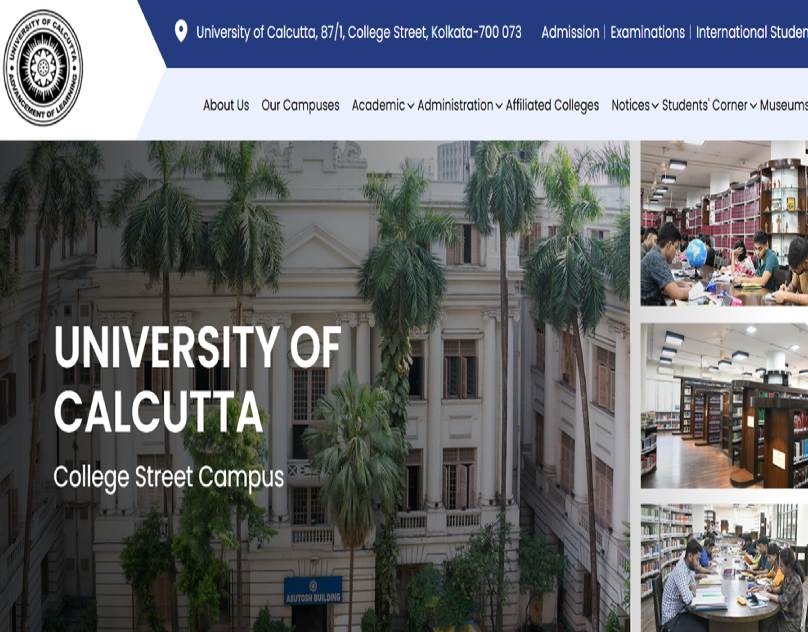
Established in 1857, the University of Calcutta remains one of India’s oldest and most historically significant institutions of higher education. Its academic legacy extends across disciplines including literature, science, law, economics and commerce. Over decades, the university has produced scholars, administrators, economists and public intellectuals who have shaped India’s educational and professional landscape.
Commerce education has occupied a particularly important position within the university’s academic structure. Kolkata’s longstanding role as a commercial and financial centre has historically contributed to the growth of commerce programmes within affiliated colleges. As business environments evolved, so too did the scope and relevance of undergraduate commerce education.
Today, BCom programmes no longer focus exclusively on traditional accounting and bookkeeping disciplines. Modern commerce curricula increasingly encompass finance, taxation, auditing, business law, economics, analytics and corporate governance. This broader orientation reflects the changing demands of India’s economy and employment market.
The release of Semester V results, therefore, represents a key milestone for students approaching the final phase of their undergraduate education.
Why Semester V Matters
Within the undergraduate structure, Semester V occupies a particularly significant position. For most BCom students, it serves as a preparatory stage for both final examinations and future career planning.
Academic performance during this phase often influences postgraduate admissions, internship opportunities and preparation strategies for professional courses such as Chartered Accountancy, Company Secretaryship, Cost and Management Accountancy and MBA entrance examinations.
Many students begin balancing multiple ambitions simultaneously during Semester V. Alongside university examinations, they may also prepare for competitive examinations, professional certifications or placement opportunities. Consequently, the results carry substantial emotional and professional weight.
For honours students especially, strong performance can strengthen applications for postgraduate commerce, finance and management programmes at reputed institutions across India.
The publication of Semester V scores also provides students with an opportunity to assess their academic standing before entering the concluding phase of their undergraduate studies.
Digital Result Systems and Administrative Modernisation
One notable aspect of the result declaration process is the increasing reliance on digital academic administration. Students can now access results online through examination portals without physically visiting colleges or university offices.
This shift reflects broader transformations occurring across India’s higher education institutions. Universities that once depended heavily on paper-based administrative systems are gradually adopting digital platforms for admissions, examinations, mark sheets and academic communication.
For students, online result systems provide convenience, speed and accessibility. The ability to instantly download scorecards and review subject-wise marks has significantly reduced administrative delays traditionally associated with university result announcements.
At the same time, digital systems have increased expectations regarding efficiency and transparency. Students now anticipate timely declarations, accessible portals and prompt grievance redressal mechanisms.
The university has also informed students that those dissatisfied with their scores may apply for review or re-evaluation within prescribed timelines.
Such review mechanisms have become an important component of academic administration, particularly in large universities where thousands of answer scripts are evaluated simultaneously.
The Expanding Relevance of Commerce Education
The continuing popularity of BCom programmes across India reflects the enduring relevance of commerce education within the country’s economic environment. As India’s financial systems, startup ecosystem and corporate sectors expand, commerce graduates remain central to multiple industries.
The discipline itself has evolved considerably. Contemporary commerce education increasingly intersects with data analytics, digital finance, fintech, taxation policy and international business. Students are expected not only to understand accounting frameworks but also broader economic and managerial structures.
This evolution has transformed undergraduate commerce from a narrowly specialised degree into a versatile academic foundation supporting diverse career pathways.
Graduates today enter fields ranging from banking and financial services to consulting, entrepreneurship, auditing and public administration. Many also pursue higher studies in management, economics or professional accountancy.
Consequently, university results acquire significance not merely as academic indicators but as gateways to broader professional mobility.
Student Anxiety and Examination Culture
Behind every university result announcement lies a more personal and often overlooked reality: the psychological pressure experienced by students navigating India’s competitive educational environment.
Examinations remain deeply embedded within the country’s academic culture. Performance is frequently linked not only to career prospects but also to family expectations and social perception.
For many students, result days generate intense emotional anticipation. Strong scores may bring relief and confidence, while disappointing outcomes can create uncertainty regarding future plans.
This emotional dimension becomes particularly pronounced during advanced undergraduate semesters, where students are already confronting questions regarding employment, higher education and financial independence.
The availability of online result portals has altered the experience itself. Results that once arrived gradually through notice boards now appear instantly on digital screens, intensifying the immediacy of reactions and comparisons.
Social media further amplifies this environment. Students often discuss marks, cut-offs and academic performance publicly, contributing to an increasingly visible culture of academic competition.
Re-evaluation and Academic Fairness
The provision for review and re-evaluation remains a crucial safeguard within university examination systems. Large universities evaluating thousands of scripts inevitably face administrative pressures, making review mechanisms essential for maintaining institutional credibility.
Students dissatisfied with scores may seek re-evaluation to ensure accurate assessment and mark tabulation.
Such procedures reinforce the principle that academic evaluation should remain open to scrutiny and correction where necessary.
Across India, universities have increasingly recognised the importance of transparent grievance mechanisms in preserving student trust. The ability to apply for review provides reassurance that academic outcomes are not entirely inflexible or beyond challenge.
However, re-evaluation systems also place administrative pressure upon institutions already managing large examination cycles. Balancing speed, accuracy and procedural fairness remains one of the central challenges of higher education administration.
Commerce Graduates in a Changing Employment Landscape
The significance of BCom results cannot be separated from wider employment trends shaping India’s economy. Commerce graduates today enter a labour market undergoing rapid technological and structural transformation.
Automation, digital banking, artificial intelligence and evolving taxation frameworks are reshaping professional expectations within finance and business sectors. Employers increasingly value analytical thinking, digital competence and adaptability alongside traditional academic qualifications.
As a result, undergraduate students are often encouraged to supplement degrees with internships, certification courses and technical skills training.
This shift has altered how students perceive university examinations themselves. Academic scores remain important, but they now function within a broader ecosystem of employability and professional development.
For many Semester V students, result announcements therefore coincide with decisions regarding internships, placements, postgraduate entrance preparation and professional certification pathways.
Kolkata’s Academic Ecosystem
Kolkata continues to occupy a distinctive position within India’s intellectual and educational landscape. The city’s universities and colleges have historically contributed significantly to commerce, economics and finance education.
The University of Calcutta remains central to this ecosystem, overseeing a vast network of affiliated colleges and diverse student populations. Its commerce graduates contribute to sectors ranging from banking and insurance to academia and entrepreneurship.
The release of BCom Semester V results, therefore, resonates beyond individual campuses. It reflects the functioning of one of India’s oldest academic systems and its continuing role within the country’s higher education structure.
As educational priorities evolve nationwide, traditional institutions such as Calcutta University face the dual challenge of preserving academic legacy while adapting to contemporary demands for digitalisation, skill integration and global relevance.
Looking Ahead
The declaration of the BCom Semester V Examination 2025 results represents a pivotal moment for students approaching the final stages of undergraduate commerce education. Beyond marks and scorecards, the announcement reflects broader developments within India’s educational and economic environment.
It highlights the increasing digitisation of academic administration, the growing competitiveness of professional pathways and the evolving role of commerce education within a changing economy.
For students, the results provide both reflection and direction. Some will move forward confidently towards postgraduate study or professional qualifications, while others may reassess strategies and academic goals before final examinations.
What remains clear is that university examinations continue to occupy a central position within India’s educational culture. They shape opportunities, influence aspirations and often determine the trajectory of young professionals entering an increasingly demanding and dynamic workforce.