CTET 2026 Answer Key to Be Released: A Crucial Step for Aspiring Teachers
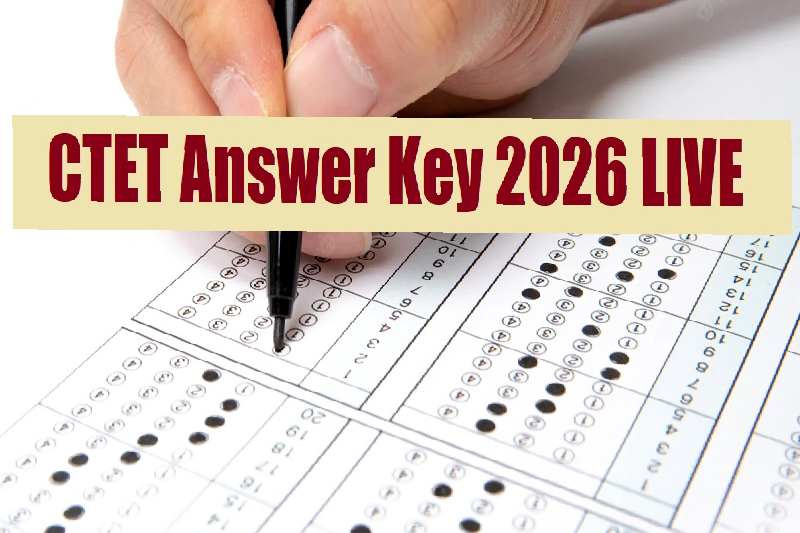
The Central Teacher Eligibility Test (CTET) 2026, one of the most pivotal examinations for aspiring educators in India, is poised to enter its next phase as the Central Board of Secondary Education (CBSE) prepares to release the provisional answer key. The announcement, expected imminently on the official website ctet.nic.in, marks a critical moment for candidates who appeared for the examination on February 7 and 8. With over 2.5 million aspirants having participated this year, the CTET remains an indispensable gateway for those seeking teaching positions in central government schools, including Kendriya Vidyalayas, Navodaya Vidyalayas, and Army schools.
Understanding the Significance of the CTET
The CTET is widely regarded as the benchmark for teacher recruitment in India. It not only validates a candidate’s knowledge and teaching aptitude but also ensures adherence to standardised pedagogical practices across the country. By qualifying this examination, educators demonstrate their readiness to impart quality education, aligning with national standards and expectations. The upcoming release of the answer key represents a critical juncture for candidates to assess their performance and predict outcomes prior to the official results.
Accessing the Provisional Answer Key
Candidates will be able to access the provisional CTET 2026 answer key directly from the official portal, ctet.nic.in. The process requires logging in using the candidate’s roll number and date of birth. Once authenticated, the answer key will be displayed, enabling candidates to cross-check their responses against the officially released solutions. Given the scale of the examination, the timely publication of the answer key is crucial in reducing anxiety among aspirants and ensuring transparency in the evaluation process.
Raising Objections: Ensuring Accuracy and Fairness
A distinctive feature of the CTET process is the provision for raising objections to the provisional answer key. Candidates who identify discrepancies or believe an answer has been marked incorrectly are entitled to submit a formal challenge. This process, however, requires the payment of a non-refundable fee of Rs 1,000 per question, ensuring that only genuine claims are submitted for review. The CBSE carefully examines all objections before finalising the answer key, thereby maintaining the integrity and credibility of the evaluation process.
Minimum Qualifying Marks and Eligibility
To secure qualification in the CTET 2026, candidates from the general category must obtain at least 90 marks out of 150, representing a 60 per cent threshold. Candidates belonging to Scheduled Castes (SC) and Scheduled Tribes (ST) categories are required to achieve a minimum of 82 marks, equivalent to 55 per cent. Successful completion of the examination not only confers eligibility to teach but also unlocks opportunities across primary and upper primary classes, depending on the specific paper cleared. Paper 1 qualifies candidates to teach Classes 1 to 5, while Paper 2 is designated for aspirants intending to teach Classes 6 to 8.
The Scale of Participation
The CTET 2026 witnessed unprecedented participation, with more than 2.5 million candidates registering for the examination. Multiple examination centres were established nationwide to accommodate the massive influx of aspirants. This scale underscores the enduring popularity and critical importance of the CTET in shaping the future workforce of Indian educators. Each year, the examination draws a diverse pool of candidates, reflecting the aspirations of individuals from various socio-economic, regional, and academic backgrounds.
Implications of the Answer Key Release
The release of the CTET answer key serves multiple purposes. Firstly, it allows candidates to evaluate their performance and estimate potential scores, providing a preliminary indication of qualification status. Secondly, it enhances transparency in the examination process, allowing stakeholders to verify the accuracy of the assessment. Lastly, it upholds the principle of fairness by enabling candidates to raise objections and seek rectification of errors, thereby strengthening confidence in the overall system.
Navigating the Objection Process
Candidates intending to challenge the provisional answer key must carefully adhere to the procedure outlined on ctet.nic.in. Upon logging in, aspirants can select the questions they wish to contest and complete the required payment. Only objections submitted within the designated window and in accordance with the stipulated guidelines will be considered. This structured process ensures that all concerns are addressed methodically, reinforcing the credibility of the final answer key and the subsequent results.
Preparing for the Next Steps
Following the review of objections, the CBSE will release the final answer key, which will serve as the basis for calculating official results. For candidates, this marks the culmination of months of preparation and anticipation. Those who qualify the CTET 2026 will become eligible to apply for teaching positions in central government schools, a coveted career path that offers both stability and the opportunity to contribute meaningfully to India’s educational landscape.
CTET’s Role in Standardising Education
Beyond individual career prospects, the CTET plays a fundamental role in standardising teaching quality across India. By setting uniform benchmarks for educators, the examination ensures that teaching practices across central government schools adhere to nationally recognised pedagogical standards. The answer key, therefore, is not merely a tool for candidate assessment but a reflection of the CBSE’s commitment to transparency, quality assurance, and educational excellence.
Preparing for a Career in Teaching
For aspirants, understanding and analysing the answer key provides critical insights into examination patterns, common pitfalls, and areas requiring further improvement. Engaging with the answer key equips candidates with a clearer understanding of content requirements, enabling them to refine their preparation strategies for future attempts or related examinations. In essence, the answer key serves as both a retrospective evaluation tool and a preparatory guide for long-term professional development.
Conclusion: Transparency and Trust in the Examination Process
The imminent release of the CTET 2026 answer key represents a significant moment for millions of aspirants across India. By providing access to provisional solutions, facilitating objection submissions, and ultimately finalising results based on thorough review, the CBSE reinforces the principles of transparency, accountability, and fairness. For candidates, the answer key not only offers clarity regarding performance but also reaffirms the credibility of an examination that continues to shape the nation’s teaching workforce. As India continues to prioritise educational quality and accessibility, the CTET remains a vital instrument in identifying and nurturing competent, committed, and well-trained educators. The forthcoming answer key, therefore, is more than a document, it is a testament to a rigorous, equitable, and meticulously structured evaluation system that empowers aspirants and strengthens the educational ecosystem.