Meghalaya Government to Award Scholarships to Over One Lakh Students on MDA’s 8th Anniversary
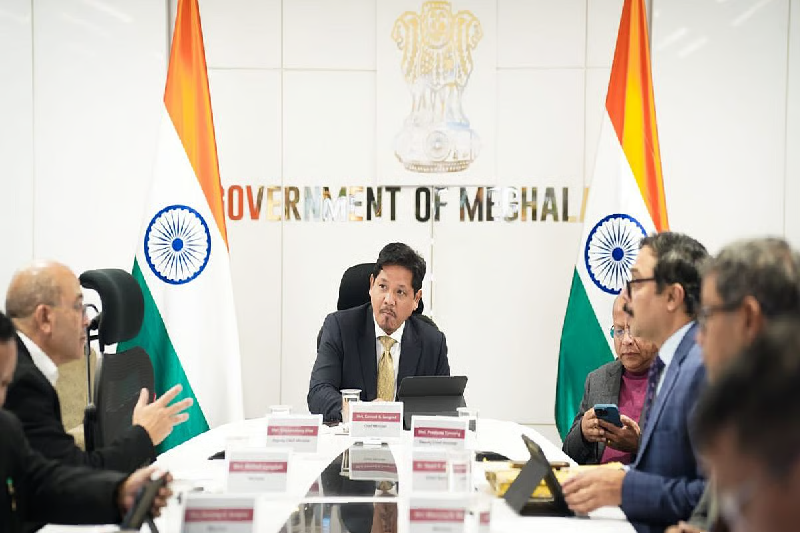
In a momentous announcement, Meghalaya Chief Minister Conrad K. Sangma declared that the state government will grant scholarships to more than one lakh students on March 6, in celebration of the eighth anniversary of the Meghalaya Democratic Alliance (MDA) government. This initiative exemplifies the administration’s commitment to education as a transformative instrument capable of fostering social equity and empowering the youth of Meghalaya.
Marking Eight Years of Governance
The eighth anniversary of the MDA government represents not only a milestone in political tenure but also a reaffirmation of the administration’s dedication to inclusive growth and social welfare. Chief Minister Sangma described the occasion as a “proud moment,” emphasising that education remains a cornerstone of the government’s vision. By instituting a large-scale scholarship programme, the government seeks to ensure that students across the state, particularly those from marginalised and rural backgrounds have access to essential financial support, enabling them to pursue their academic ambitions without impediment.
Addressing the Challenges of Secondary Education
A focal point of the Chief Minister’s announcement was the government’s concerted efforts to enhance academic outcomes, particularly in rural areas. Recognising that the Secondary School Leaving Certificate (SSLC) examinations often serve as a critical juncture in a student’s educational journey, the administration has introduced specialised guidebooks designed to improve pass rates and strengthen foundational knowledge. Chief Minister Sangma emphasised that failures at this stage can profoundly affect a child’s future prospects, stating, “In class 10, when a child fails in the matric exam, dreams can be shattered at a very early stage. It is our duty as a government to support them and ensure they are able to move forward in life.”
Scholarships as a Mechanism for Social Equity
The CM’s scholarship programme represents more than a financial incentive; it constitutes a deliberate strategy to reduce educational attrition and promote equity. Many students in rural Meghalaya encounter significant obstacles, ranging from inadequate access to learning materials to the absence of structured academic support. By providing scholarships to over one lakh students, the government intends to mitigate these barriers, thereby enabling learners to continue their education and aspire to higher achievements. This initiative underscores a fundamental principle: education must be accessible to all, irrespective of socio-economic background.
Reinforcing Academic Support Systems
In tandem with the scholarship initiative, the Meghalaya government has taken proactive steps to strengthen academic infrastructure. The distribution of guidebooks is a pivotal component of this strategy, designed to furnish students with accessible, high-quality study materials that can bolster learning outcomes. Such resources are particularly critical in rural communities, where students often lack supplementary tutoring or guidance. By equipping learners with these tools, the administration demonstrates its commitment to enhancing both the quality and reach of secondary education.
Learning from National Benchmarks
Chief Minister Sangma highlighted that similar support mechanisms exist in various educational boards across India. The Meghalaya government’s approach aims to ensure that students in the state are not disadvantaged and have access to comparable academic assistance. This alignment with national best practices reflects a forward-thinking strategy that prioritises the harmonisation of educational standards while catering to local needs. By doing so, Meghalaya is fostering an environment in which its youth can compete confidently at both regional and national levels.
Implications for Rural and Marginalised Communities
The scholarship programme holds particular significance for rural and marginalised communities, where educational attainment often correlates closely with social mobility. In regions where financial constraints and limited academic resources impede student progression, initiatives such as these can serve as catalysts for transformative change. By investing in human capital, the government is not only addressing immediate educational needs but also laying the foundation for long-term socio-economic development across the state.
Holistic Educational Reforms
Beyond financial support, the MDA government has emphasised the importance of holistic educational reforms. The introduction of guidebooks, coupled with initiatives aimed at reducing dropout rates, reflects a comprehensive approach to strengthening the state’s academic ecosystem. These measures are designed to cultivate resilience, self-confidence, and sustained academic engagement among students, thereby equipping them with the skills necessary to navigate future challenges with competence and determination.
Aligning Policy with Social Responsibility
The Chief Minister’s remarks also underscore the broader social responsibility of governance in promoting equitable educational access. Scholarships serve as instruments not merely for individual advancement but as vehicles for societal empowerment. By providing opportunities to those most in need, the Meghalaya government reinforces the principle that education is a shared societal asset, vital to fostering inclusive growth and nurturing a generation capable of contributing meaningfully to the state’s development.
Looking Ahead: Sustaining Momentum
As the MDA government celebrates its eighth year, initiatives such as the CM’s scholarship programme exemplify a sustained commitment to education as a driver of progress. Looking forward, the administration intends to continue implementing policies that enhance learning outcomes, reduce educational disparities, and cultivate a culture of academic excellence. By prioritising both access and quality, Meghalaya positions itself as a model for states striving to balance equity with excellence in education.
Conclusion: Education as a Pillar of Progress
The announcement of scholarships for over one lakh students on the MDA government’s anniversary encapsulates the transformative potential of education as a tool for social empowerment. Through this initiative, Chief Minister Conrad K. Sangma and his administration reaffirm their commitment to creating an inclusive, supportive, and resource-rich educational environment. By addressing systemic challenges, investing in human capital, and fostering equitable access, Meghalaya is charting a course toward sustainable development, social cohesion, and enduring academic success for its youth.