IIM Mumbai Launches Tech-Driven UG Programme with IIT Bombay
IIM Mumbai’s New Undergraduate Programme Signals a Bold Shift Towards Tech-Driven Management Education
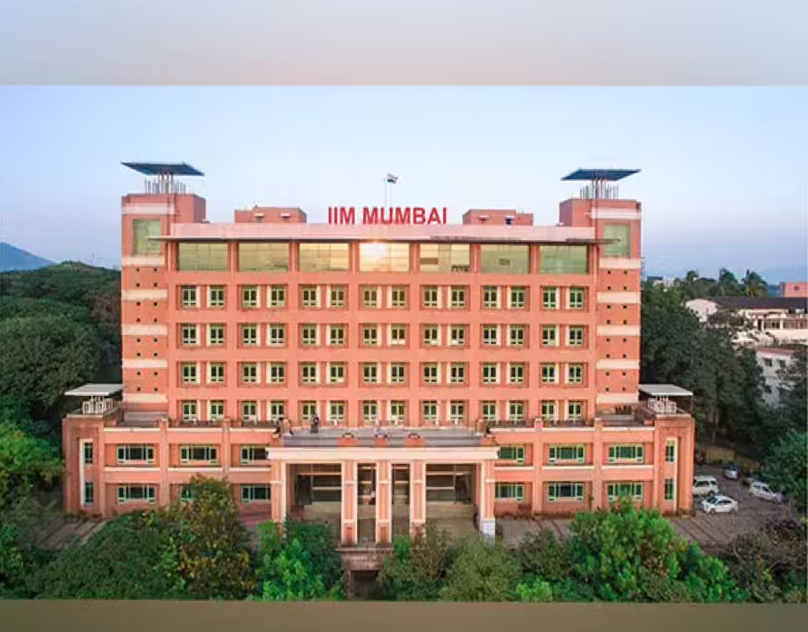
India’s higher education landscape is witnessing a notable transition and the decision by IIM Mumbai to introduce a four-year undergraduate programme marks a significant milestone. Long regarded as a bastion of postgraduate excellence, the institute is now expanding its academic horizon with a Bachelor of Science in Digital Science and Business Management, offered in collaboration with IIT Bombay. This initiative reflects a growing recognition that the future of education lies in interdisciplinary learning and early specialisation.
Bridging Technology and Business
The newly introduced programme is rooted in the understanding that modern industries no longer operate within rigid disciplinary silos. Technology and business are deeply intertwined, and organisations increasingly seek professionals who can navigate both domains with ease. The curriculum has therefore been designed to integrate emerging technologies such as artificial intelligence, machine learning, data science and the Internet of Things with core management subjects including finance, marketing and operations. This blended approach ensures that students are equipped not only with technical proficiency but also with the strategic thinking required to apply these tools in real-world business contexts.
A Strategic Collaboration with IIT Bombay
One of the defining features of the programme is its collaboration with IIT Bombay, a premier institution known for its engineering and technological prowess. This partnership represents a convergence of two distinct yet complementary academic traditions. While IIM Mumbai contributes its strengths in management education, IIT Bombay brings a robust technological foundation to the table. Such a collaboration enhances the programme’s academic depth and ensures that students benefit from a holistic learning experience. It also underscores the importance of institutional partnerships in addressing the complexities of contemporary education.
Admission Process and Cohort Design
Admissions to the programme will be based on performance in JEE Main, followed by a personal interview. This dual-layered selection process is intended to identify candidates who possess both analytical capability and interpersonal competence. By leveraging a nationally recognised entrance examination, the institute ensures a merit-based intake with strong academic foundations. The initial cohort is expected to be relatively small, allowing for a more personalised and immersive learning environment. This approach reflects a commitment to maintaining academic rigour while fostering meaningful student engagement.
Fee Structure and Value Proposition
The annual fee for the programme is expected to be in the range of ₹6–7 lakh, placing it within the premium segment of undergraduate education in India. While this may raise considerations around affordability, it also reflects the value proposition associated with an IIM qualification, particularly one that integrates technology and management. For many aspirants, the programme represents an investment in a future-oriented education that aligns closely with industry demands.
Alignment with National Education Policy
The introduction of this undergraduate course is closely aligned with the principles outlined in the National Education Policy (NEP) 2020. The policy advocates for multidisciplinary education, flexibility in academic pathways and a focus on skill development. By offering a programme that combines technical and managerial disciplines, IIM Mumbai is effectively translating these policy objectives into practice. Additionally, the provision for students to pursue a one-year MBA after completing the degree creates a seamless academic progression.
Industry Relevance and Career Outcomes
In an era defined by digital transformation, the demand for professionals who can bridge the gap between technology and business has grown exponentially. Organisations are increasingly looking for individuals who can interpret data, leverage emerging technologies and make informed strategic decisions. The programme’s emphasis on areas such as analytics, innovation and digital strategy positions graduates to meet these expectations. It also enhances their employability across a wide range of sectors, from consulting and finance to technology and entrepreneurship.
Experiential Learning and Practical Exposure
Beyond theoretical instruction, the programme is expected to incorporate experiential learning elements such as internships, live projects and industry interactions. These components are essential in helping students translate classroom knowledge into practical skills. Engagement with industry not only enriches the learning experience but also provides valuable insights into real-world challenges and opportunities. This experiential dimension is likely to play a crucial role in shaping well-rounded graduates.
Redefining Undergraduate Pathways
Traditionally, students aspiring to careers in management have followed a linear pathway, completing an undergraduate degree before pursuing postgraduate studies. The introduction of this programme offers an alternative route, enabling students to embark on a management-focused journey immediately after school. This integrated approach allows for deeper engagement with the subject matter and fosters a more cohesive learning experience. It also reflects changing student aspirations, with many seeking specialised education at an earlier stage.
Challenges and Considerations
While the programme holds considerable promise, its successful implementation will require careful planning and execution. As IIM Mumbai’s first undergraduate offering, it will need to uphold the institution’s reputation for excellence. This includes ensuring high-quality faculty, robust infrastructure and a dynamic curriculum that evolves with technological advancements. Affordability is another important consideration. Expanding access through scholarships and financial aid will be essential to ensure that the programme attracts diverse talent.
A Forward-Looking Initiative
The launch of this undergraduate programme signals IIM Mumbai’s commitment to innovation and adaptability. It reflects a broader trend within Indian higher education, where institutions are rethinking traditional models to better align with global developments and industry needs. By embracing interdisciplinary education and forging strategic collaborations, the institute is positioning itself at the forefront of this transformation.
Conclusion
IIM Mumbai’s decision to introduce a four-year undergraduate programme in Digital Science and Business Management is both timely and forward-thinking. It acknowledges the changing dynamics of education and the growing importance of integrating technology with business acumen. If executed effectively, the programme has the potential to set new benchmarks in undergraduate education, offering students a comprehensive and future-ready academic experience. More importantly, it represents a shift in how education is conceptualised, moving beyond conventional boundaries to prepare students for a rapidly evolving world.